



Keywords: 304 stainless steel kitchen faucet, China stainless steel faucet factory, OEM/ODM
In recent years, more international buyers have been shifting from traditional brass faucets to 304 stainless steel kitchen faucet products.
This trend is driven not only by material upgrading, but also by a change in procurement philosophy—from focusing on initial purchase price to evaluating Total Cost of Ownership (TCO), including durability, maintenance cost, compliance requirements, and long-term lifecycle value.
For hotels, commercial kitchens, residential projects, and brand procurement programs, a high-quality 304 stainless steel kitchen faucet offers superior corrosion resistance, longer service life, and easier compliance with global drinking water regulations. As a result, it is becoming an increasingly important choice in the international market.
Table of Contents:
1. Why Is the Demand for 304 Stainless Steel Kitchen Faucet Increasing?
2. Why 304 Stainless Steel Kitchen Faucet Is More Suitable for Kitchens?
3. 304 Stainless Steel vs Brass: Which Is Better for Long-Term Procurement?
4. Global Compliance Trends Are Driving Stainless Steel Adoption
5. How to Identify a Genuine 304 stainless steel kitchen faucet?
6. How to Choose a Reliable China stainless steel faucet factory?
7. About YOROOW (OEM/ODM Support)
1. Why Is the Demand for 304 Stainless Steel Kitchen Faucet Increasing?
For decades, brass faucets have been widely used due to lower cost and mature manufacturing processes, especially in mid- and low-end retail and short-cycle projects.
However, real-world engineering applications have exposed several issues:
- Oxidation and darkening in coastal or high-humidity environments
- Accelerated corrosion in hard water regions
- Peeling or flaking of electroplated surfaces over time
- Faster aging caused by commercial kitchen cleaning agents
- Significant increase in after-sales failure rates after 1–2 years
We previously served a coastal hotel project in South America that used brass faucets in its commercial kitchen system. After approximately 18 months of operation, the project experienced:
- Widespread oxidation spots
- Increasing minor leakage issues
- Higher maintenance frequency
Ultimately, annual maintenance costs exceeded the budget by around 30%.
After reevaluating the project, the conclusion was clear: Lower initial procurement cost does not reduce total cost—it only shifts cost to later maintenance.
In the second phase, all products were replaced with 304 stainless steel kitchen faucet solutions. Under the same conditions, after-sales issues significantly decreased, and overall maintenance costs dropped by more than 60%.
2. Why 304 Stainless Steel Kitchen Faucet Is More Suitable for Kitchens?
The kitchen is one of the most frequently used environments in both residential and commercial spaces. Faucets are constantly exposed to water, grease, cleaning agents, and temperature fluctuations.
The key advantage of 304 stainless steel lies in its stable alloy composition (18% chromium + 8% nickel), which forms a passive protective layer that ensures long-term performance stability.
Compared with brass, 304 stainless steel kitchen faucet is more suitable for:
- Coastal high-salt environments
- Hard water regions
- High-frequency commercial kitchen usage
- High-humidity and corrosive engineering projects
In practical feedback, the most significant advantage is: Long-term use without plating peeling or structural corrosion, greatly reducing maintenance and replacement costs.
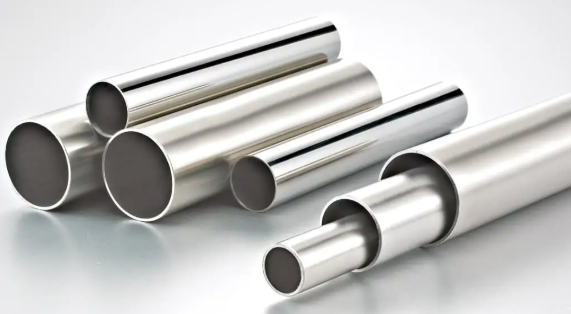
3. 304 Stainless Steel vs Brass: Which Is Better for Long-Term Procurement?
In kitchen faucet sourcing decisions, the key factor is not material preference alone, but Total Cost of Ownership (TCO).
| Evaluation | 304 stainless steel kitchen faucet | Brass faucet |
|---|---|---|
| Drinking water safety | Lead-free, compliant with global standards | May contain lead unless specially treated |
| Corrosion resistance | High, suitable for complex water conditions | Moderate, may oxidize over time |
| Surface finish | No plating, no peeling risk | Relies on plating, may flake |
| Service life | Longer and more stable | Shorter, higher replacement rate |
| Lifecycle cost | Lower (less maintenance/replacement) | Higher (maintenance + replacement cost) |
From an engineering procurement perspective, the key difference is not the unit price, but the 3–5 year lifecycle cost, maintenance frequency, and replacement expenses (Total Lifecycle Cost).
4. Global Compliance Trends Are Driving Stainless Steel Adoption
In recent years, global regulations on drinking water materials have become stricter, with “low-lead / lead-free” requirements becoming mandatory in many export markets.
Because 304 stainless steel is naturally lead-free, it is easier to comply with international drinking water safety standards and multi-region certification systems.
Key certifications by market:
North America
- NSF/ANSI 61 (Drinking water safety)
- NSF/ANSI 372 (Lead-free standard)
- cUPC certification
Europe
- EN 817
- WRAS (UK)
- ACS (France)
- REACH compliance
Oceania
- WaterMark certification
- AS/NZS 3718
South America
- INMETRO (Brazil)
- NOM (selected LATAM markets)
For OEM stainless steel faucet export projects, the advantages of 304 stainless steel are not only material performance, but also:
- Easier multi-market compliance
- Reduced certification complexity
- Faster entry into high-standard markets (EU/US)
- Lower risk of “lead-content restrictions”
Therefore, 304 stainless steel is becoming a mainstream material in the global kitchen faucet industry.
5. How to Identify a Genuine 304 stainless steel kitchen faucet?
With increasing demand, common issues include:
- Using 201 stainless steel as 304 replacement
- Mixing internal low-grade materials with external 304 shells
- Misleading appearance treatment (polishing or plating)
Recommended verification methods:
1. Material test report
Request SGS or third-party certification confirming ~18% Cr and ~8% Ni composition.
2. Spectrometer testing
Fast and accurate method to verify material composition.
3. Salt spray test
High-quality 304 stainless steel can typically pass 48–96 hours salt spray testing.
4. Avoid unusually low prices
Raw material costs for 304 stainless steel are transparent. Extremely low pricing may indicate material substitution or quality compromise.
6. How to Choose a Reliable China stainless steel faucet factory?
For international buyers, the key is not only “whether it is 304”, but whether the 304 kitchen faucet supplier can ensure consistent mass production quality.
A qualified China stainless steel faucet factory should have:
- Traceable raw material system
- ISO9001 certified production process
- Full testing capabilities (airtightness, water pressure, valve lifespan)
- OEM/ODM customization capability
- Logo customization
- Structural modification
- Packaging design
- Market-specific development
- Stable mass production capability
In China’s stainless steel faucet industry, companies often follow different positioning strategies.
For example:
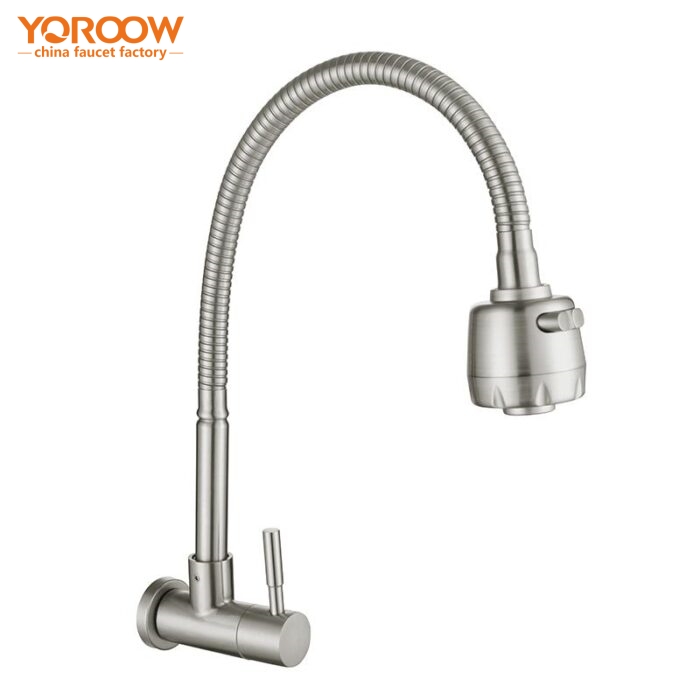
- YOROOW focuses on being a 304 stainless steel kitchen faucet manufacturer, specializing in OEM stainless steel faucet production for global brand owners, wholesalers, distributors, and engineering projects, providing full OEM/ODM solutions from product development to mold design and customization.
- JOMOO is a well-known Chinese sanitary ware brand focused on domestic retail, retail channels, and integrated bathroom solutions, primarily operating under its own brand in the consumer market.
For international B2B buyers seeking long-term cooperation, a factory with mature OEM/ODM capabilities is often better suited for brand development and project procurement.
7. About YOROOW (OEM/ODM Support)
As a professional China stainless steel faucet factory, YOROOW specializes in the design, manufacturing, and global export of 304 stainless steel kitchen faucet products.
We provide OEM stainless steel faucet and 304 kitchen faucet OEM solutions for brand owners, wholesalers, distributors, contractors, and importers.
Our advantages include:
- Full in-house R&D, mold development, and production of 304 stainless steel kitchen faucet products
- Professional OEM stainless steel faucet customization (design, structure, logo, packaging)
- Complete quality control system (material reports, salt spray tests, water pressure tests)
- Stable mass production ensuring consistent quality between samples and bulk orders
- Support for global certification and market compliance requirements
With a strong manufacturing system and strict quality control, YOROOW helps global clients reduce lifecycle costs, improve product competitiveness, and build stable supply chain partnerships.
Conclusion
The rapid growth of the 304 stainless steel kitchen faucet market reflects not only material upgrading, but also a fundamental shift in global procurement thinking.
Today, more international buyers searching for a 304 kitchen faucet supplier focus on durability, compliance, and Total Cost of Ownership (TCO), rather than just initial cost.
As global regulations continue to evolve and engineering projects demand higher reliability, 304 stainless steel kitchen faucet is becoming a key direction in the global kitchen faucet market.
For companies aiming to build long-term competitiveness, choosing a reliable China stainless steel faucet factory with strong OEM/ODM capabilities is becoming a critical strategic advantage.