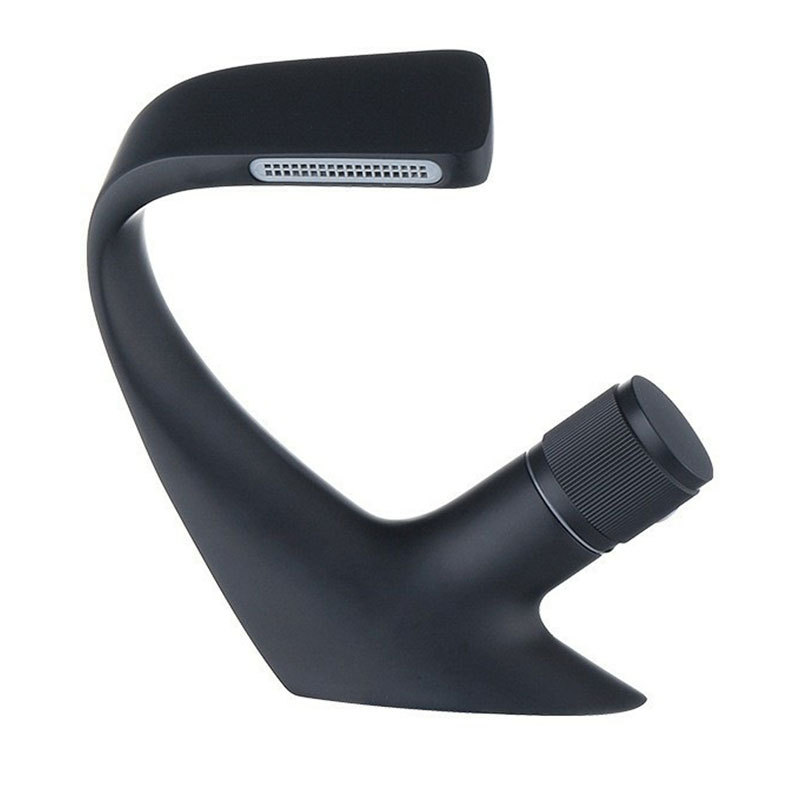




A basin faucet can look right in a product photo and still be the wrong choice for the actual installation.
The basin shape, countertop dimensions, faucet height, spout reach, water outlet position, and available hand space all affect how the faucet works in daily use. Flow rate and water-efficiency requirements come later, but they still need to be verified against the exact product configuration and target market.
For this reason, basin faucet selection is better treated as a combination of basin geometry, water outlet position, user action, flow rate, and market requirements rather than a comparison of faucet appearance alone.
Start With the Basin and Countertop, Not the Faucet Photo
Before comparing basin faucet models, record the basic installation conditions.
The important information includes the basin type, mounting position, countertop thickness, available space around the tap hole, and the approximate position where water should land inside the basin.
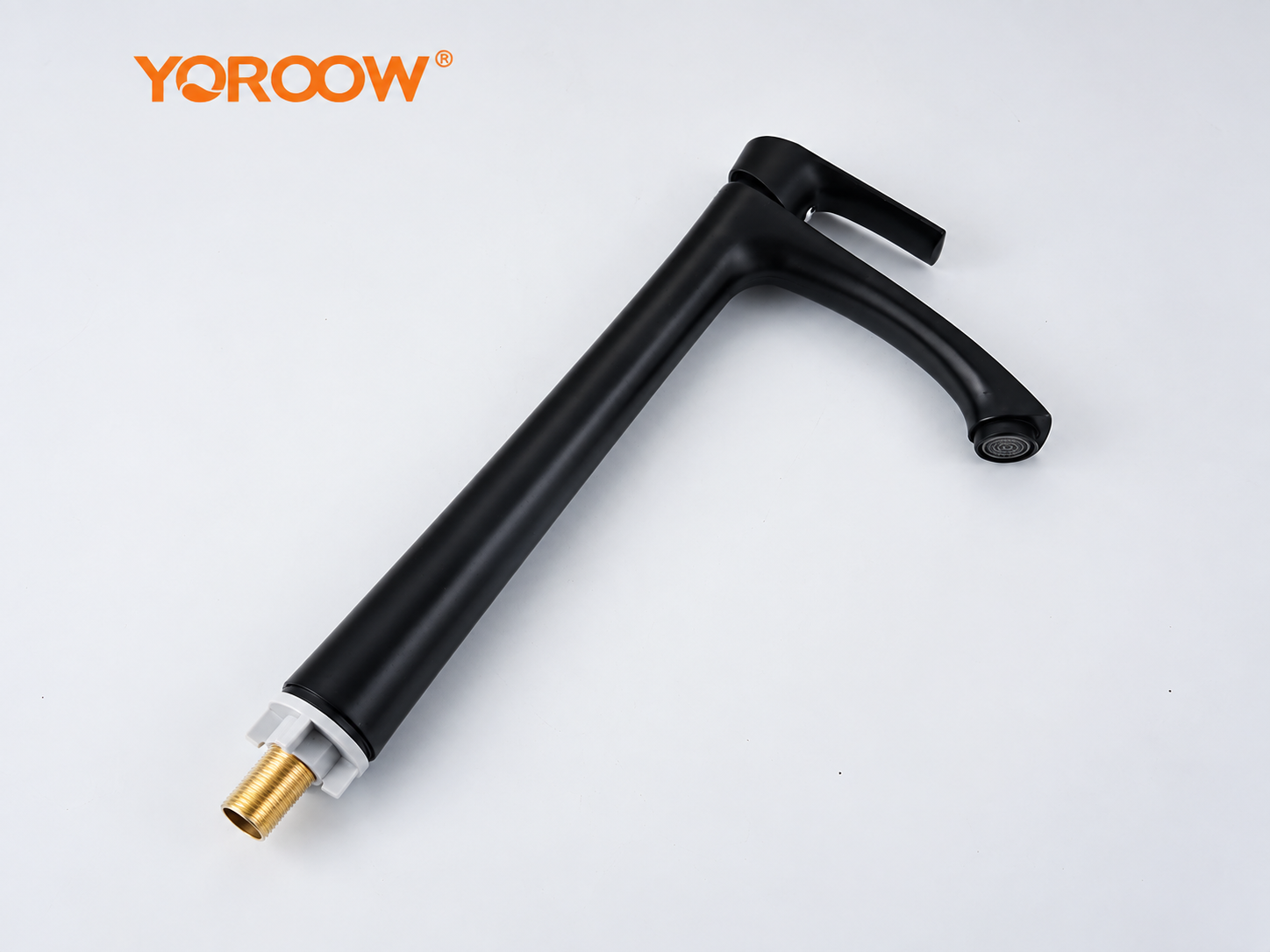
A faucet that fits the mounting hole may still create problems if its spout is too short, too tall, or positioned too far toward the front or back.
The same faucet can also behave differently on different basin designs. A shallow basin, for example, may require more attention to the relationship between spout height and water landing position than a deeper basin.
For a real selection, basin dimensions are therefore more useful than a product photo alone.
Check the Water Outlet Where the User Actually Washes
The end of the spout is where the faucet meets the user’s actual washing action.
The question is not simply whether water comes out. It is where the stream lands, how much space remains for the user’s hands, and whether the water hits the basin in a way that creates unnecessary splashing.
This should be checked with the actual basin whenever possible.
For a new product, the sample evaluation can record:
- Water landing position
- Distance between the outlet and basin surface
- Available hand-washing space
- Splashing under normal use
- Effect of the basin shape on the water stream
These observations give a more useful basis for approval than a statement such as “the faucet looks suitable.”
Separate Residential, Hospitality, and Public Use Conditions
A basin faucet used in a private bathroom does not necessarily face the same requirements as one installed in a hotel, commercial building, or public washroom.
The expected user action, operating frequency, water supply conditions, maintenance arrangements, and efficiency requirements can all differ.
Water-efficiency programs also have their own defined scopes. For example, the U.S. EPA WaterSense program has specifications for private lavatory faucets, with performance requirements tied to defined testing conditions rather than simply a general claim that a faucet is “water saving.”
The practical point for sourcing is simple: define the intended installation and market before using a flow-rate or efficiency requirement to select the faucet.
Trace Flow-Rate Claims to the Exact Product Configuration
Flow rate should be checked after the basin and use conditions are clear, but it should not be treated as an isolated number.
A faucet’s flow performance can be affected by the outlet or aerator configuration, water pressure, and other product conditions. If the outlet component changes after sample approval, the original flow evidence may no longer represent the final configuration.
Market requirements also need to be checked separately.
For example, China’s water-efficiency labeling rules for faucets cover washbasin faucets and other specified faucet categories. The current rule identifies the product model, water-efficiency grade, flow-related indicator, and applicable mandatory standard as part of the label information. The faucet water-efficiency labeling rule took effect on January 1, 2025.
This means a water-efficiency claim should be connected to the specific model, configuration, testing basis, and target market. It should not be treated as a general characteristic of an entire faucet series.
Check What Happens Above and Below the Countertop
The visible part of a basin faucet is only part of the installation.
Before approving a model, check the space underneath the countertop as well. Countertop thickness, fixing access, supply connections, flexible hoses, shutoff valves, and other accessories can affect whether installation and later maintenance are practical.
This becomes more important when the faucet is supplied as part of a wider basin package.
A configuration that works on a sample bench may become difficult to install when the actual countertop, cabinet, basin, and accessories are combined.
The quotation and product specification should therefore make clear what is included in the approved configuration and which accessories are required for installation.
Keep One Record for the Approved Basin-Faucet Combination
Once the basin and faucet have been evaluated together, keep the important information in one product record.
| Selection Dimension | Sample-Stage Record | Batch-Stage Consistency |
|---|---|---|
| Basin & countertop | Model, key dimensions, installation conditions | Approved adaptation range |
| Water outlet & use | Landing point, use observation, supply condition | Approved outlet configuration |
| Flow & requirements | Flow conditions and corresponding documents | Model and document consistency |
| Installation & accessories | Under-counter space, connections, accessories | Packing and instruction version |
| Appearance | Color, finish, matching sample | Approved appearance basis |
The purpose is not to create another complicated approval form. It is to prevent the approved faucet from becoming disconnected from the basin and installation conditions that were used to select it.
This record also becomes useful if the outlet component, finish, accessory package, or other configuration changes later.
Give the Supplier the Minimum Information Needed for a Real Quotation
A basin faucet manufacturer can give a more useful recommendation when the quotation request contains the conditions that actually affect selection.
At minimum, provide:
- Basin type and key dimensions
- Faucet mounting position
- Required spout height and reach, if already defined
- Target water outlet position
- Intended installation environment
- Water supply conditions, when known
- Target market and applicable efficiency requirements
- Required finish and accessories
- Any existing faucet or basin that the new model must replace
This does not mean the buyer needs to define the entire faucet before asking for a quotation. The purpose is to give the supplier enough information to distinguish between a faucet that merely fits the mounting hole and one that fits the complete installation.
A useful basin faucet selection should ultimately answer three questions:
Does the faucet fit the basin and countertop?
Does the water land correctly for the intended use?
Can the required flow and efficiency claims be traced to the exact configuration and market?
When those three questions are answered together, the product selection becomes much more than choosing a faucet from a catalog.