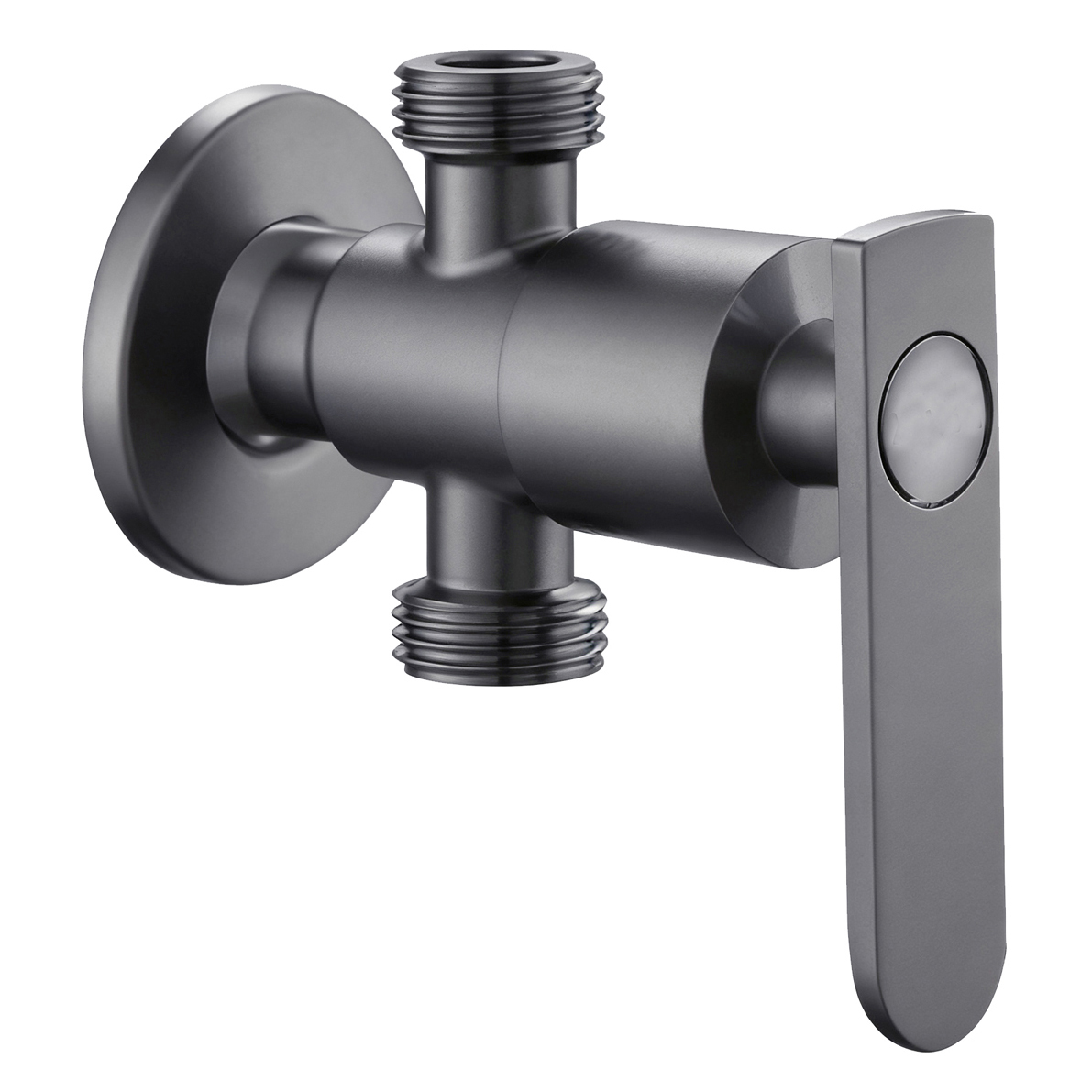




A common problem occurs in Replacement projects.
The old product measures close to 6 inches, and the new product specification also says 6 inches. However, the connection points do not line up during installation.
The problem does not always come from an incorrect dimension.
More often, the old and new products use different measurement references.
For a 6 Inch Shower Faucet, the first step is to confirm exactly where the 6-inch measurement starts and ends.
If it refers to the distance between two wall connections, the measurement should normally use the centers of the connections as reference points.
It should not use the outer edges of the connections, the edges of the escutcheons, or the overall width of the faucet body.
A difference of several millimeters or more may not look significant on a specification sheet. With fixed pipework, however, that difference can directly affect installation.
For Replacement, Measure the Pipe Connections Rather Than the Old Faucet Shape
A 6 Inch Shower Faucet is not automatically a smaller version of an 8 Inch model.
The controls, installation centers, and connection positions may not follow the same proportions. If they differ, each model should have its own installation information instead of sharing the same drawing.
When building-material stores display different sizes on the same shelf, the labels should clearly explain what the stated dimension refers to and where the measurement starts.
A simple diagram can also show consumers when two sizes are not interchangeable.
For project supply, different floors may contain concealed connections installed during different construction periods.
In this case, the project team should group the installation conditions by room type. Whether one adjustable fitting can solve all these differences requires an on-site check. The product name alone cannot confirm compatibility.
After an old Shower Faucet has been installed for many years, escutcheons, the faucet body, and connectors may hide part of the pipework.
If someone measures only the outside width of the old product, it is easy to confuse the faucet’s visible width with the distance between the wall connections.
A more reliable check should focus on the actual connection points.
When removal is possible, installers can confirm the Center Distance, Thread Specification, and connection direction of the hot and cold water outlets.
If the old faucet cannot be removed in advance, the original product information or visible structure can help with the assessment. However, the measurement still requires care.
This is also what makes a 6-inch shower faucet different from a product where the stated size only describes its overall dimensions.
If a retail store sells both 6-inch and 8-inch models, a printable measurement diagram can help customers more than adding terms such as “Universal” or “Replacement” to the product name.
The key dimension may not simply describe the size of the product. It may directly determine whether the faucet matches the existing installation.
If a project includes many similar installation points, everyone should also use the same measurement reference.
Otherwise, different people may produce different results for the same “6 Inch” specification.
For Replacement Selection, the most important step is not finding a new product with the same number.
The real question is: Do the old and new products measure the same two points when they both say 6 Inch?