



A faucet factory may have a large showroom, multiple product series, and rows of production equipment. Yet after a factory visit, a buyer may still have important questions.
Who purchases the cartridges for an order? Who manages surface finishing? Who has the authority to approve rework? If a quality problem occurs, how far can the factory trace it through its records?
A factory tour shows what is on site. A factory audit needs to answer a different question: how do these resources work together to complete an actual order?
A useful faucet factory audit checklist should therefore follow verifiable order evidence.
In manufacturing clusters such as Nan’an, suppliers may work with specialized external partners. This does not mean every factory must perform every process in-house. At the same time, being located in a major manufacturing cluster does not by itself prove delivery capability.
The buyer needs to verify the actual manufacturing scope, quality controls, and final responsibility for the order.
Start With One Traceable Order Before the Visit
Ask the supplier to prepare one completed order that can be reviewed with confidential information removed. The records should cover the process from requirement confirmation to final packing.
Within reasonable limits, the buyer should be able to select the order for review. The audit should not rely only on a standard set of documents that is always prepared for visitors.
Confidential customer information can be removed. However, enough information should remain to connect the product model, version, dates, and batches.
The purpose of the audit should also be clear before the visit.
Is this an initial supplier audit? Are you verifying capability for a particular faucet category? Or are you investigating a previous quality issue?
Each purpose requires different evidence and a different amount of time on site. A single visit should not be treated as proof of every product capability or long-term production capacity.
Before arriving, ask the supplier to identify its in-house processes, outsourced processes, key purchased components, and inspection locations. This allows the factory visit to focus on evidence rather than spending the day discussing where each process takes place.
Step 1: Trace Customer Requirements to the Current Production Version
Start by asking how customer requirements enter the supplier’s internal system or controlled documents.
Do the quotation, drawings, BOM, approved sample, and packaging files use the same product identity? Who approves technical changes? Who informs purchasing and production? How are obsolete versions removed from use?
A factory does not necessarily need a complex software system. It does need a working method for controlling information.
Choose one specific product feature and trace it through the order.
For example, select the hose length or finish of one faucet. Find the requirement in the customer-approved document. Then trace the same version into purchasing or production records. Finally, compare it with the finished product or retained sample.
This simple exercise can reveal information gaps more effectively than reviewing many unrelated forms.
If the supplier says, “Sales tells the workshop,” ask how that instruction is recorded. How does the production manager confirm it? How would another employee know the requirement if the usual person were absent?
For buyers asking how to verify a faucet supplier, the key is to check whether the supplier’s explanation is supported by actual records.
Step 2: Trace the Finished Faucet Back to Key Materials
Using the same order, select several important components and trace them backward.
These may include the cartridge, water-contact materials, aerator, hoses, or other key parts.
Can purchase orders, receiving records, incoming inspection results, and production issue records be reasonably connected?
If a problem is found, can the factory identify which orders may be affected? Or can it only say that the component was probably used “around that period”?
Material documentation should also correspond to the actual material used. Having a certificate somewhere in a file is not enough.
The relationship between the certificate, supplier, component model, and batch should be explainable. If a material or component is related to market access or product certification, the factory should also determine whether a substitution requires additional review.
A long-term relationship with a component supplier does not mean every substitution is automatically approved.
The warehouse provides another useful audit point.
Observe how accepted, pending-inspection, rejected, and hold materials are identified. Check whether returned components could accidentally re-enter normal assembly. Also look at how old and new versions are separated.
These observations help determine whether the records reflect everyday factory practice.
Step 3: Follow the Order Across In-House and Outsourced Processes
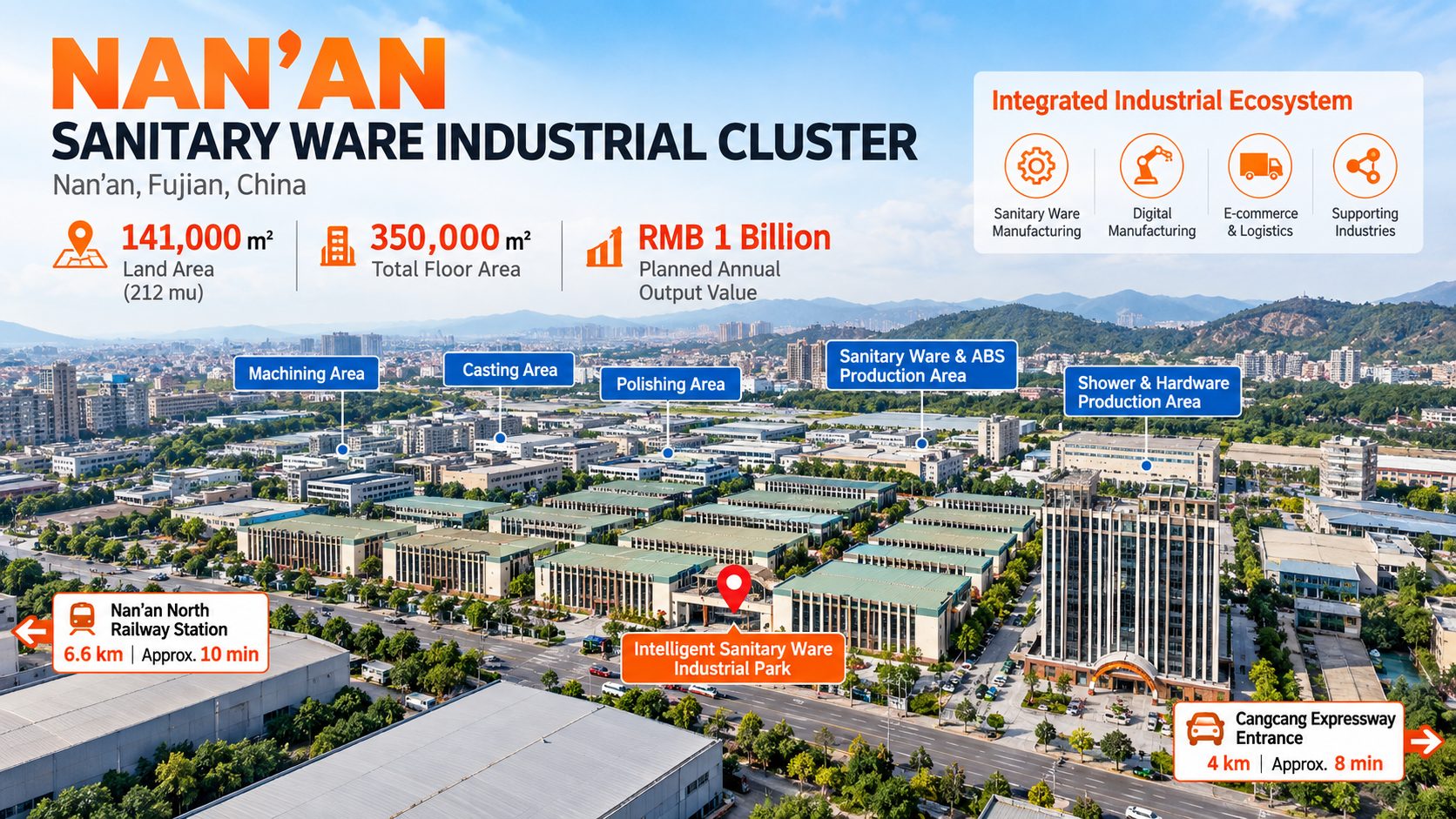
Nan’an has a highly concentrated plumbing and sanitary ware supply chain. In June 2025, the Quanzhou Municipal Government reported the launch of an international plumbing and sanitary ware supply chain distribution center in Nan’an. The report also described further coordination across raw materials, production, sales, and services. [1]
This regional supply network creates opportunities for specialized cooperation. However, buyers still need to verify how an individual supplier manages its external partners.
When discussing faucet factory vs trading company, the company label alone should not determine the audit conclusion.
A manufacturer may outsource surface finishing. A trading company may coordinate several manufacturing partners. What matters is whether contractual responsibility, technical requirements, supplier selection, quality verification, and problem handling are clearly managed.
For an outsourced process, ask four questions:
- What product version and quantity were sent out?
- What processing requirements were given to the external supplier?
- What was checked when the products returned?
- Who is responsible when the result does not meet requirements?
Outsourcing records, transfer documents, and incoming verification records should be traceable to the order being reviewed.
YOROOW’s internal faucet production documentation separates mold preparation, machining, polishing, surface finishing, assembly, and inspection into different stages. These stages can help identify where quality information needs to pass from one process to another during an audit.
However, not every material or product follows exactly the same production route. Seeing a particular machine in the workshop also does not prove that every process for the audited order was completed in-house.
Step 4: Review How One Real Quality Issue Was Closed
Ask the supplier to show one actual quality issue with confidential customer information removed.
Follow the record from discovery and segregation through root-cause analysis, disposition, reinspection, and final release.
The buyer does not need to know the customer’s identity. The purpose is to understand whether the corrective action was connected to the problem.
If every record only says “normal” or “passed,” ask how routine production problems are normally documented.
Rework alone does not mean that a problem has been closed.
Check whether the reworked products were reinspected for the affected characteristics. Were they identified correctly? Were quantities reconciled? Was any action taken to reduce the chance of the same issue occurring again?
It is also useful to understand the authority of the quality team.
If the production schedule conflicts with an inspection result, who can stop or delay release? The buyer should verify how this works in practice rather than relying only on an organizational chart that shows a QC department.
Step 5: Finish the Trace at Packing and Shipment
The final step is to connect the finished product, batch, packaging, carton number, and packing list back to the original order.
For mixed orders, ask what happens when one model is completed earlier or when the quantity is short. Can a substitute product enter the shipment without customer approval? If an order is shipped in several lots, do the records clearly show what remains open?
This section is not about evaluating every detail of packaging design. The purpose is to check whether order traceability continues through the final shipment.
After-sales information is also worth reviewing.
If a customer reports a missing accessory or an installation problem, what information does the supplier use to identify the product? How is the correct spare-part version confirmed? Can repeated feedback be passed back to engineering or quality teams?
Delivery capability includes managing information about products that have already left the factory.
The following table can be used as an on-site audit record. Each conclusion should be linked to identifiable evidence. If something cannot be verified, record it as unverified instead of forcing a pass result.
| Order Stage | What to Check | Useful Evidence |
|---|---|---|
| Requirement confirmation | Whether the model, drawing, BOM, and approved sample match | Current version and approval records |
| Material purchasing | Whether source, batch, inspection, and issue records are connected | Purchasing, receiving, and batch records |
| Outsourced processing | Whether requirements are transferred and returned work is verified | Transfer, processing, and acceptance records |
| Nonconformity handling | Whether segregation, rework, reinspection, and authority are clear | Disposition records, reinspection results, and approver |
| Packing and release | Whether product, accessories, carton numbers, and documents match | Packing list, carton identification, and release records |
Machine Count Does Not Equal Available Capacity
Seeing production equipment does not tell a buyer how much capacity is actually available.
Is the equipment used for the product you plan to purchase? What is its current workload? Are important proce