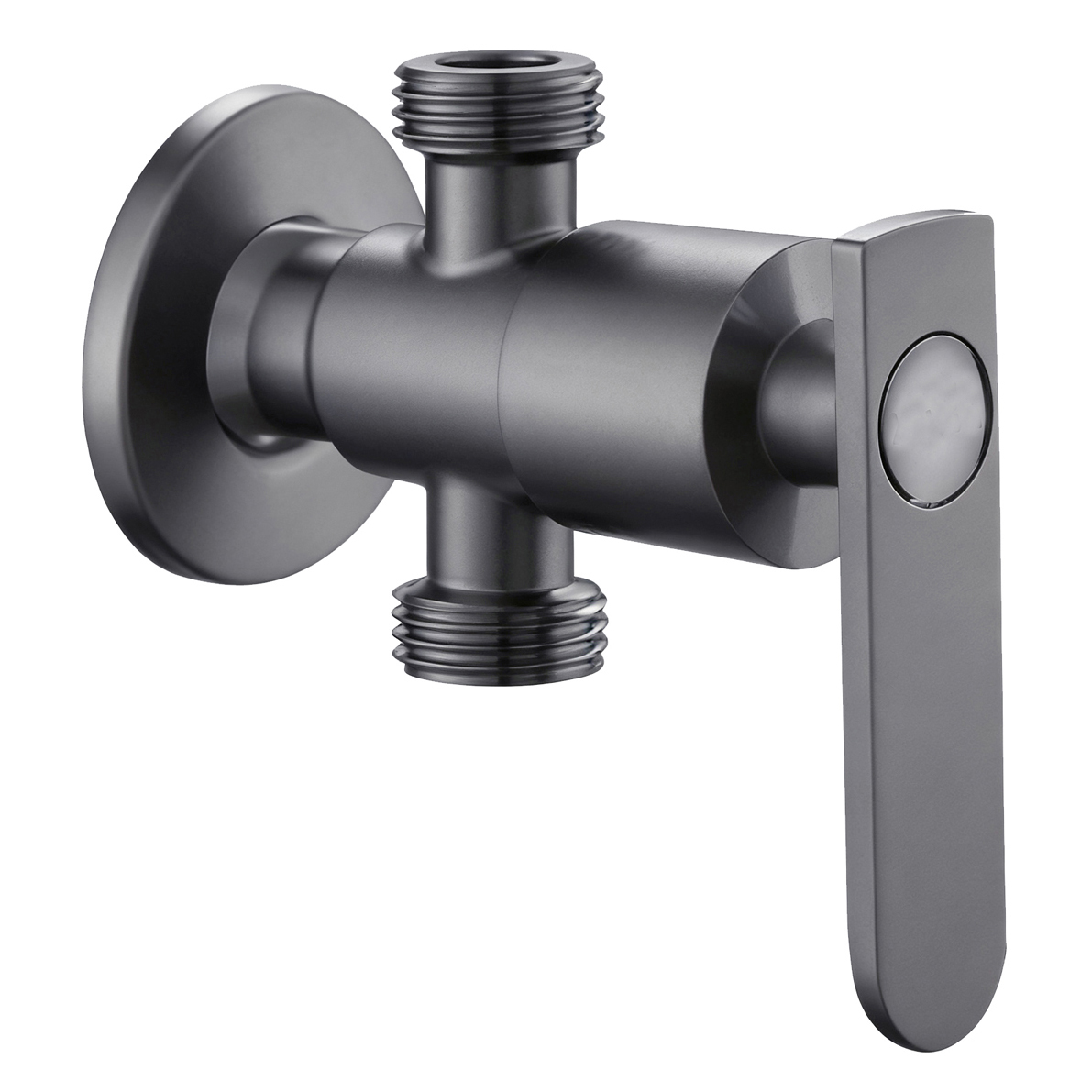




“Pull-out” is a function that shoppers can understand easily.
When they see the spray head of a Kitchen Mix Tap pull away from the spout, they can quickly understand the basic benefit.
It extends the usable rinsing range.
However, important information still sits between the retail package and the final installation.
Much of it is hidden below the sink.
Product images rarely show this area, but it can directly affect whether the pull-out function works properly.
Pull-Out Movement Needs Space Below the Counter Too
When users pull out the spray head of a swivel single handle pull out kitchen mixer tap, the hose needs to move below the faucet and sink.
This means shoppers need to check more than the faucet dimensions above the countertop.
The space below the sink matters too.
Storage items, pipes, bins, or other obstacles may block the hose path.
Products that use a counterweight also need enough vertical space for the weight to move freely.
A Kitchen Mix Tap with both swivel and pull-out functions can have two separate movement ranges.
The complete spout may rotate around the faucet base.
The spray head uses the hose to move away from its fixed position.
Shoppers who see “swivel” on a product page may not always understand the difference between these two movements.
A top-view diagram can show the spout rotation area.
A section drawing can show the hose travel, return mechanism, and the area below the sink that should remain clear.
These diagrams often provide more useful information than adding more function icons.
Retail trial data can also reveal common installation problems.
For example, a waste bin inside the cabinet may block the counterweight.
The spray head may then fail to return smoothly.
Recording this type of problem helps retailers improve the installation instructions.
It is more useful than leaving sales or after-sales staff to explain the issue later.
A simple “Pull-out Function” label cannot communicate these installation conditions.
Pull-Out Length and Return Mechanism Are Different Pieces of Information
A packaging image can show the spray head in an extended position.
That proves the spray head can move.
It does not tell the shopper how far it can reach.
The term “Pull-out” also does not explain how the hose returns.
It does not show whether the product uses a counterweight or another return method.
Nor does it explain what needs to happen after the user releases the spray head.
Retail information can connect the visible function with the mechanism that supports it below the sink.
During sample evaluation, installers can also test the faucet under more realistic conditions.
They can place a common storage bin inside the cabinet and repeatedly pull out and return the spray head.
If the bin blocks the counterweight, the team should first review the installation guidance or product selection.
It should not automatically classify the problem as poor pull-out faucet quality.
A simple structural diagram may provide enough information.
It can show the spray head, hose, countertop, sink, and counterweight.
It can also mark the space the hose needs for normal movement.
This helps shoppers understand more than the “Pull-out” function shown on the front of the package.
They can also see which installation conditions allow that function to work correctly.
For a pull-out Kitchen Mix Tap, some of the most important product information is often found exactly where the packaging photo does not show it:
below the sink.