



Keywords: China faucet factory, OEM/ODM kitchen faucet manufacturer, Pull-Out Kitchen Faucet
With its flexible water control, wider cleaning coverage, and convenient user experience, the Pull-Out Kitchen Faucet has become an increasingly popular choice for modern kitchens.
However, proper installation is essential to ensure stable water flow, smooth hose movement, and long-term reliable performance. Whether replacing an old kitchen faucet or installing a new one, understanding the correct installation process can help reduce common issues such as water leakage, poor hose retraction, and unstable installation.
This guide explains the preparation steps, installation process, and common troubleshooting methods for a Pull-Out Kitchen Faucet.
1. What Should You Prepare Before Installing a Pull-Out Kitchen Faucet?
Proper preparation before installation can improve efficiency and help prevent future problems.
1. Prepare Installation Tools
Common installation tools include:
● Adjustable wrench
● Screwdriver
● PTFE sealing tape
● Bucket or towel (for remaining water)
Many modern Pull-Out Kitchen Faucet models feature simplified connection structures, making installation relatively easy. However, preparing basic tools in advance can make the process smoother.
2. Check the Installation Hole Size
Before installation, confirm that the sink or countertop mounting hole matches the kitchen faucet requirements.
Important points to check:
● Whether the mounting hole size meets the product requirements;
● Whether single-hole or multi-hole installation is suitable;
● Whether the faucet base can fully cover the installation area.
When replacing an old faucet, make sure the existing mounting hole is compatible with the new Pull-Out Kitchen Faucet.
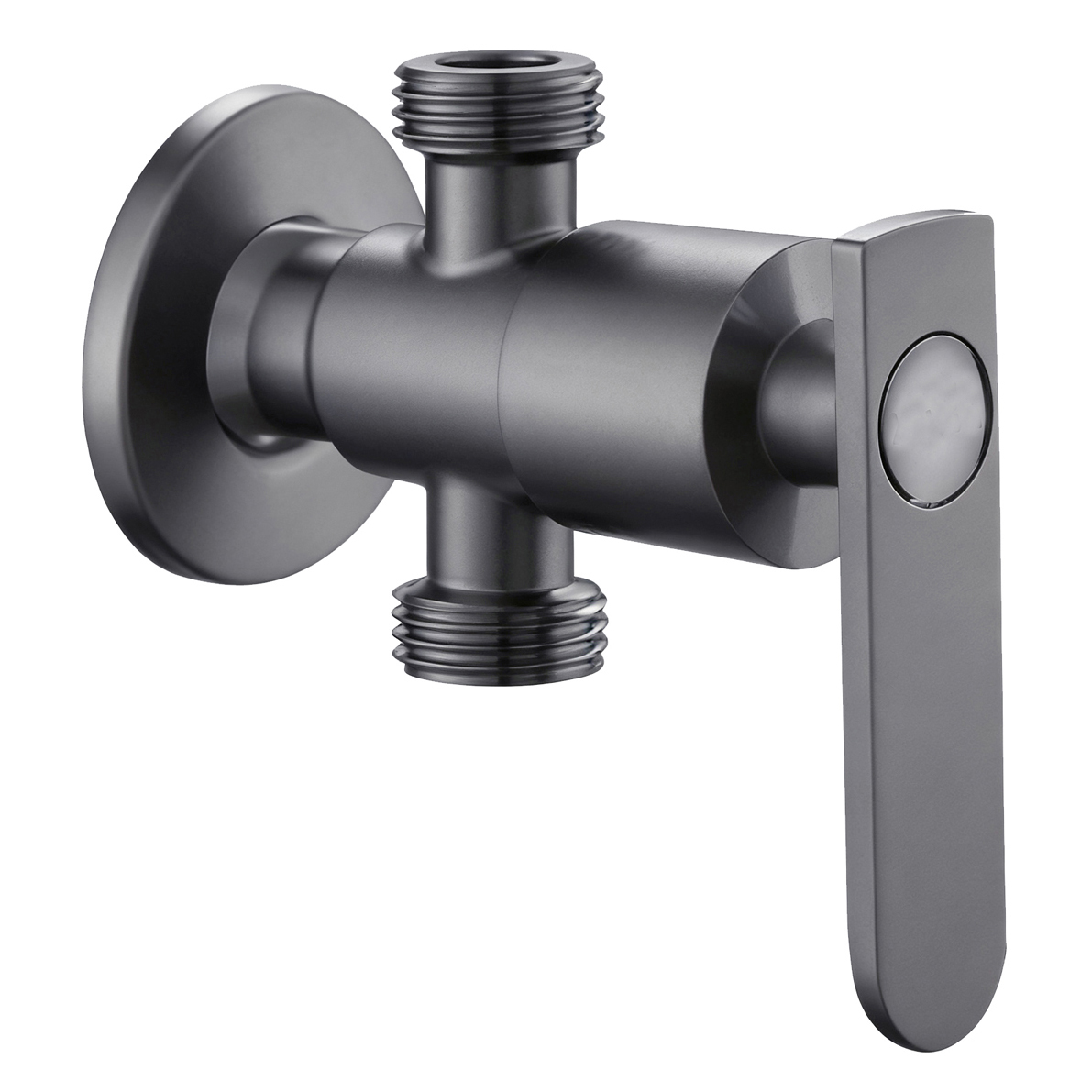
3. Check Hot and Cold Water Connections
Before installation, shut off the hot and cold water supply valves and confirm:
● Whether the water pipe connections are in good condition;
● Whether the inlet hoses are long enough;
● Whether the connection specifications match.
Incorrect connections or poor sealing may result in reversed hot/cold water direction or leakage problems.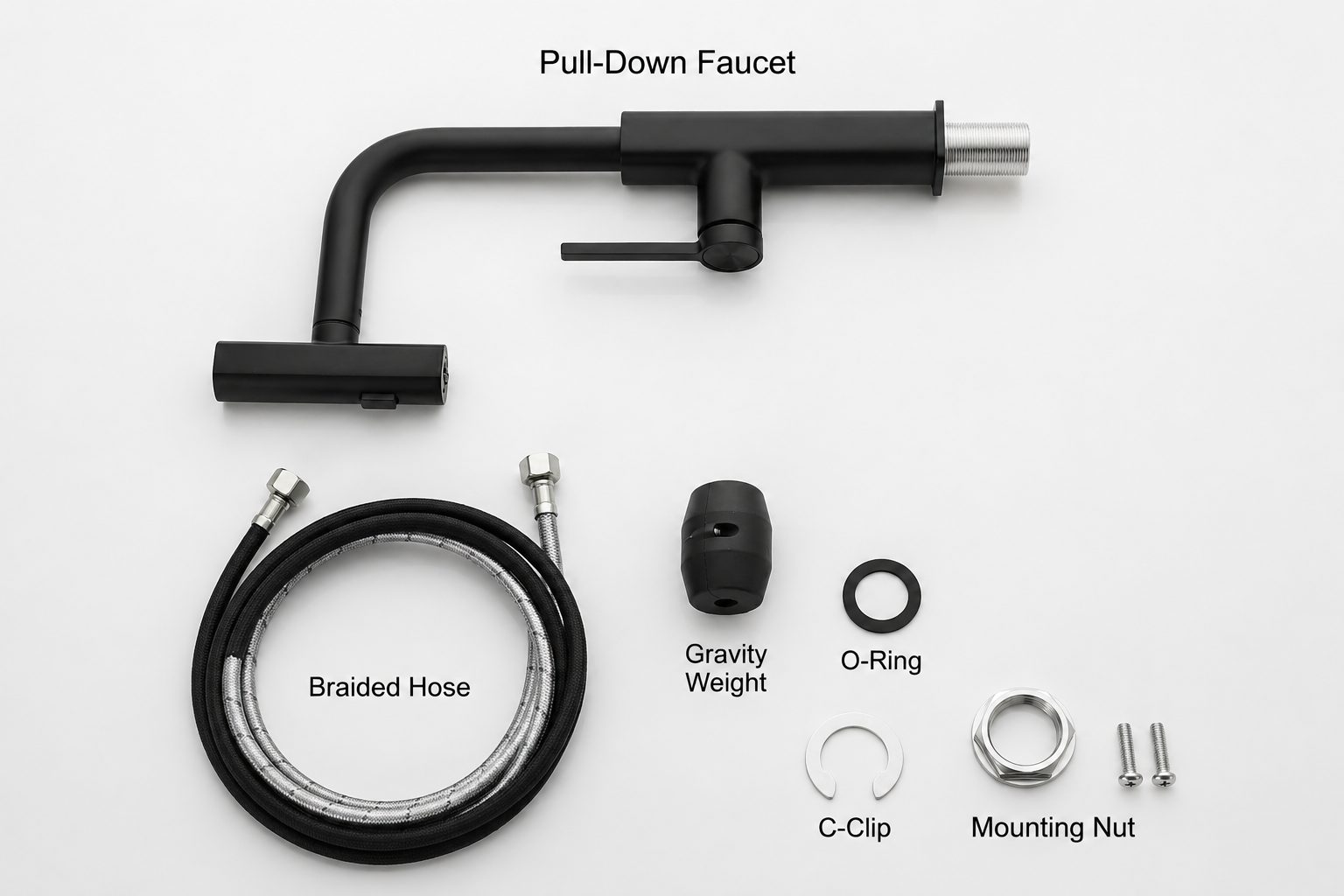
4. Confirm Space Under the Sink
A Pull-Out Kitchen Faucet includes a pull-out hose and counterweight system, so sufficient space under the sink is necessary.
Before installation, check:
● Whether the hose movement path is clear;
● Whether there are obstacles inside the cabinet;
● Whether the counterweight can move freely.
Adequate installation space helps ensure smooth pull-out operation and long-term reliability.
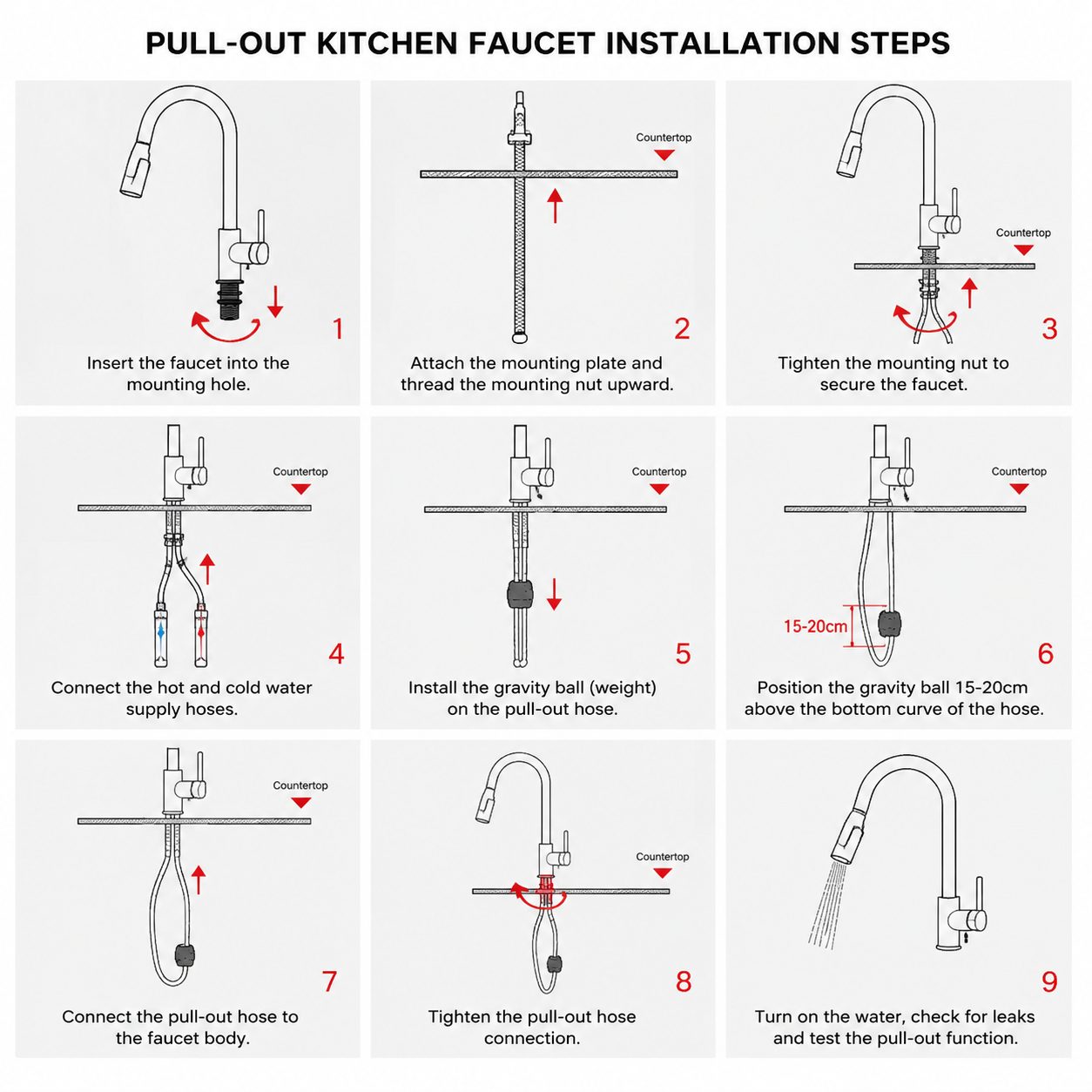
2. Installation Steps for a Pull-Out Kitchen Faucet
1. Fix the Faucet Body
First, install the faucet body into the mounting hole of the sink.
Installation steps:
- Place the sealing gasket correctly at the bottom of the faucet;
- Install the fixing components from underneath the sink;
- Adjust the faucet direction;
- Tighten the mounting nut.
Note:
The faucet should be securely fixed, but avoid excessive tightening, which may damage the mounting area or affect future adjustment.
2. Connect the Hot and Cold Water Supply Lines
Connect the hot and cold water hoses to the corresponding angle valves.
During installation, pay attention to:
● Connect the cold water hose to the cold water supply;
● Connect the hot water hose to the hot water supply;
● Ensure all connections are secure;
● Check that sealing rings are correctly installed.
After connection, gently check whether the fittings are loose.
3. Install the Pull-Out Hose
The pull-out hose is one of the most frequently used components of a kitchen faucet.
Proper pull-out faucet hose installation requires attention to:
● Ensure the hose is firmly connected to the faucet body;
● Avoid twisting or excessive bending;
● Keep the hose movement path smooth and natural.
Incorrect hose installation may cause:
● Difficult pull-out operation;
● Spray head failing to return properly;
● Long-term hose wear.
4. Install the Counterweight
The counterweight helps the pull-out spray head return automatically after use.
During installation:
● Follow the product instructions to determine the correct position;
● Ensure the counterweight can move freely;
● Prevent collision with water pipes or cabinet structures.
An incorrect counterweight position may affect the spray head retraction performance.
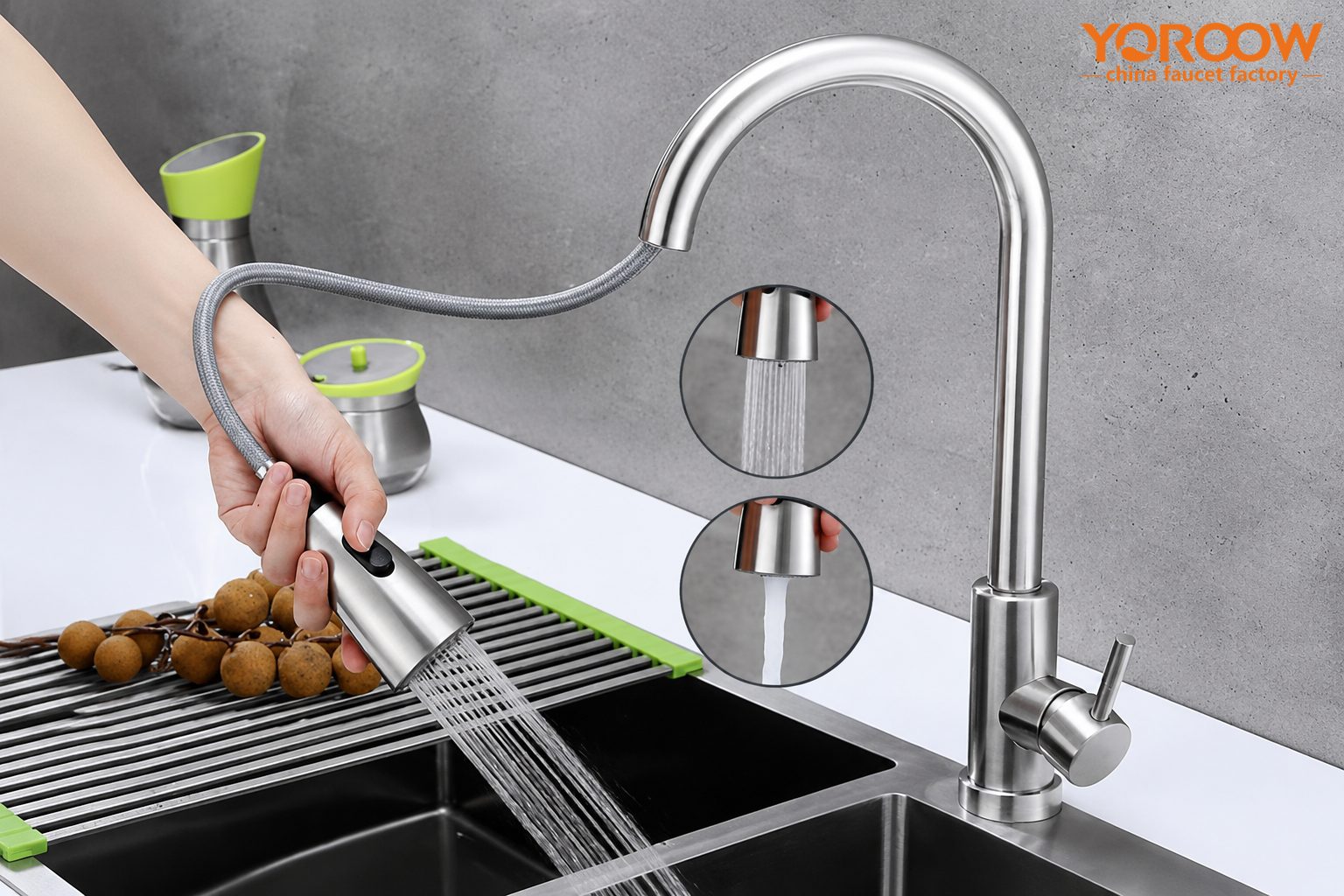
5. Test the Pull-Out Retracting Function
After installation, test the pull-out operation carefully.
Check:
● Whether the spray head can be pulled out smoothly;
● Whether the hose moves naturally;
● Whether the spray head automatically returns after release.
If the hose does not retract properly, check:
● Whether the hose is blocked;
● Whether the hose is bent or twisted;
● Whether the counterweight is installed in the correct position.
6. Perform a Water Flow Test
After completing the installation, open the hot and cold water supply valves for testing.
Check the following:
● Whether water flows normally;
● Whether there are any leaks at connection points;
● Whether the pull-out function works correctly;
● Whether the spray modes switch smoothly.
It is recommended to run water for several minutes to ensure the installation is stable.
3. Common Pull-Out Kitchen Faucet Installation Problems and Solutions
During installation, common issues may include:
| Common Problem | Possible Cause | Solution |
|---|---|---|
| Hose does not retract automatically | Incorrect counterweight position or blocked hose movement | Adjust the counterweight position and clear the hose path |
| Reduced water flow | Bent hose or clogged aerator | Check the hose condition and clean the aerator |
| Connection leakage | Poor sealing or loose fittings | Check sealing components and tighten connections |
| Faucet body moves or shakes | Loose mounting components | Re-adjust and tighten the installation position |
Understanding these pull-out faucet installation problems can help installers and buyers reduce future maintenance costs.
4. How to Ensure Long-Term Performance of a Pull-Out Kitchen Faucet?
Correct installation is important, but product structure and manufacturing quality also directly affect long-term performance.
1. High-Quality Internal Components
A high-quality ceramic cartridge ensures smooth operation and helps reduce leakage risks during long-term use.
2. Durable Pull-Out Hose Design
The pull-out hose needs to withstand frequent stretching and movement during daily use.
A reliable hose should provide:
● Good flexibility;
● Strong wear resistance;
● Stable performance after repeated use.
3. Stable Surface Finishing Technology
Surface finishes such as Chrome and PVD coating can improve:
● Wear resistance;
● Corrosion resistance;
● Color stability.
These technologies help maintain the faucet’s appearance and performance over long-term use.
Conclusion
Proper installation is a key factor in ensuring the performance and service life of a Pull-Out Kitchen Faucet.
By confirming installation conditions in advance, following correct connection procedures, and completing thorough testing after installation, users can effectively reduce problems such as leakage, poor hose retraction, and unstable installation.
For overseas brands, distributors, and engineering project buyers, choosing a kitchen faucet supplier is not only about product appearance and price. Installation convenience, structural reliability, and manufacturing capability are equally important factors.
As a professional China faucet factory and OEM/ODM kitchen faucet manufacturer, YOROOW continuously improves product design, manufacturing quality, and customization services to provide reliable Pull-Out Kitchen Faucet solutions for global customers.
Through stable production capability and professional OEM/ODM support, YOROOW helps partners reduce installation challenges, improve product competitiveness, and build long-term market advantages.