


However, when two water lines need to share the same supply point, a different connection arrangement may be required. A dual outlet angle valve provides two outlet connections within one valve body.
The difference is not simply the number of outlets. Valve design, water flow control, connection sizes, and installation conditions can all affect which type is suitable.
So, what are the practical differences between single outlet and dual outlet angle valves, and when is a dual outlet design necessary?
1. How Do Dual Outlet and Single Outlet Angle Valves Differ in Structure?
A standard single outlet angle valve typically has one inlet and one outlet, allowing it to connect a single water supply line to a fixture or appliance.
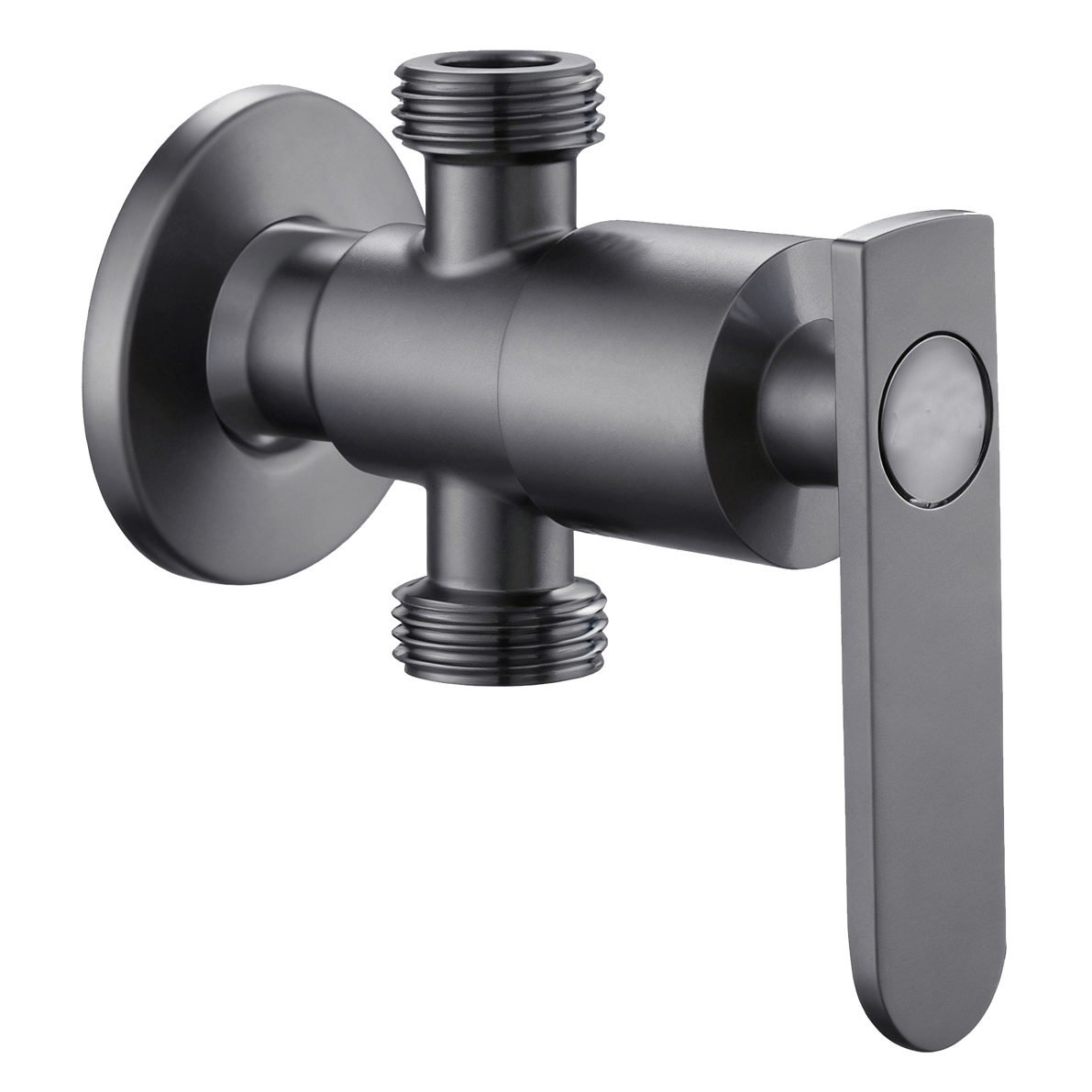
A dual outlet angle valve provides two outlet connections from one inlet, allowing two water lines to connect to the same valve body.
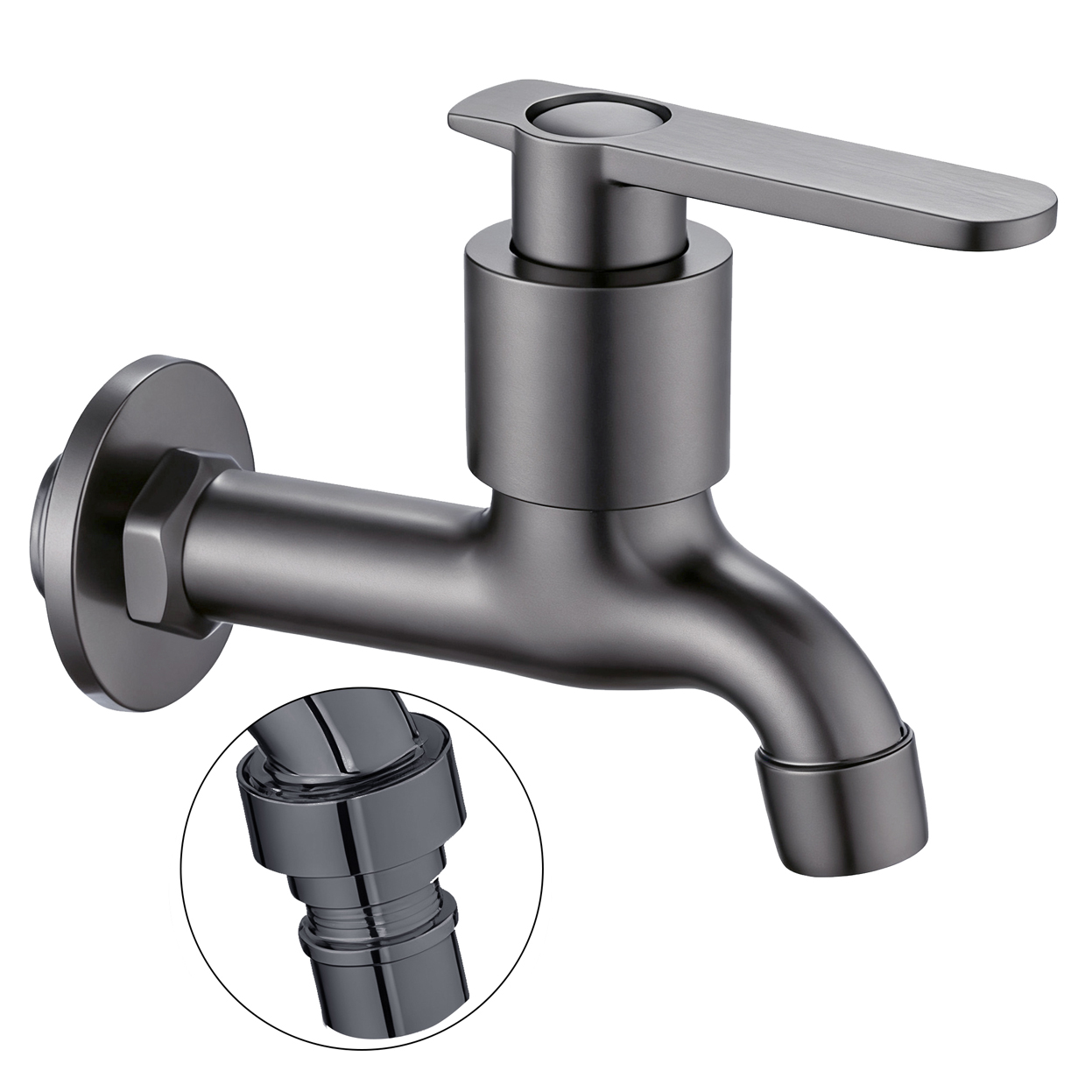
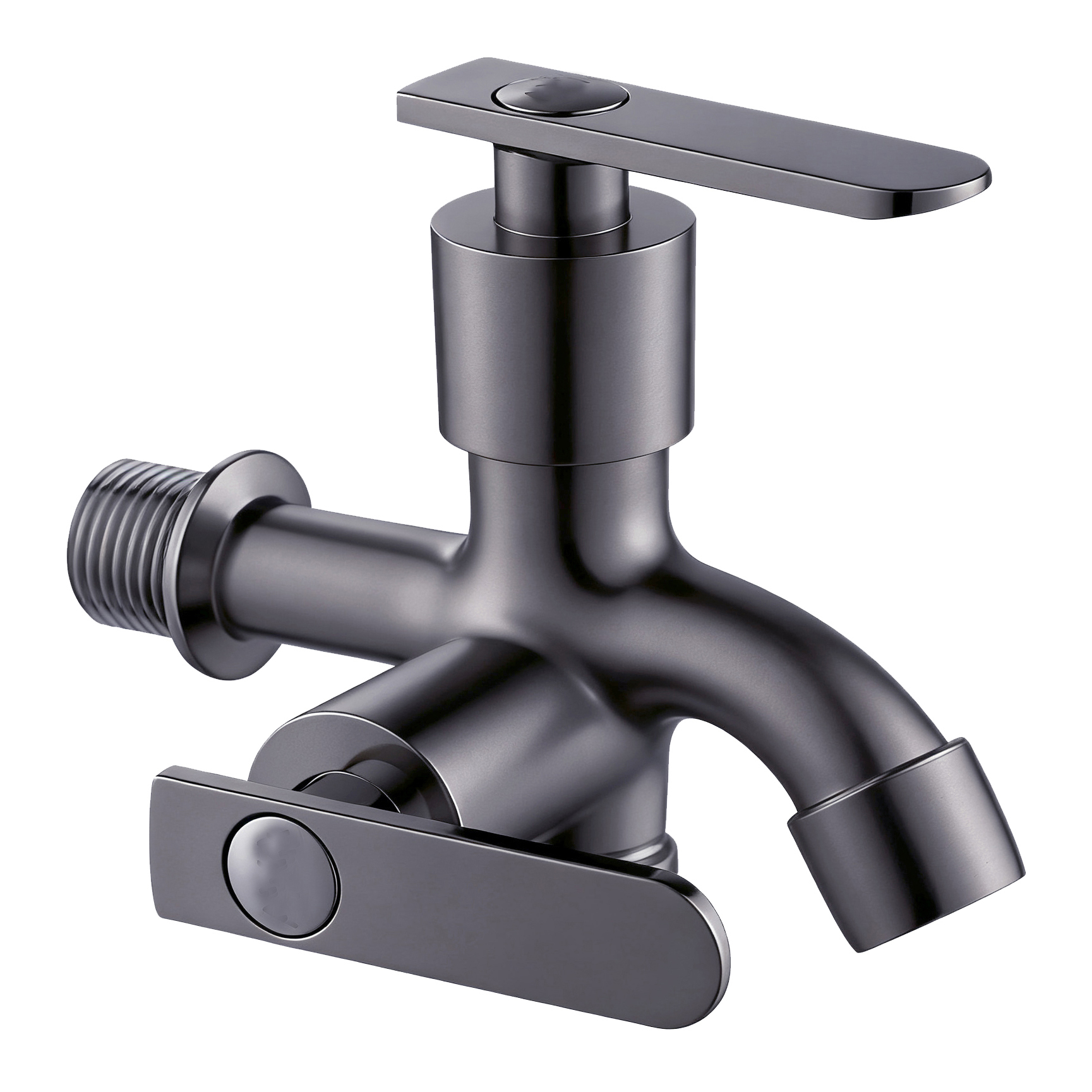
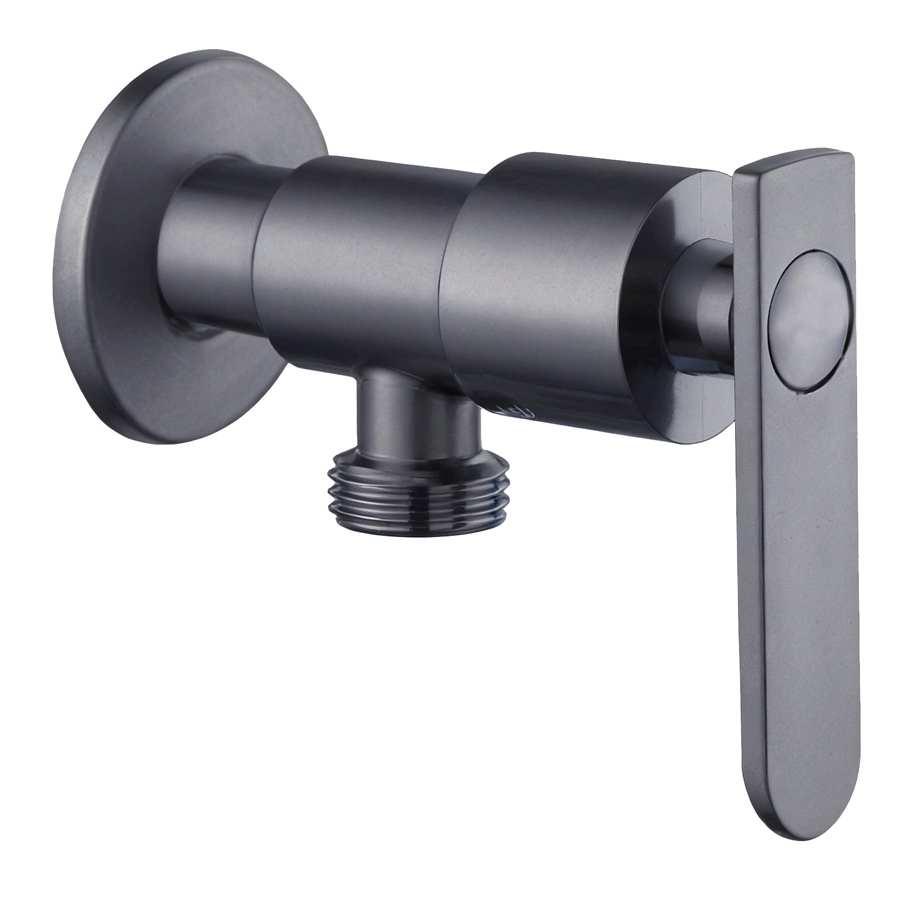
Two 304 stainless steel angle valves from YOROOW illustrate these structural differences.
Il YOROOW single outlet angle valve features a threaded connection at the bottom, another on the side, and a control knob at the top.
Il YOROOW dual outlet angle valve has a T-shaped body with a bottom threaded connection, two external threaded connections on opposite sides, and a top control knob.
Their main structural differences are summarized below.
| Caratteristica | Single Outlet Angle Valve | Dual Outlet Angle Valve |
|---|---|---|
| Inlet connections | 1 | 1 |
| Outlet connections | 1 | 2 |
| Valve body design | Bottom and side connections | T-shaped, multiple connections |
| Top control knob | 1 | 1 |
| Water lines connected | 1 | 2 |
| Installation considerations | Space and direction for one connecting hose | Space and direction for two connecting hoses |
The main advantage of a dual outlet valve is that it provides two outlet connections within a single valve body.
However, the number of outlets and the internal water control mechanism are separate considerations. The external design alone does not reveal exactly how the water flows through the valve.
2. How Do Their Water Control Functions Differ?
A single outlet angle valve typically uses one knob to open or close the water supply to one line.
Dual outlet valves have two outlet connections, but their internal water control arrangements may vary. It is important to distinguish between having two connections and being able to control them independently.
Two Outlets Do Not Always Mean Independent Control
Some dual outlet valves use a shared control mechanism, while others are designed to control the two outlets independently.
This difference matters during everyday use and maintenance.
If the outlets can be shut off independently, one appliance can potentially be disconnected or serviced while the other continues receiving water.
With a shared shut-off mechanism, closing the valve may interrupt the water supply to both lines.
Another important question is whether both outlets can supply water simultaneously. This also depends on the valve’s internal waterway design and should not be assumed from the presence of two outlets.
Why Does the Internal Control Design Matter?
The YOROOW dual outlet valve shown in the product images has one control knob at the top and two side connections.
Its external structure confirms the connection layout, but the images alone cannot establish whether both outlets operate simultaneously, whether they can be shut off separately, or how different knob positions affect water flow.
Before selecting a valve, it is therefore important to confirm three points:
-
Can both outlets supply water at the same time?
-
Can each outlet be shut off independently?
-
How does the control knob operate the internal waterways?
A dual outlet design provides additional connection points, but independent water control is a separate function that must be verified.
3. What Connection Sizes and Installation Conditions Should Be Considered?
Although a dual outlet angle valve provides two connections, its suitability also depends on thread specifications, available installation space, and water supply conditions.
Connection Sizes and Thread Types
Water supply pipes and appliance hoses may use different connection sizes and thread standards.
YOROOW Valvola ad angolo category includes:
-
Valvola ad angolo da 9/16
-
Valvola ad angolo da 3/8
-
Valvola ad angolo da 3/4
-
Valvola angolare a doppia uscita
These categories reflect different connection sizes and valve designs. However, the listed sizes should not be treated as the specifications of every dual outlet valve.
For a dual outlet model, the inlet and both outlets should be checked individually for connection size and thread type.
For example, a basin faucet supply hose and a washing machine inlet hose may require different fittings. Even when a valve provides two outlets, both connections must match the intended hoses or suitable compatible fittings.
Thread size alone is not always sufficient. Different thread standards, such as BSP and NPT, are not necessarily interchangeable.
The correct valve must therefore match the actual connection requirements, rather than simply having the required number of outlets.
Installation Space
A single outlet angle valve generally requires clearance for one outlet connection and its hose.
A dual outlet valve requires space for two connections, which may extend in different directions.
The YOROOW T-shaped dual outlet valve has threaded connections on both sides. During installation, there must be sufficient clearance for both hoses to connect without interference from nearby pipes, cabinet panels, or other fittings.
This can be particularly important inside a compact bathroom vanity cabinet.
The control knob also needs enough clearance for convenient operation.
As a result, installation compatibility depends not only on connection sizes but also on the valve body layout and available space.
Water Supply Requirements
Two outlets do not mean twice the water supply capacity.
When two water lines share one supply point, the available flow still depends on upstream pipe capacity, water pressure, internal valve passages, and the requirements of the connected fixtures or appliances.
If both appliances are expected to operate simultaneously, the existing supply conditions must be considered.
The valve’s rated working pressure and other product specifications should also be checked. The number of outlets alone cannot determine its water delivery performance.
4. When Should You Choose a Dual Outlet Valve Instead of a Single Outlet Valve?
Neither type is universally better. The appropriate choice depends on how many water lines need to be connected and whether separate control is required.
When One Supply Point Serves One Water Line
A toilet inlet hose or a single basin faucet supply hose typically requires one connection to the water supply.
In this situation, a standard single outlet angle valve is usually sufficient.
If there is no second water line to connect, adding another outlet provides little practical benefit.
When One Supply Point Needs Two Connections
Consider a situation where one cold-water supply point needs to connect both a basin faucet’s cold-water inlet and a washing machine.
A dual outlet valve may provide a suitable connection arrangement, provided that the thread specifications, water supply conditions, and installation space are compatible.
However, whether both outlets can operate simultaneously and how they are controlled must still be confirmed from the specific valve design.
A dual outlet valve distributes connections from one supply source; it does not create separate hot and cold water supplies.
When Two Water Lines Need Separate Shut-Off Control
If two appliances share one water supply point but need to be maintained independently, the valve’s control mechanism becomes particularly important.
For example, shutting off the water to a washing machine while keeping the other connected fixture in operation requires independent outlet control.
A valve with two outlets but only a shared shut-off mechanism may not meet this requirement.
Therefore, the term “dual outlet valve” should not automatically be interpreted as “dual independent control valve.”
Conclusion: Choose the Valve Based on Actual Connection Requirements
A single outlet angle valve is designed for one water supply line, while a dual outlet angle valve provides two connection points from one supply source.
However, having two outlets does not necessarily mean independent shut-off control or increased water pressure and flow.
The right choice depends on the number of connected water lines, thread specifications, installation space, and water supply requirements.
What matters most is not simply how many outlets a valve has, but whether its connection layout and control functions meet the needs of the installation.