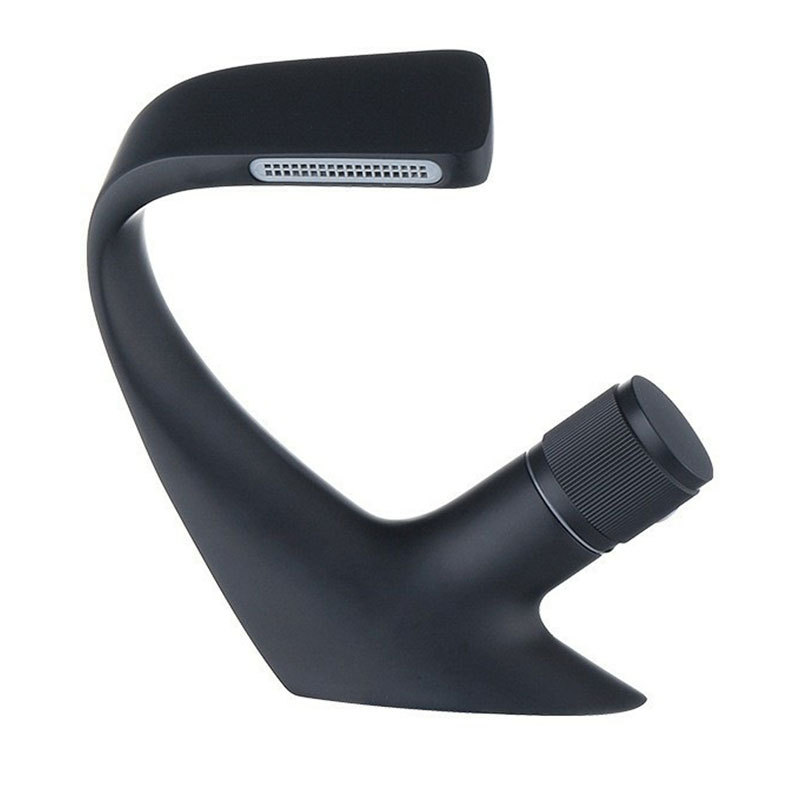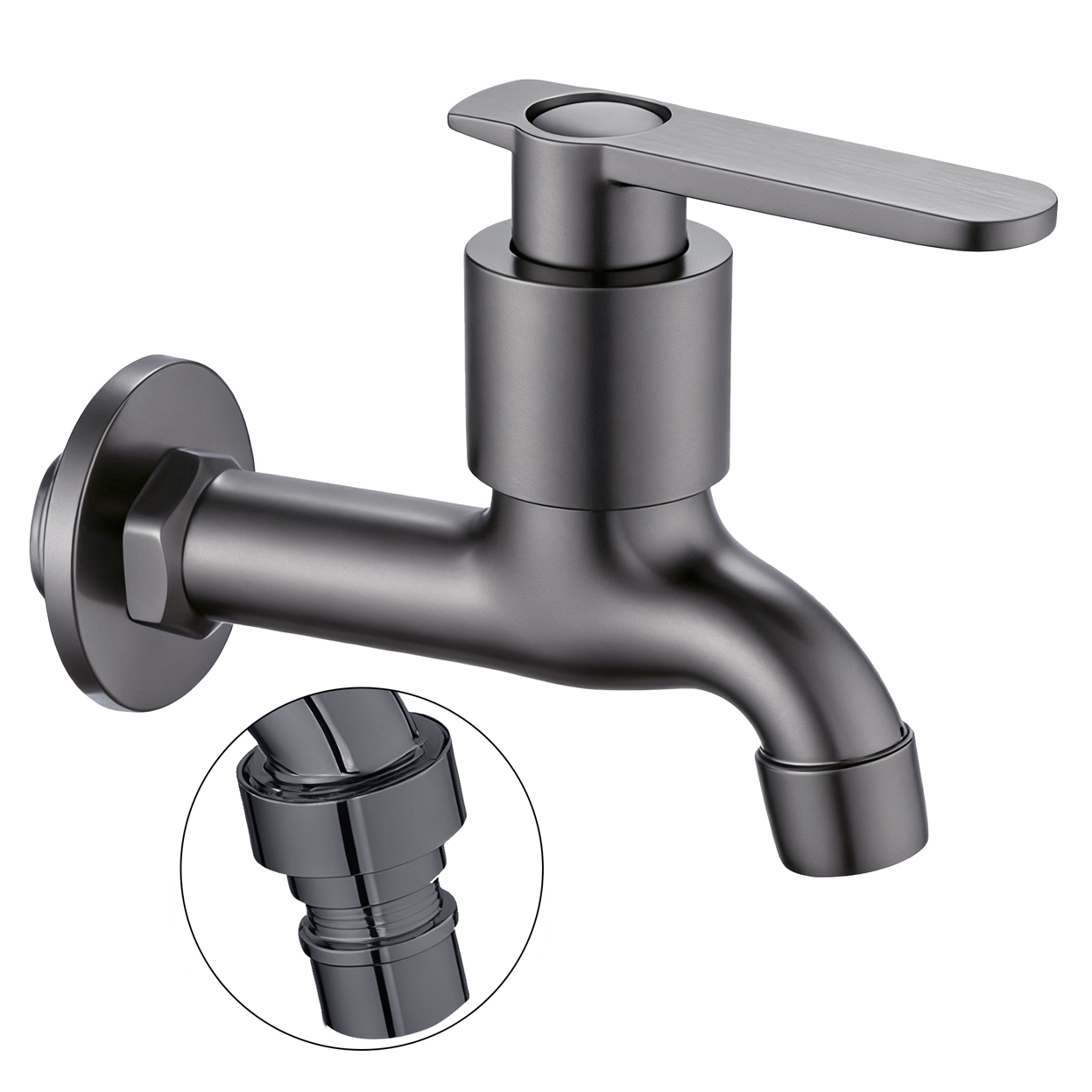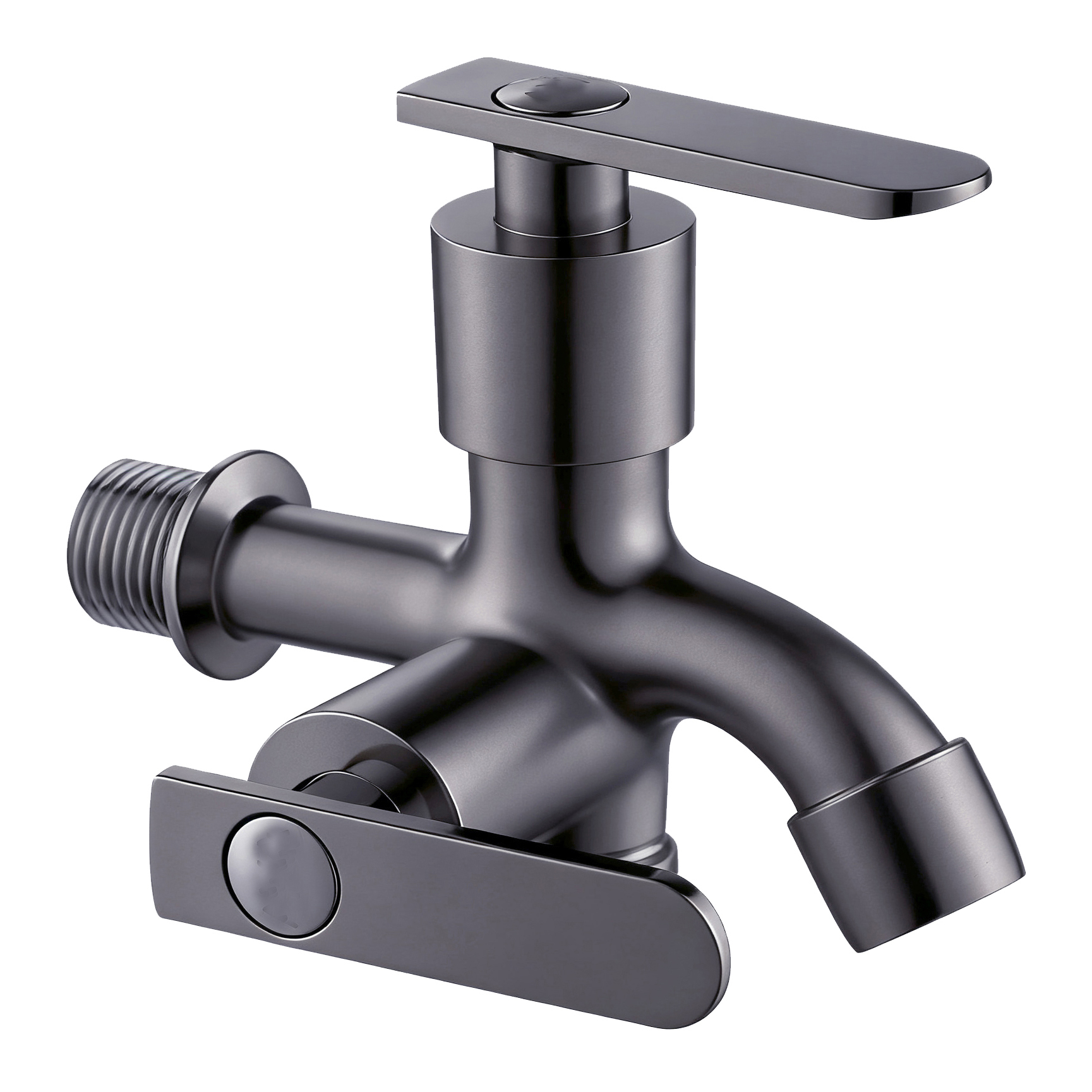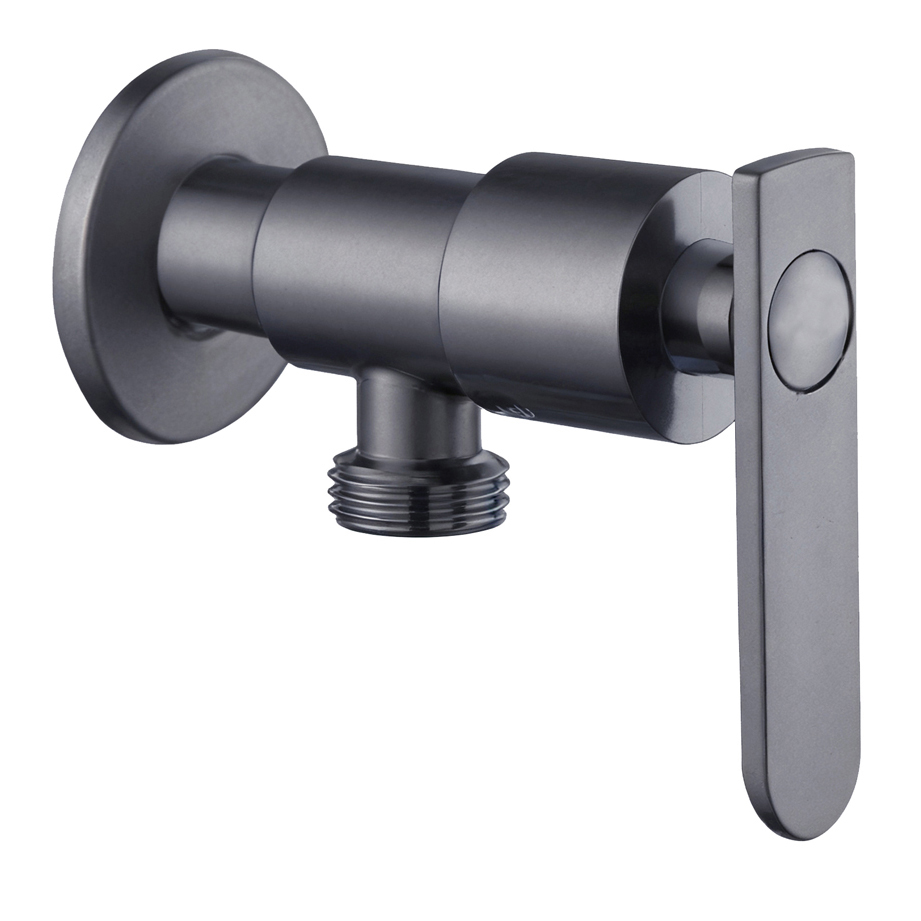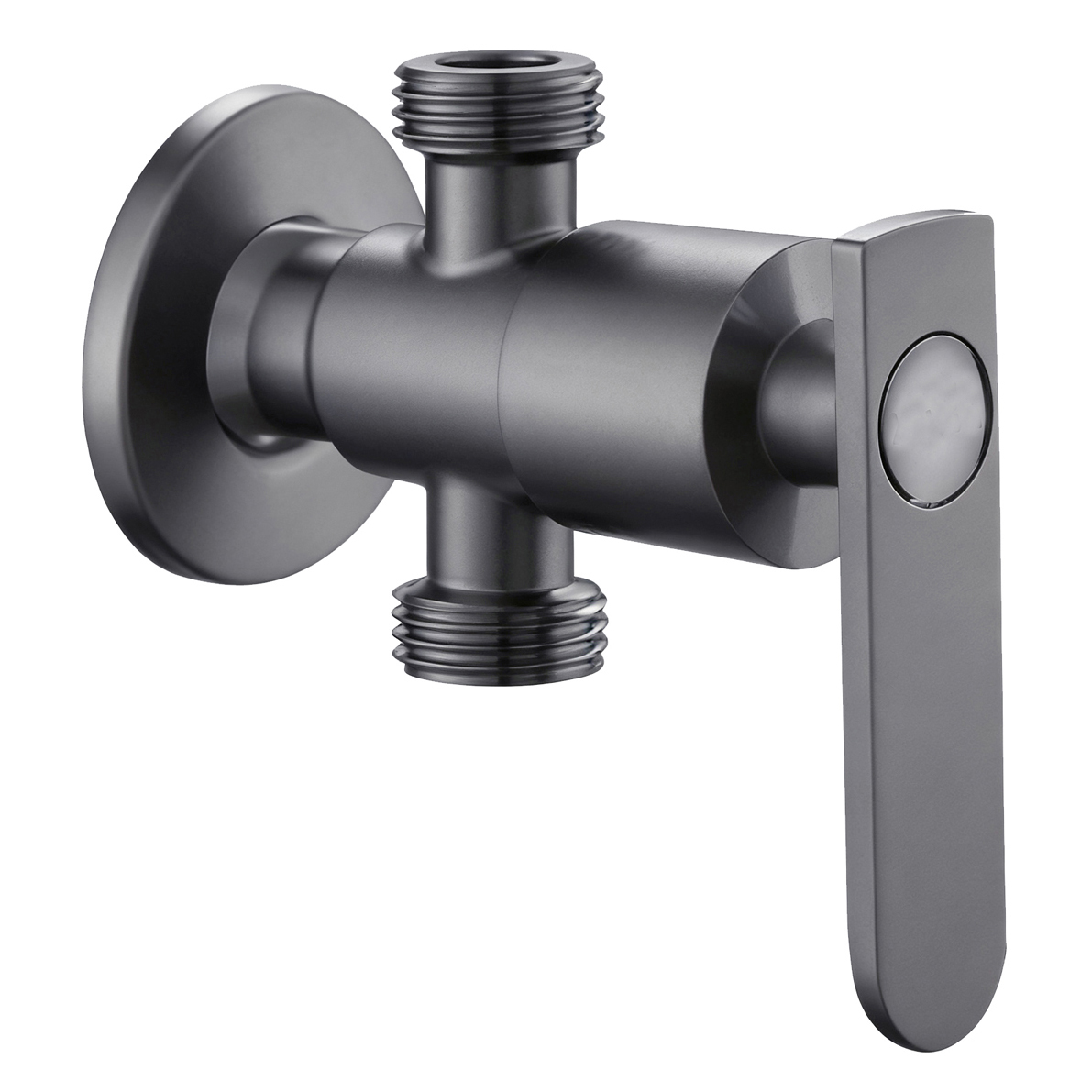




Complex products are usually easy to tell apart.
Different functions, control methods, and structures create visible differences. Basic water taps present the opposite situation. The simpler the design, the more likely several SKUs on the same shelf will look alike.
A Round Water Tap is a good example.
A round body, simple handle, and similar finish can give several products almost the same appearance. However, they may differ in connection type, size, application, or structure.
Appearance Cannot Identify an SKU by Itself
When shoppers pick up two Round bibcock models, the main difference may be hidden at the connection point.
In this case, the front appearance alone may not help them choose the correct product.
The problem becomes more noticeable in chain stores.
Different stores may sell the same group of basic SKUs. Warehouses need to replenish them, store staff need to return them to the correct shelves, and shoppers may bring back an old product when looking for a replacement.
If identification depends mainly on descriptions such as “the round one,” “the silver one,” or a very similar product photo, mistakes can easily happen.
Basic products therefore need stable identification information.
Model, Connection, and Application Information Solve Different Problems
A round design can make several Round Water Tap models difficult to distinguish on the shelf. This gives barcodes and model numbers a more important role in product identification.
Product cards should clearly show the inlet thread, outlet application, and main installation location.
This can help stores avoid placing similar garden taps, washing-machine taps, and general-purpose water taps in nearly identical packaging.
If a supplier change affects the connection or internal structure, the retailer should first check whether the existing SKU identity remains accurate.
Similar colors and identical packaging cannot prove compatibility.
These information fields also serve different purposes.
Model / SKU identifies the specific product.
Connection Size / Thread Information helps shoppers check whether the product can connect to the existing pipework.
Application explains the main intended use, such as direct water access or hose connection.
For a Round hose bib, the product information should also distinguish the hose outlet from the wall-side water inlet.
Otherwise, shoppers may see one size and assume that it describes every connection on the product.
This type of information structure provides more value than adding extra marketing names to a basic tap.
Product Identity Should Remain Clear After Packaging Updates
Basic SKUs in chain retail may go through many replenishment cycles.
Some models may differ only in the handle pattern.
During warehouse receiving, staff can scan the barcode and take a photo of the inlet connection as a second check. This can help prevent round taps with different connections from entering the same storage location.
Matching the barcode with the SKU master data is only one part of the process.
The outer carton and individual package should also carry matching information.
If the individual package loses its application information after staff open the carton, accurate warehouse classification alone cannot prevent shoppers from picking up the wrong product on the shelf.
The same ANAMACO survey in Brazil reported that 20% of small and medium-sized building-material stores conducted e-commerce sales in 2025. The figure reached 56% among large stores.
If retailers sell a Round Water Tap through both online and physical channels, the barcode, connection photos, and application labels should use the same product master data.
Otherwise, the two sales channels may identify products with different ports as the same Round Water Tap.
These figures show differences in digital activity between store types. They do not represent the online penetration rate of any individual product. [1]
Retailers can update packaging design and reshoot product images. However, if the product specification remains unchanged, the model number, barcode, and key specifications should maintain a stable relationship.
If a later production batch changes a key connection or installation condition, the retailer should decide whether the product should still use exactly the same SKU identity.
This issue affects more than consumer selection.
Warehouse replenishment, store inventory checks, and future replacement searches all depend on the same identification system.
Le Round Water Tap illustrates a retail problem that may seem contradictory.
The simpler the product and the more similar its appearance, the less retailers can rely on appearance to identify it.
For basic hardware in chain stores, stable and specific product information often prevents incorrect selection more effectively than more complicated packaging.