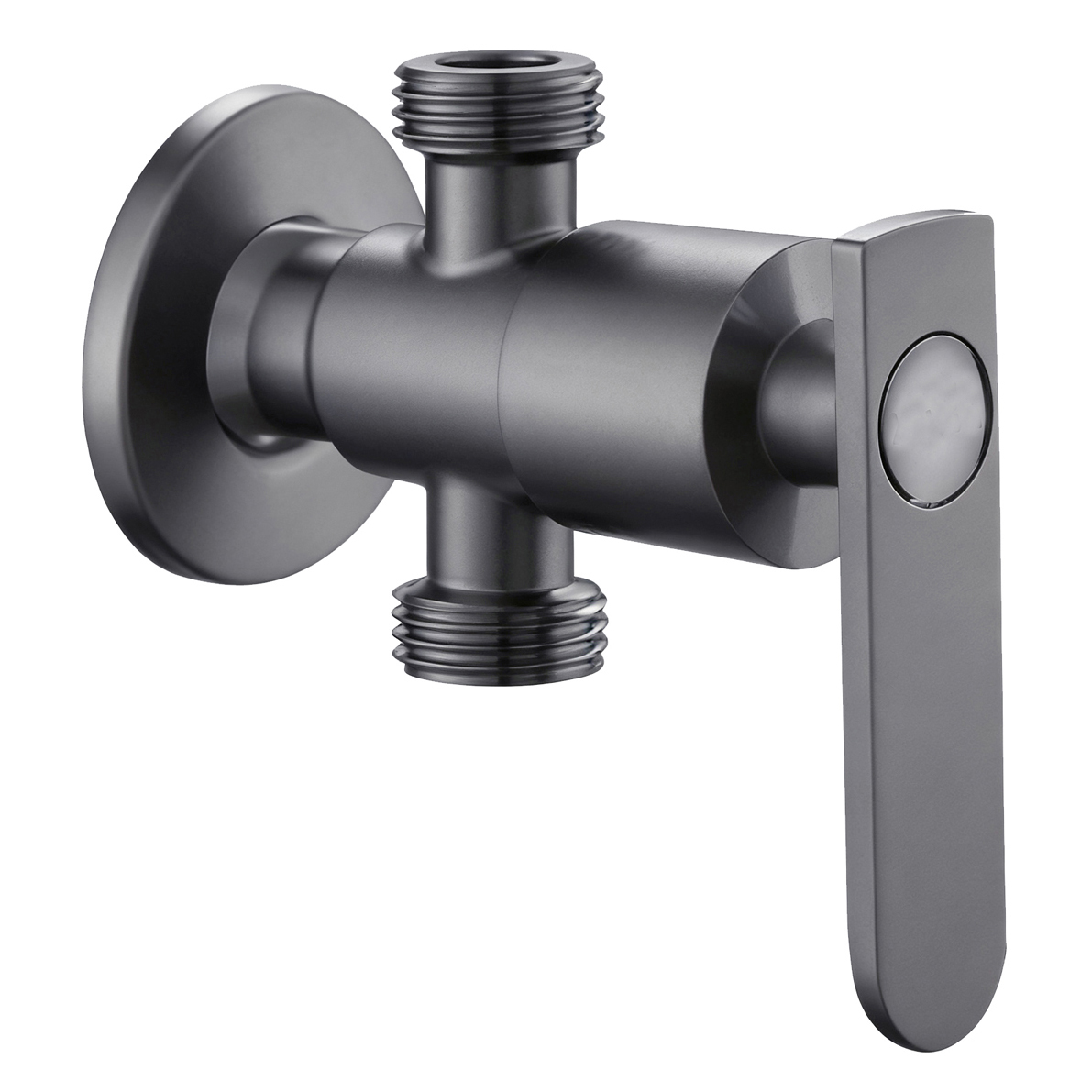




The first decision in planning a faucet collection is not how many models a supplier can offer. It is why each model deserves inventory, display space, and sales attention.
Kitchen faucets, basin faucets, and shower products can share the same design language without performing the same job in the product line.
A kitchen faucet may showcase a function that helps customers notice the collection. A basin faucet may cover the installation scenarios that generate more regular demand. A shower product may help distributors complete a coordinated bathroom offering.
Once those roles are clear, decisions about sizes, finishes, configurations, and price points have a stronger basis.
For importers building a private-label range, faucet product line planning should result in a product-role plan that can guide both ordering and later review.
For every proposed model, the team should be able to answer:
Who is this product for? Why would they choose it? What would be missing if it were unavailable? How is it meaningfully different from the model next to it?
If several models have essentially the same answers, adding more SKUs may simply divide demand that was previously concentrated in fewer products.
A Trade Show Collection and a Purchasing Assortment Have Different Jobs
At a trade show, products are often presented as part of a complete kitchen or bathroom space.
Coverage of Roca at the 2025 Kitchen & Bath China exhibition, for example, described coordinated room settings together with faucets and hardware in different forms and finishes.[1]
This is useful as an example of how a brand can communicate a collection through a complete space. It does not tell an importer which finish will sell in another market or how many models should be stocked.
A display and a warehouse have different jobs.
The display may need a product that attracts attention. The warehouse needs products that can support actual sales and replenishment.
The number of products required for those two purposes does not have to be the same.
After a trade show, buyers can therefore separate the design elements they want to explore from the SKUs they are ready to purchase.
A handle shape, spout proportion, or finish may fit the direction of a future collection. That does not mean every product category, height, and configuration needs to be launched in that version immediately.
Give Each SKU a Role Before Giving It a Budget
The following is a planning framework rather than a universal industry classification. The same product could play a different role in another channel, but within one purchasing plan its primary purpose should be clear.
| Product Role | What Buying Need Does It Address? | What Should Be Checked First? |
|---|---|---|
| Entry model | How can customers enter the collection at an accessible price point? | Whether the basic configuration is complete and the price position can be explained |
| Core model | Which product covers the main demand in the target channel? | Installation fit, supply stability, and replenishment performance |
| Statement model | What gives the collection a recognizable feature? | Whether the feature can be seen, experienced, and accurately explained |
| Coordinating model | What may customers need after choosing the main product? | Visual relationship, combination logic, and independent supply conditions |
An entry model still needs to provide complete use value. A lower price should not come from hiding necessary installation items that later become unexpected costs.
A core model has a different responsibility. Because it may generate more regular transactions, its dimensions, installation information, availability, and replacement support deserve particular attention.
A statement model may help customers notice or remember the collection. But being visually distinctive does not automatically mean it needs the same inventory depth as a core product. It may be stocked normally, tested in selected channels, or produced against confirmed demand.
A coordinating model helps extend the collection after the main product has been selected. Its value comes from completing a relevant combination, not simply from adding another item to the catalog.
For faucet SKU selection for importers, one useful rule is to give every proposed SKU a one-sentence reason for being listed.
“Higher than the current model” only describes a difference.
“Covers countertop-basin installations that the current basin faucet cannot serve” explains why the additional model may deserve a place in the range.
The reason does not always need to come from historical sales. It may be based on distributor requests, project requirements, channel feedback, or a market hypothesis.
If it is still a hypothesis, label it that way and use samples or a limited launch to test it before committing to deeper inventory.
Let Kitchen, Basin, and Shower Products Perform Different Jobs
A coordinated faucet collection does not require every category to contribute in the same way.
Kitchen faucets can carry functional differentiation
The kitchen category often provides opportunities to make functional differences visible.
Spout movement, pull-out functions, spray options, operating space, or sink compatibility may give customers a clear reason to compare one model with another.
For a particular collection, the kitchen faucet may therefore serve as a product that demonstrates function or attracts attention.
That does not mean every kitchen faucet needs more functions. The point is to decide what role the category is expected to play before adding more models.
Basin faucets can cover important installation scenarios
Basin products may need to cover different basin types, mounting arrangements, outlet positions, or height requirements.
A collection might therefore use basin faucets to cover the installation scenarios that appear most frequently in its target channel.
Adding another basin model is easier to justify when it fills an identifiable gap. Adding several models that serve essentially the same basin and installation condition may simply make the assortment harder to explain.
Shower products can complete the bathroom offer
Shower products can perform another role: helping a distributor or retailer extend the same design direction across more of the bathroom.
Their value in the collection may therefore come partly from coordination with basin products.
However, visual coordination does not remove their own technical requirements. Exposed and concealed arrangements, wall-side connections, component layouts, and maintenance access still need to be evaluated for the actual product.
This leads to an important distinction when building matching kitchen and bathroom faucet collections:
Design language can be shared. Product architecture does not have to be.
A useful collection brief can therefore separate two things.
One part defines what should remain visually connected, such as the finish reference, handle language, or recognizable proportions.
The other identifies what may change because the products perform different tasks, including dimensions, mounting methods, internal configurations, and functions.
This gives the collection a recognizable identity without forcing unrelated products into the same structure.
Finish coordination also needs more than giving every product the same color name.
If several products will be sold as one collection, representative samples can be compared under agreed viewing conditions for differences in gloss, texture, and overall appearance.
The objective is not to make every manufacturing process identical. It is to make sure the finished products create the intended visual relationship.
See What Happens When Finishes and Configurations Multiply
Consider a simple planning example.
A brand starts with four base models and offers each in three finishes:
4 models × 3 finishes = 12 sales combinations
If each base model then receives another installation configuration, the possible combinations may increase to:
4 × 3 × 2 = 24 combinations
Whether all 24 become separate SKUs depends on how the products are sold and managed. The calculation is useful because it makes the expansion visible.
Adding one finish does not always mean adding only “one more option.”
It may increase the number of combinations that need to be purchased, presented, stocked, identified, and maintained.
Shared components may reduce some complexity, but they do not make every finished combination equivalent. Buyers also should not assume that different finishes can always share one MOQ or one production schedule. Those conditions need to be confirmed for the actual project.
For an initial launch, a brand may choose to let its main finish cover the most important product roles while testing a more experimental finish on a smaller number of representative models.
That is not a universal formula.
If distributors have already placed clear orders, a wider launch may be justified. If the main evidence is interest generated at a trade show, a smaller test can provide more information before the assortment expands.
The objective is not to keep the number of SKUs as low as possible.
It is to know why each additional combination is being added.
Build an Assortment Customers Can Understand
Faucet assortment planning for retailers should also consider how products are compared when they appear next to one another.
Customers usually do not read every specification available to the purchasing team. Sales staff also need a practical way to explain why one model costs more or suits a different situation.
If three products can be distinguished only by their internal item codes, the assortment may not yet have clear enough roles.
One useful check is an internal sales simulation.
Give the product information to colleagues who were not involved in development and ask:
When would you recommend Model A instead of Model B?
If the answers depend mainly on vague expressions such as “more premium” or “better quality,” the differences may need to be defined more clearly.
A useful distinction should be tied to something that can be observed or supported, such as installation fit, dimensions, operating method, a confirmed function, or included components.
This also applies to coordinated displays.
A kitchen and bathroom collection may look like one complete set in a showroom while still consisting of independently purchased products. The visual relationship should make the assortment easier to understand without creating confusion about what each product actually includes.
Retail feedback should also distinguish between two signals:
“We would display this model.”
et
“We would replenish this model.”
The first can indicate interest in the appearance or concept. The second provides different information about the product’s ongoing commercial role.
Mixing those signals can lead to too much inventory in attention-grabbing models while ordinary core products receive too little support.
Set the Review Conditions Before Adding Another Model
A product line should not become a catalog that only grows.
When a new model enters a trial launch, define when it will be reviewed and which information will be considered.
That information may include actual orders, repeat orders, returns, lost sales caused by stockouts, and recurring questions from sales teams.
There is no need to apply one arbitrary elimination percentage to every product.
If a model performs poorly, first identify what is happening.
Is there little demand for the product itself?
Are the images failing to communicate its main difference?
Is stock availability the problem?
Are installation conditions unclear?
Is the price position difficult to justify?
Or is the model simply dividing demand with another SKU that already performs the same role?
These situations do not require the same response.
A model may need to be removed, adjusted, repositioned, or explained more clearly.
If a model is eventually discontinued, enough identification should remain to support products that have already been sold. Removing a SKU from future purchasing does not require erasing its product identity.
Start With the Role the Collection Needs to Fill
When discussing a product-line project with YOROOW, the useful starting information can include the target channel, the use cases the collection needs to cover, the design characteristics that should remain recognizable, and the gaps in the current assortment.
Candidate products can then be considered against those roles before every available finish, size, or configuration is added.
This creates a different starting question.
Instead of asking:
“How many models can we put into this collection?”
the team asks:
“What different jobs does this collection need its products to perform?”
The answer may lead to a kitchen faucet that demonstrates a useful function, basin faucets that cover important installation scenarios, and shower products that complete the bathroom offer.
Only after those roles are clear does it make sense to multiply the range by finish, size, and configuration.
The right number of models is therefore not determined by how large the catalog can become. It depends on whether each SKU has a distinct, explainable, and reviewable reason to remain in the product line.