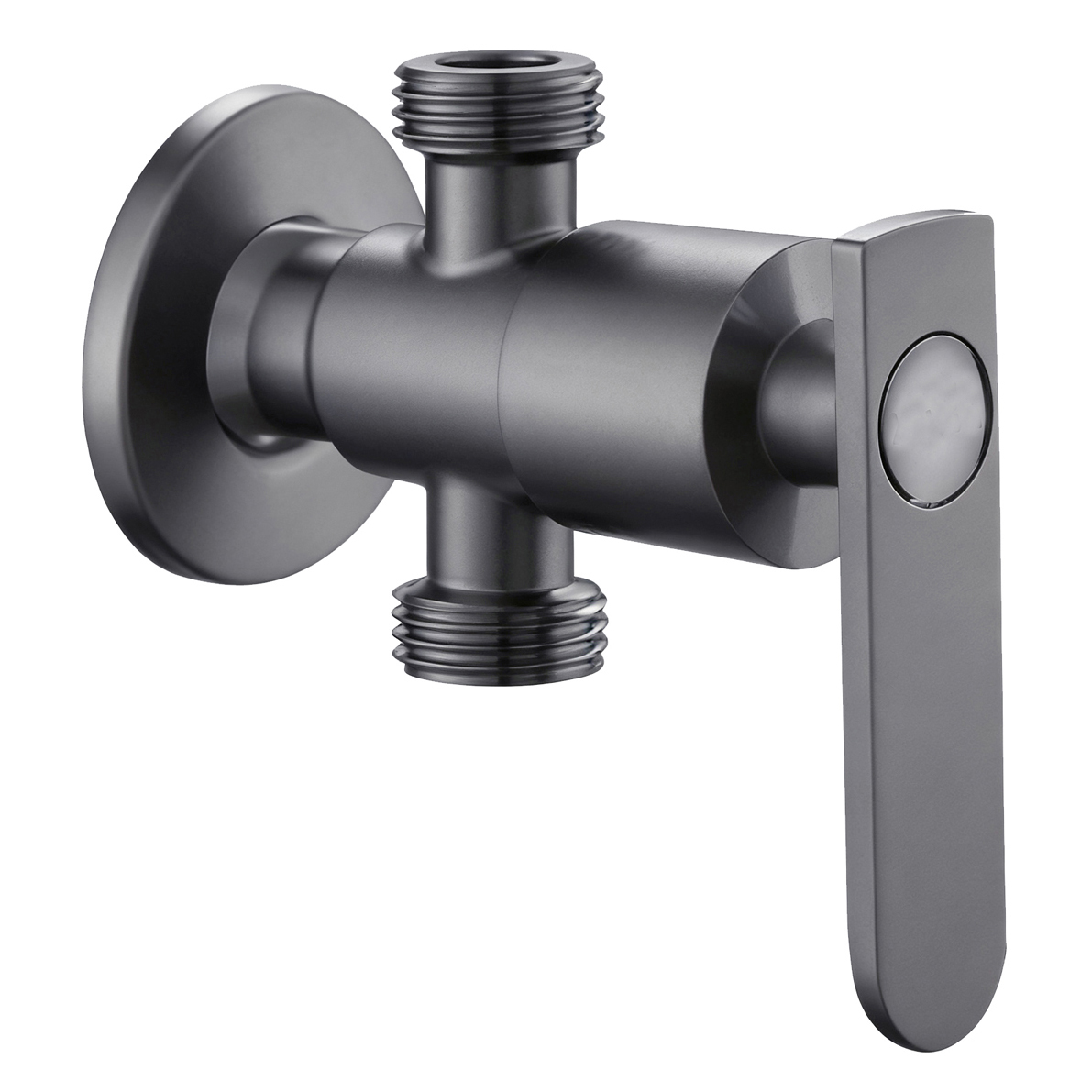




Once a faucet line is already generating orders in one market, expanding it into another country creates two opposite risks.
One is starting over—developing new products, packaging, and supporting materials as if nothing had already been proven. The other is copying the existing assortment unchanged and assuming that what worked in one country will work everywhere else.
Both approaches can create unnecessary work.
A better starting point for Latin American expansion is to identify what has already been validated in the core market, then compare the next market against that baseline. The goal is not to build every country from scratch, nor to force every country into exactly the same configuration.
For buyers evaluating a faucet supplier for Latin America, this also changes the supplier discussion. The question is no longer simply whether the factory can ship to several countries. It is whether the same product platform can support controlled differences between markets.
Start with the version that is already working
Before selecting products for a second market, document the version that is already being sold.
This baseline should go beyond a catalog model number. It may include the approved product configuration, drawings, materials, finish reference, installation conditions, packaging, product information, and any service parts that have already been needed.
Actual market experience adds another layer. Which installation questions appear repeatedly? Which models require frequent replenishment? Which spare parts have actually been requested? Are customers buying the product because of its design, installation fit, price position, or the way it is presented by the distributor?
These details matter because a successful product and a successful sales environment are not the same thing.
A faucet may perform well in one country partly because a distributor keeps it in stock, sales staff understand how to explain it, or installers are already familiar with the configuration. If those conditions do not exist in the next market, previous sales alone cannot establish the same outcome.
The baseline therefore serves a practical purpose: every proposed change for the next country can be compared against a known product version instead of creating another loosely defined “similar model.”
Some parts travel well across markets. Others do not.
Not everything needs to be reconsidered when a faucet line crosses a border.
The design language of a collection, for example, may remain useful across several markets. Handle shape, overall proportions, and other recognizable design features can help preserve a consistent brand identity.
Approved components and structures may also be reusable where their interfaces, functions, and validation scope remain applicable.
Other elements are much more dependent on the destination. Installation connections, product information, language, documentation, and service arrangements may need another review even when the faucet itself looks unchanged.
A useful way to separate them is:
| Existing element from the core market | Typical approach for the next market | What still needs to be checked |
|---|---|---|
| Collection design language | Reuse where appropriate | Local assortment and finish choices |
| Approved structure and key components | Reuse conditionally | Installation and configuration compatibility |
| Technical document format | Reuse the framework | Market- and model-specific content |
| Installation configuration | Revalidate | Actual connection and site conditions |
| Packaging and product information | Adapt as needed | Language, version, and channel requirements |
| Service-part system | Reuse the identification method | Compatibility with the market version |
The purpose of this separation is not to maximize the number of shared parts.
A shared component only creates value when it remains suitable for the products that use it. If standardization introduces extra adapters, installation difficulties, or service limitations, reducing the component count may simply move complexity somewhere else.
Sometimes the most reusable part of an existing program is not the product itself, but the working method: the sample approval format, change record, product identification system, or feedback process.
Build a difference list for the second market
Once the baseline exists, the second market does not need another completely independent specification from the beginning.
Start with the approved version and ask one question:
What is different here?
Suppose a faucet configuration is already established in Colombia and a distributor wants to introduce the collection in Ecuador. The team can compare the Ecuador requirement against the Colombian baseline rather than rebuilding the entire specification.
The difference list might cover the actual installation connection, included accessories, packaging language, documentation, channel positioning, or local service arrangement.
Items that remain unchanged stay linked to the existing baseline. Items that differ become specific review tasks. Unknown items should remain marked as pending rather than being filled in with assumptions from the first country.
This approach also makes local input more useful.
Instead of asking a distributor, “What faucets are popular in your country?”, the discussion can become much more specific: Does this connection work with the products you currently sell? Can this packaging information be used in your channel? Does this finish belong in the same assortment? Is the existing service configuration practical for your customers?
The same principle applies when a faucet exporter to South America is supplying several markets. South American countries can share products and supply resources without automatically sharing every installation condition or commercial requirement.
For Brazil in particular, Portuguese-language materials need their own review rather than being treated as another Spanish-language version. Translation should also follow the current product configuration. Translating an older instruction sheet accurately does not solve the problem if the accessories or functions have already changed.
One visible model can become several controlled market versions
Regional expansion becomes harder to manage when products still look identical but their internal or supplied configurations begin to diverge.
Imagine that the original version uses configuration A, while a new country requires connection configuration B. These labels are only examples, but the management issue is real.
The two versions may still share the same body, handle, finish, and most components. That does not mean the warehouse should treat them as interchangeable.
The difference needs to remain visible in the order, bill of materials, packaging identification, or another controlled record. Otherwise, warehouse staff may eventually have to infer the correct configuration from the destination country.
Not every market change requires a new technical version. A translation update may affect packaging without changing the faucet itself. A different connection or internal component can have a wider effect and may require additional compatibility or documentation review.
The scope of the change should determine the scope of the work.
This becomes especially important for private-label programs. A private label faucet for Latin American brands may keep the same visual identity across several countries while carrying different installation or information requirements behind that identity.
Without controlled market versions, a regional collection can gradually turn into several products that share the same name but no longer share a clear definition.
Spare parts should follow the market version
Regional expansion also changes the meaning of a “common spare part.”
If one cartridge, aerator, hose, or other service component is genuinely approved across several versions, sharing it can simplify inventory. But that relationship should be documented rather than assumed from appearance.
The service team should be able to start with a sold product and identify the correct replacement part. It should also be possible to start with a spare-part number and determine which product versions it can support.
This becomes more important after several rounds of product changes.
An older version may remain installed in the market long after a new version has entered the catalog. Removing the old product from the current sales assortment should not erase the information needed to service it.
For a fabricante de grifería for South America, this kind of identification can be more useful to a long-term distributor than simply supplying extra unlabelled spare parts with each shipment.
Expand the verified platform, not every assumption
After the second market begins selling, the expansion itself becomes a new source of evidence.
Some assumptions will prove correct. A core component may work across both markets without modification. The same design language may be accepted by both channels. An existing document structure may make the second launch much faster.
Other assumptions may fail. An installation condition may require a separate version. A translated product page may still cause confusion. A shared spare part may turn out to have a narrower compatibility range than expected.
Those results should update the baseline.
By the time the same collection enters a third market, the team should know more than it did during the second launch. It can distinguish between elements that have already demonstrated a useful degree of commonality and elements that repeatedly require local confirmation.
That is the real value of a regional product platform.
Expanding a faucet line across Latin America does not mean copying the catalog from the strongest market, and it does not mean rebuilding the collection every time it crosses a border. It means carrying forward what has already been verified, identifying the differences that actually matter, and keeping those differences visible as the product line grows.