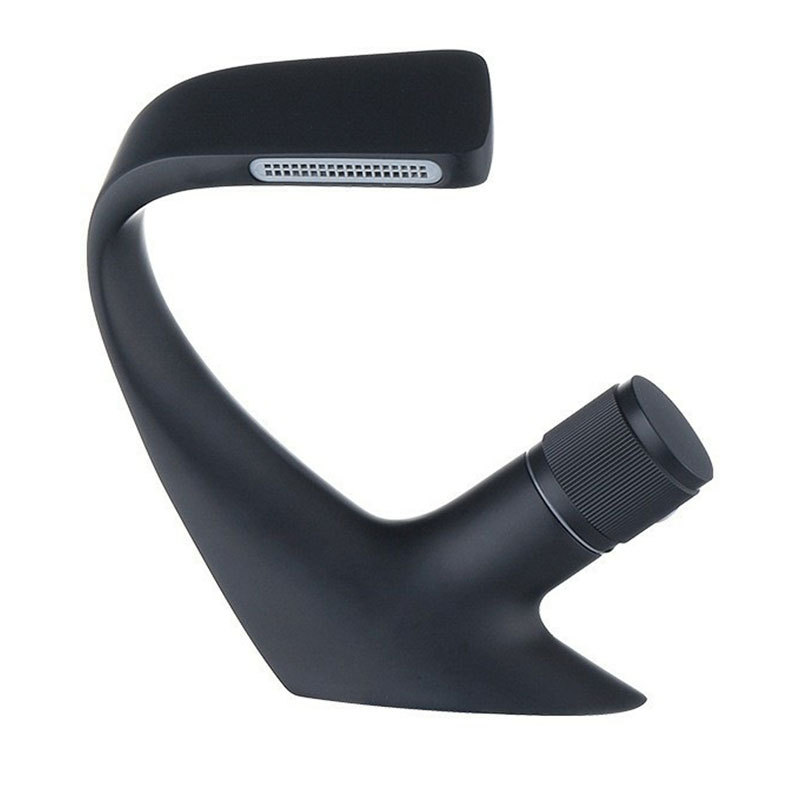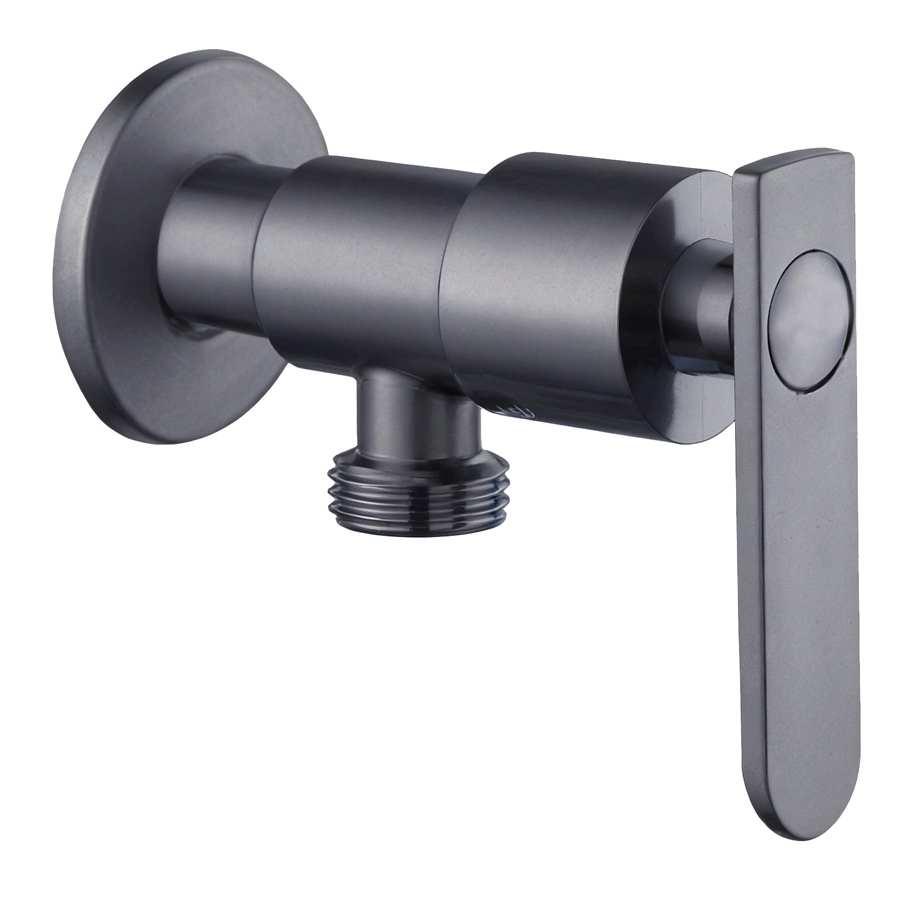



A kitchen faucet may feature a slim lever, a flat side-mounted handle, or two cross-shaped handles positioned on either side. These designs create different appearances, but handles also serve practical functions, including turning the water on and off and adjusting water temperature.
For example, two kitchen faucets may both feature a single side-mounted handle, but one controls cold water only, while the other regulates both hot and cold water. Although they have the same number of handles, their control requirements are different.
Therefore, faucet handle design involves more than appearance. It must also consider water flow control, operating movements, and available installation space.
1. How Do Different Handle Shapes Affect Faucet Operation?
The handle is the part of a faucet that users directly touch and operate. Different shapes affect where the hand makes contact and how the handle is operated. However, appearance alone cannot determine which design requires less effort or provides greater comfort.
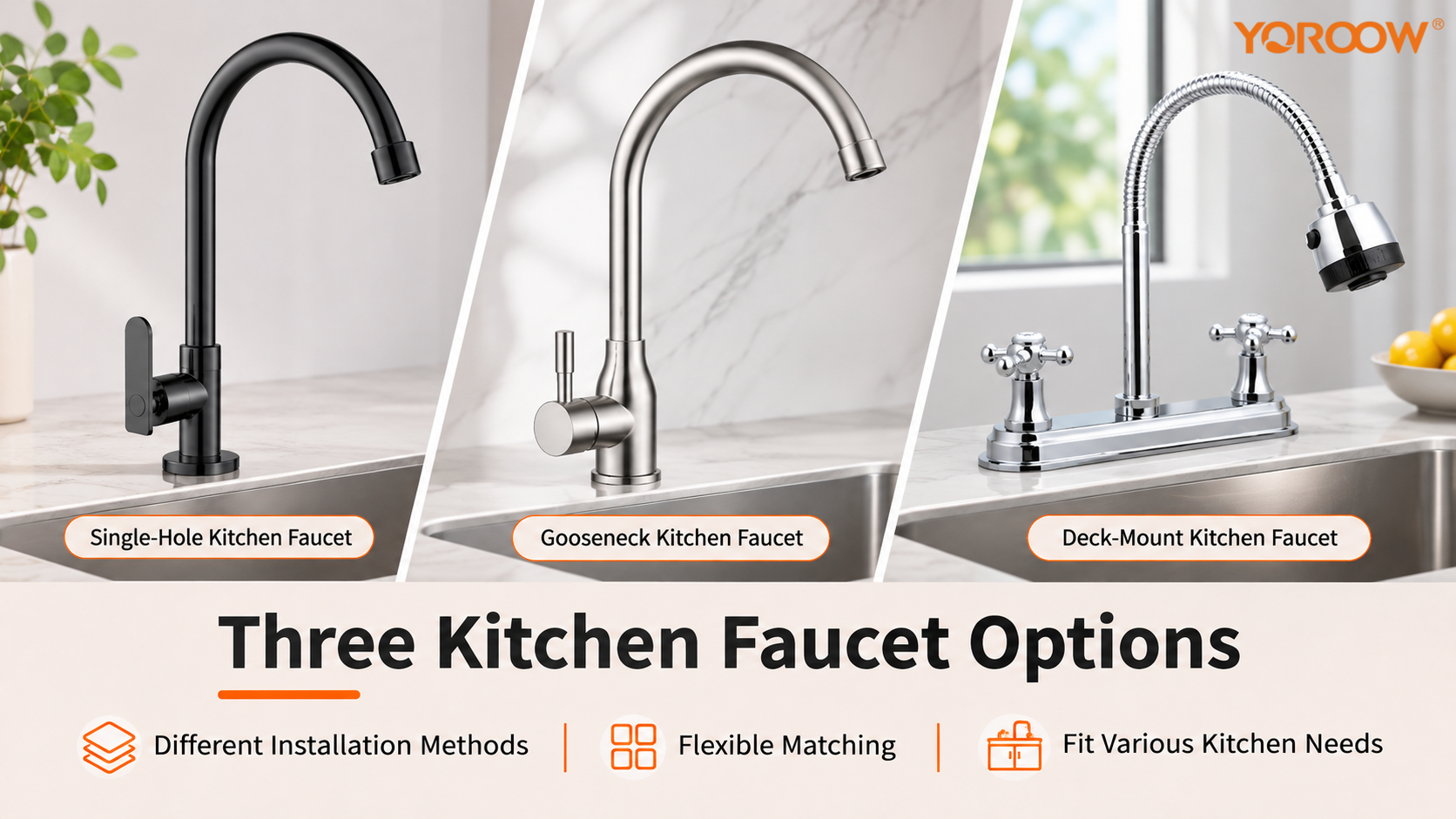
Three YOROOW kitchen faucets illustrate different handle designs.
Flat Lever Handle
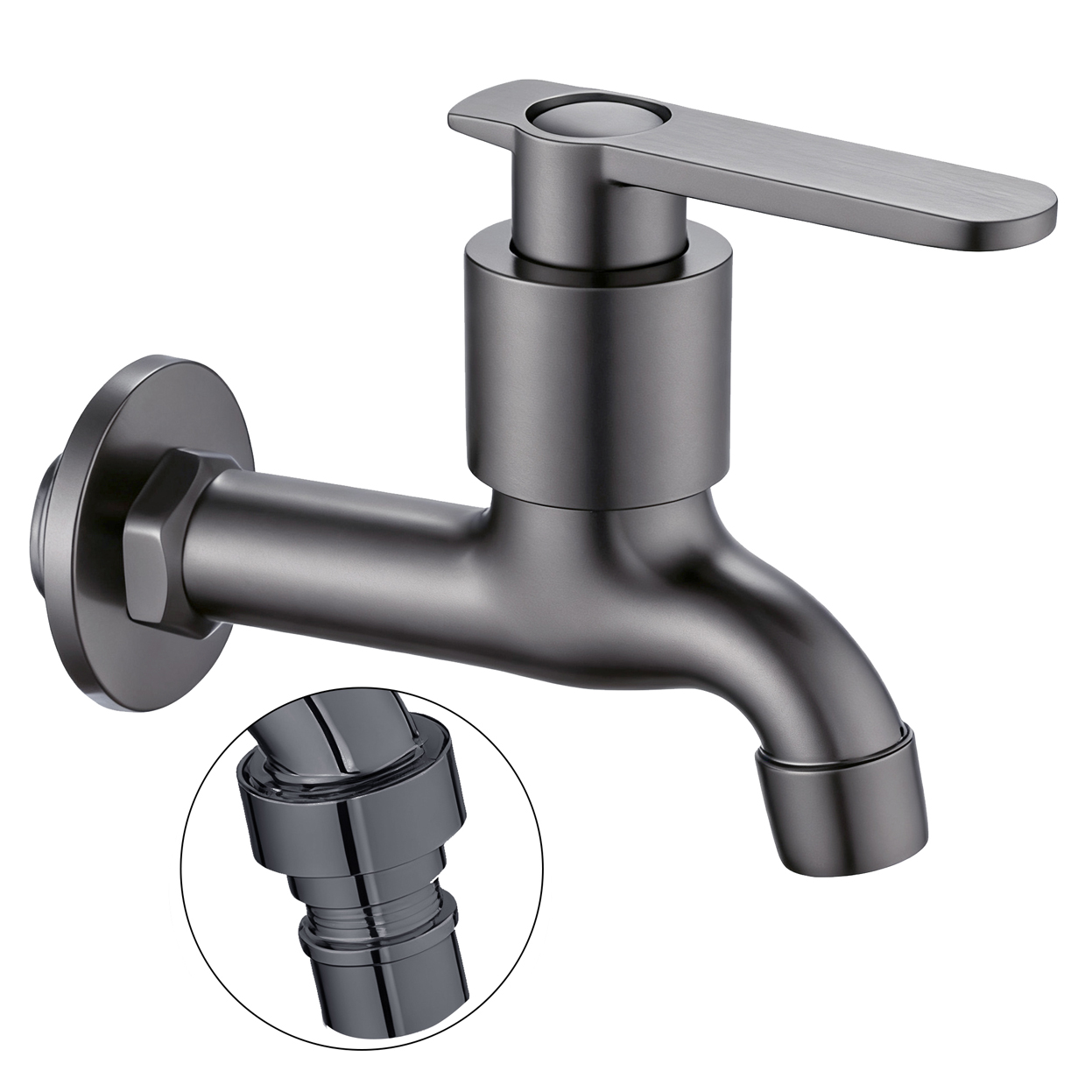
En YOROOW cold-water kitchen faucet features a flat, elongated side-mounted lever.
Compared with a slim lever, this design provides a wider contact surface. Since the faucet has a cold-water-only configuration, the handle is mainly used to turn the cold water on and off and adjust its flow rate.
Slim Lever Handle
En YOROOW single-handle hot and cold kitchen faucet features a slim side-mounted lever.
This handle differs from a flat lever in width and overall shape. Because the faucet uses a hot and cold water mixing configuration, the same handle must work with the internal control mechanism to adjust both water flow and temperature.
Cross Handles
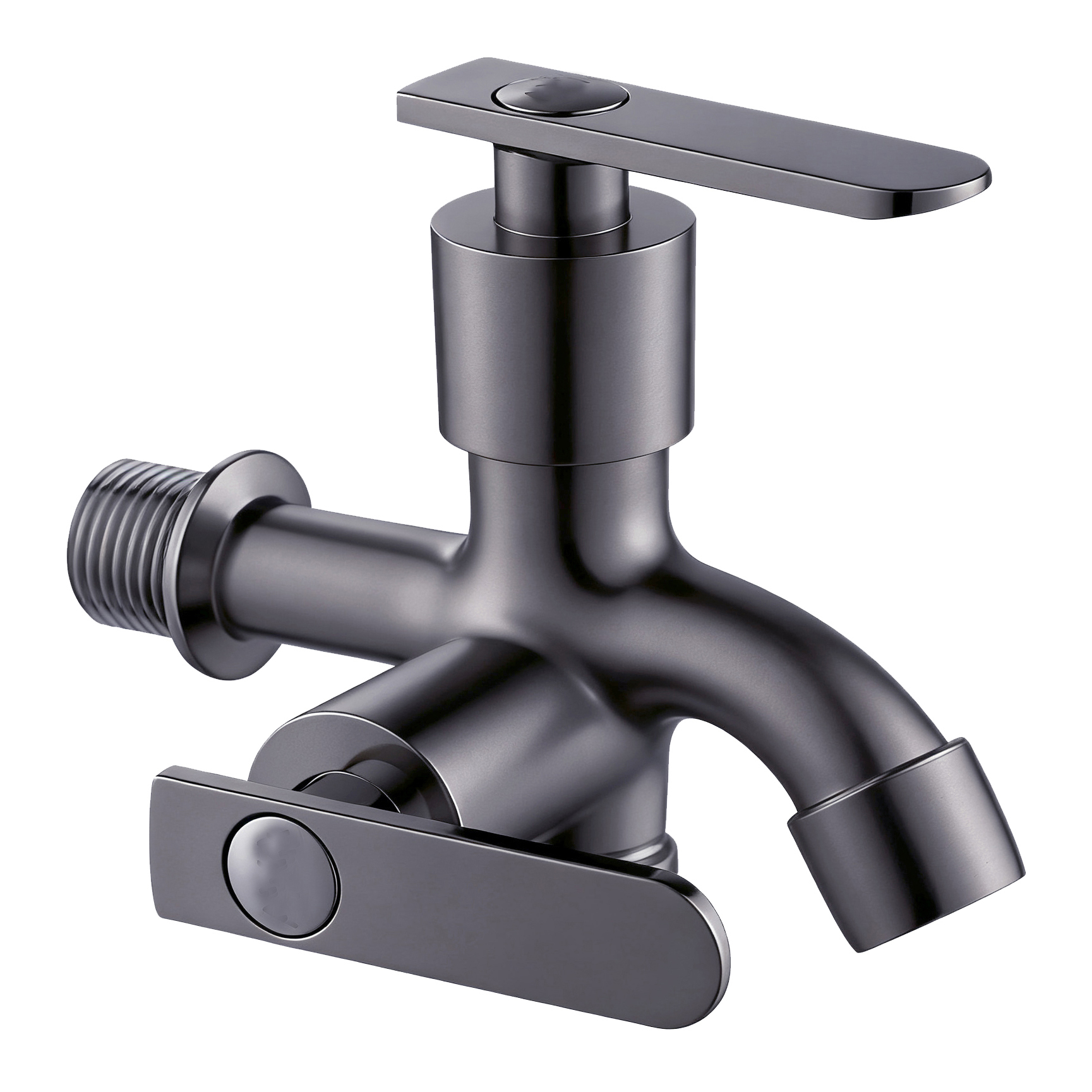
En YOROOW two-handle hot and cold kitchen faucet features two cross-shaped handles positioned at opposite ends of a horizontal base.
By rotating the corresponding handle, users can control the hot and cold water supplies separately. Compared with side-mounted lever handles, this design provides different gripping positions and an operating layout.
These three products demonstrate that handle shape affects hand contact and operating methods, while the specific control functions still depend on the faucet’s internal water flow configuration.
2. Why Must Handle Configuration Match Water Flow Control Functions?
Similar handle appearances or the same number of handles do not necessarily mean that faucets have identical control functions.
Cold-water-only, single-handle mixer, and two-handle mixer kitchen faucets have different water flow control requirements.
Single-Handle Cold-Water Faucet: Controlling One Water Supply
A cold-water kitchen faucet has only one cold-water supply and does not mix hot and cold water.
Its handle is mainly used to turn the water on and off and adjust the cold-water flow rate.
Therefore, the handle must work with a control mechanism designed for a single water supply. It does not need to regulate the mixing ratio of hot and cold water.
Single-Handle Mixer Faucet: Two Adjustments with One Handle
A single-handle hot and cold kitchen faucet uses one handle to control water flow and adjust the mixing ratio of hot and cold water.
Compared with a cold-water-only faucet, this configuration has more complex control requirements.
The handle must work with the appropriate mixing mechanism, allowing users to adjust water flow and temperature through the designated operating movements.
Therefore, even if two faucets feature similar side-mounted single handles, their handle structures and control methods cannot be assumed to be identical based on appearance alone.
Two-Handle Mixer Faucet: Separate Hot and Cold Water Control
A two-handle hot and cold kitchen faucet uses two control mechanisms to manage the cold and hot water supplies separately.
Users operate the two handles to adjust the flow from each supply and achieve the desired mixed water output.
Unlike a single-handle mixer, this design uses separate handles positioned on either side, corresponding directly to the independent control of hot and cold water.
The main differences between these three configurations are shown below.
| Comparison | Single-Handle Cold-Water Faucet | Single-Handle Mixer Faucet | Two-Handle Mixer Faucet |
|---|---|---|---|
| Number of handles | 1 | 1 | 2 |
| Water control | Cold water only | Mixed hot and cold water | Separate hot and cold water control |
| Control mechanism | One control mechanism | One mixing mechanism | Two control mechanisms |
| Design considerations | Operating a single water supply | Coordinating flow and temperature adjustment | Handle positioning and operation on both sides |
These differences show that handle design must first meet the required control functions before the specific appearance is considered.
The same number of handles may correspond to different control mechanisms, while different handle layouts also require different operating methods.
3. Why Do Handle Position and Movement Space Affect Faucet Installation?
In addition to handle shape and control functions, the installation location also affects whether a handle can operate properly.
When installing a faucet, it is important to consider not only the position of the faucet body and spout but also the space required for handle movement.
Operating Space for Side-Mounted Handles
YOROOW’s cold-water kitchen faucet and single-handle hot and cold kitchen faucet both feature side-mounted handles, with the control lever positioned on one side of the lower faucet body.
This arrangement requires sufficient clearance between the moving handle and surrounding objects. For example, when a faucet is installed close to a wall, windowsill, or another fixed object, it is necessary to confirm that the handle has enough room to move.
Although both products use side-mounted handles, their shapes and control functions differ. The actual movement directions and ranges should therefore be confirmed for each model.
Operating Layout for Two-Handle Faucets
The YOROOW two-handle hot and cold kitchen faucet features two cross-shaped handles mounted at opposite ends of a horizontal base, with the spout positioned in the center.
Unlike a side-mounted single-handle design, this layout requires operating space on both the left and right sides.
If the faucet is installed in a narrow space or near other objects, both handles must be checked to ensure they can rotate normally without obstruction.
Handle Movement Range and Actual Installation
Different control mechanisms may require different operating movements. Therefore, the actual movement range cannot be determined from appearance alone.
For example, a side-mounted single handle may need to move in different directions, while a cross handle is typically operated by rotation. The specific movement range still depends on the product’s control mechanism.
When determining the installation position, it is important to check not only the dimensions of the faucet body and spout but also whether handle movement could interfere with walls, sink edges, or surrounding objects.
Therefore, handle installation compatibility depends not only on appearance and position but also on the actual operating method and available movement space.
4. How Can Faucet Handle Design Balance Appearance and Functionality?
Handle design affects the overall appearance of a faucet, but it must also meet practical operating requirements and work with the internal control mechanism.
As shown by the three products discussed above, flat levers, slim levers, and cross handles have different visual characteristics, but each must be compatible with its corresponding control configuration.
Appearance Must Be Compatible with the Control Mechanism
For example, the handle of a cold-water kitchen faucet only needs to control one water supply, while a single-handle mixer faucet must also adjust water temperature.
Even if both products are intended to use similar handle shapes, their control mechanisms and movement requirements must be considered separately. Similar external designs do not necessarily mean identical internal functions.
Handle Shape Must Consider Actual Operation
Different handle shapes change the points of contact and the movements required for operation.
Flat levers, slim levers, and cross handles each have distinct structural characteristics. However, whether a particular design is suitable depends on the faucet’s control method and operating requirements.
Handle shape alone cannot establish the operating force, comfort, or long-term performance of a faucet.
Product Development Requires Design and Structural Compatibility
During product development, once the handle design has been determined, its compatibility with the control mechanism, valve body, and installation position must be checked.
For example, changing the length or shape of a handle requires evaluating whether the original movement range will be affected. If the handle position is changed, sufficient clearance around the new location must also be confirmed.
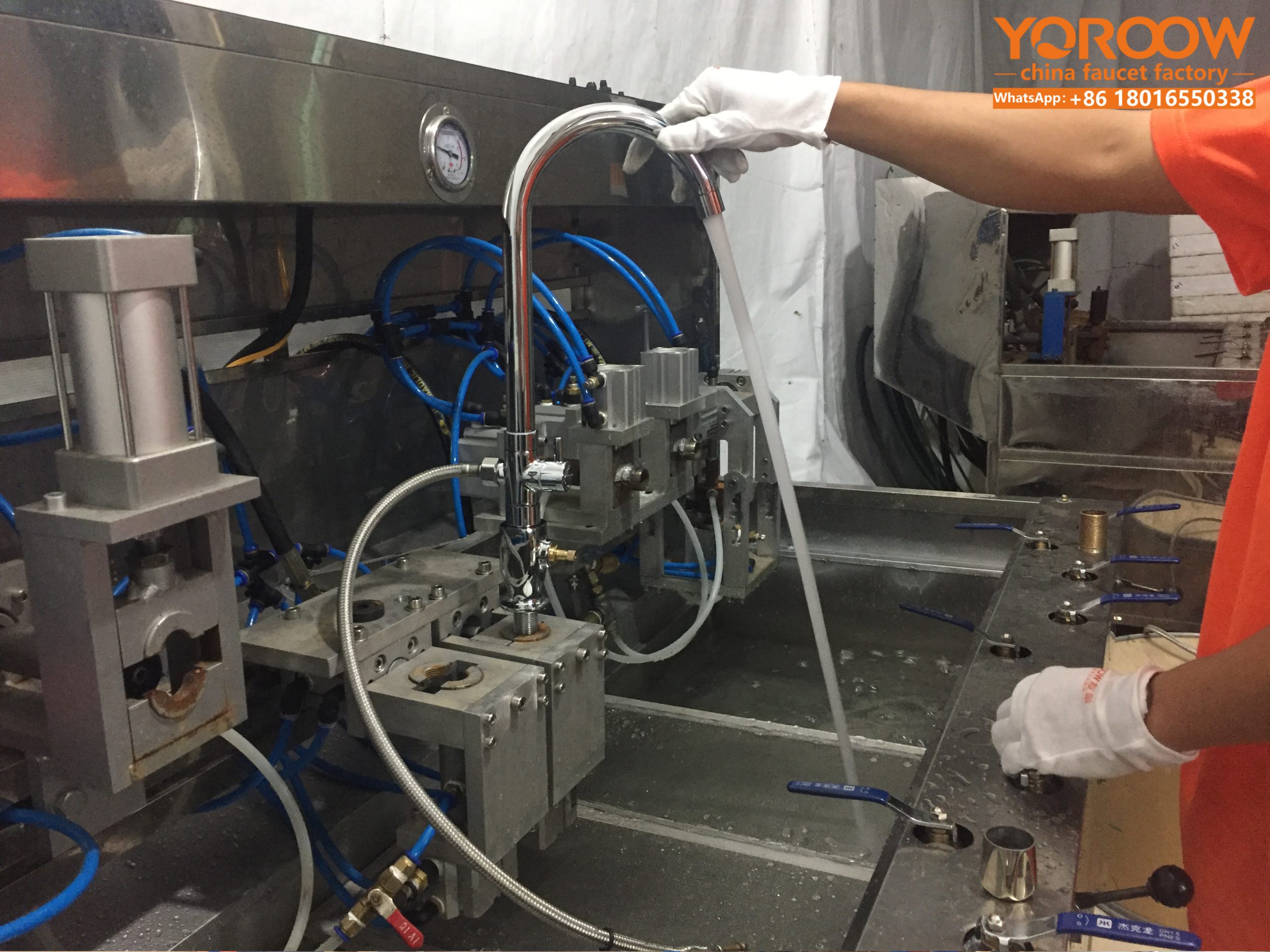
YOROOW provides OEM/ODM kitchen faucet development and customization services. When handle appearance modifications are involved, design feasibility must be evaluated according to the specific product’s control structure and confirmed through samples, rather than relying solely on appearance drawings.
Therefore, handle design is not merely a decorative choice independent of faucet functionality. It is part of product development that must consider control mechanisms, operating methods, and installation conditions together.
Conclusion: Faucet Handle Design Should Start with Practical Functions
Faucet handles affect not only product appearance but also how users control water flow.
Single-handle cold-water faucets, single-handle mixer faucets, and two-handle mixer faucets may feature different handle shapes, but each design must be compatible with its corresponding control configuration.
In faucet product design, considering handle shape, control mechanisms, movement range, and installation space together is essential to ensuring that appearance and practical operating requirements are properly matched.