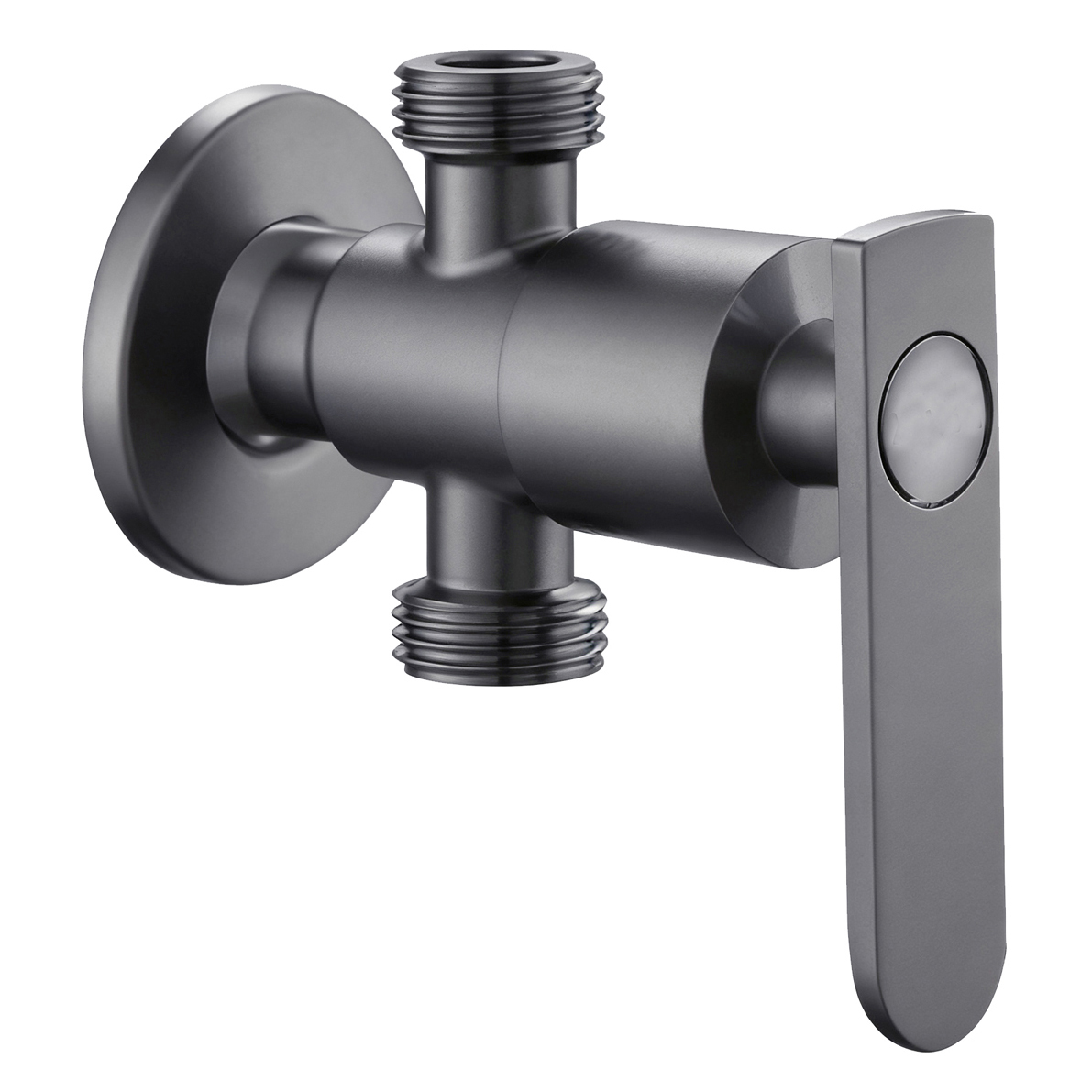




A faucet may go through casting, machining, polishing, surface treatment, assembly, testing, and packaging before it is ready to ship.
But for a buyer, the more important question is not simply how many manufacturing steps a fábrica de grifería has.
It is whether the same model can be produced to the same requirements when the next order comes in.
In actual sourcing, a first sample can look and function correctly without guaranteeing that every replenishment order will be identical. A handle gap may change, the surface finish may vary, or a component version or packaging configuration may be different from the previous order.
These differences do not always originate from the final inspection stage. They can also appear when requirements are transferred from one production process to another.
Therefore, evaluating a faucet manufacturing process is not only about understanding how the faucet is made. It is also about understanding how product requirements enter the process, how they are transferred between operations, and how they are applied again to the next order.
A Process Flow Should Start With the Product Structure
A typical faucet manufacturing process can be summarized as:
Blank → Machining → Polishing → Surface Treatment → Assembly → Testing → Packaging
But this sequence alone does not represent the actual process route for a specific faucet model.
Different product structures, materials, and surface requirements can change the manufacturing steps that need to be controlled.
For example, a brass faucet and a stainless steel faucet may both go through machining, polishing, surface treatment, and assembly, but their earlier forming processes and some machining requirements can be different.
So when confirming the manufacturing process for a specific model, a more useful question is not:
“What production processes does your factory have?”
It is:
“How are this model’s structure, material, and surface requirements translated into its actual production process?”
This is one reason why two factories with similar production equipment can still have different levels of manufacturing consistency.
Brass and Stainless Steel Are Not Just Different Materials
Material selection can directly affect the manufacturing route.
For example, brass faucets commonly involve casting, machining, polishing, and surface treatment. Stainless steel faucets may involve different forming, welding, machining, and finishing processes.
For sourcing purposes, it is not enough to compare only brass versus stainless steel. It is more useful to confirm:
- whether the material matches the product structure;
- how the blank enters the following machining process;
- which dimensions require tighter control;
- what condition the surface must reach before finishing;
- what assembly and testing conditions are required before release.
In other words:
Material influences the manufacturing route, product structure determines specific processing requirements, and production documentation needs to translate those requirements into controlled operations.
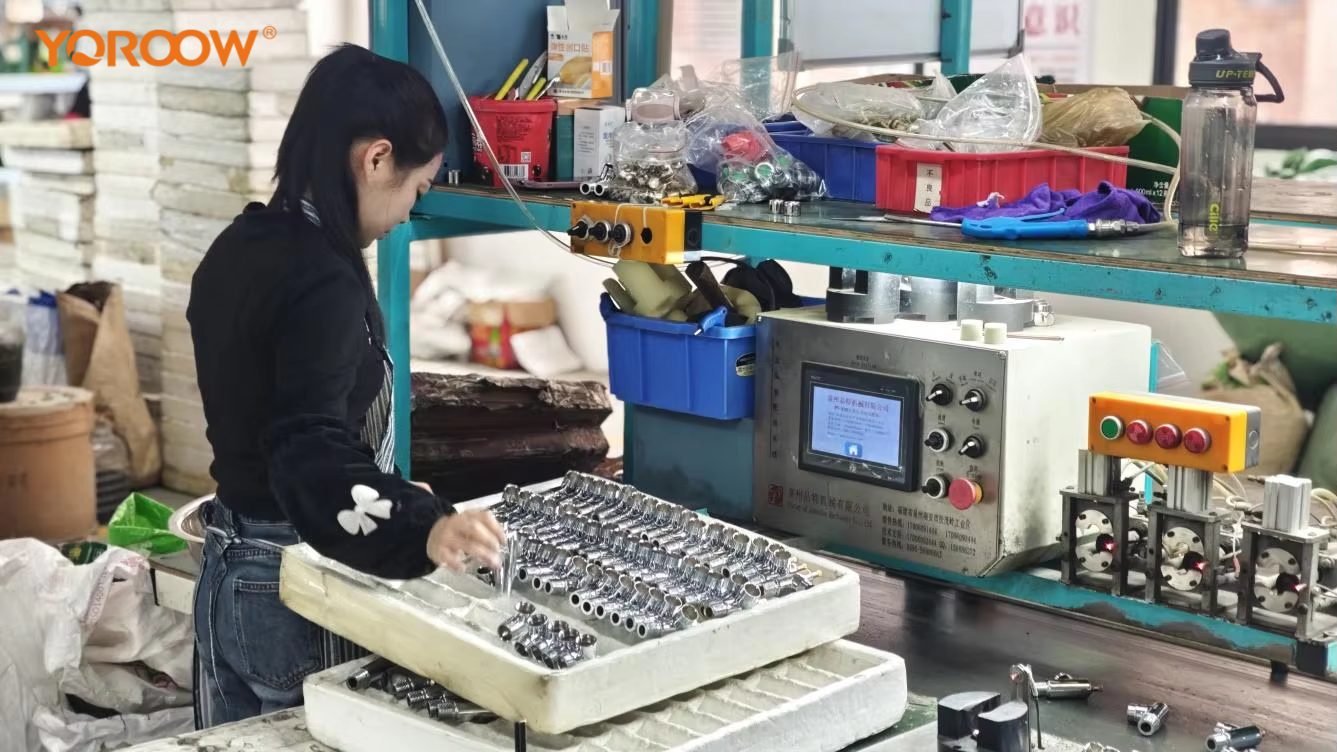
Four Process Handoffs Where Requirements Can Be Lost
Many quality issues do not happen because one operation completely fails. They happen because a requirement is not transferred accurately from one operation to the next.
Four handoffs deserve particular attention.
1. Blank → Machining
Before a blank enters machining, its dimensions, machining allowance, and critical structures need to meet the requirements for the next operation.
If the blank condition is inconsistent, even identical machining parameters may produce different results.
The key question at this stage is:
Is the correct product version being processed, and does it meet the conditions required for the next operation?
2. Machining → Surface Treatment
After machining, surface treatment is not simply a matter of sending the faucet to plating or finishing.
Machining dimensions, surface condition, polishing quality, and areas that need protection can all affect the final finish.
If these requirements are not clearly transferred, differences in color, gloss, or localized defects can become difficult to trace back to the actual process where they originated.
3. Surface Treatment → Assembly
After surface treatment, the product still needs to meet the conditions required for assembly.
For example, the surface should be intact, threads and connection points should function properly, and critical dimensions should not interfere with component installation.
Without clear release criteria, a product may move directly into assembly while an issue is only discovered during final testing—or after shipment.
4. Assembly → Final Inspection
Completing assembly does not automatically mean the faucet is ready for release.
Final inspection needs to confirm that the product configuration, function, appearance, and test results meet the requirements of the current version.
This becomes particularly important when a model has undergone changes to components or structure. If the old and new versions are not clearly controlled, final inspection may also be performed against the wrong requirements.
A stable process is therefore not simply:
Operation A → Operation B → Operation C
It is:
Requirements from Operation A → Clear Handoff → Operation B → Inspection → Release
Trace One Finished Faucet Back Through the Production Records
One practical way to evaluate whether a manufacturing process is truly traceable is to work backward from a finished product.
Take one packed faucet and ask:
Which model and version is it?
Then continue backward:
Which component batches were used during assembly?
Where did those components come from?
Which production order and processing batch do they correspond to?
Where did the original material or blank come from?
If these records can be connected step by step, a quality issue can be traced back to a specific part of the process more efficiently.
If one of the links is missing, there is a break in the production record.
| Reverse Check Point | Records to Locate | What a Gap May Indicate |
|---|---|---|
| Finished product and packaging | Model, version, batch, packaging record | The package label may not match the actual configuration |
| Montaje | Key component identity and release status | Component versions are not clearly controlled |
| Machining and related processing | Production order, batch, inspection records | Processing cannot be linked back to the finished product |
| Raw material / blank | Material identity and receiving records | The material source cannot be confirmed |
This type of reverse traceability is not only useful when handling a quality complaint.
It also helps a buyer understand whether a supplier is simply producing a faucet, or actually managing a product version that can be reproduced in a controlled way.
Rework Also Needs a Controlled Route Back to Release
A nonconforming product does not necessarily mean that the entire manufacturing system is unstable.
The more important question is:
What happens after a deviation is found?
A controlled rework process should be able to follow a clear path:
Deviation Identified → Cause Assessed → Rework / Adjustment → Reinspection → Release
For example, if a dimensional deviation is found during assembly, the product may be adjusted before continuing.
But if the adjustment is made without reinspection or a corresponding record, it becomes difficult to confirm whether the product has actually returned to an acceptable condition.
Rework should therefore not be treated as something outside the normal production process.
It should also be part of the controlled process.
The Real Value of Process Documentation Is Using It Again
The purpose of a process document is not only to tell operators how to make the product this time.
Its greater value is whether the same requirements can still be found and applied when the model is produced again.
For products that require long-term replenishment, the production records should be able to identify at least:
- the current product model and version;
- key structural and material requirements;
- major machining and surface treatment requirements;
- critical component versions;
- inspection criteria;
- packaging configuration;
- the latest status after any approved changes.
Then, when the same order returns to production, the factory is not working from a faucet that merely “looks similar to the previous one.”
It is working from a product with a defined version and controlled production requirements.
This is one of the foundations for turning an approved sample into a repeatable production item.
Three Questions Buyers Can Ask
Does having more equipment mean more stable production?
Not necessarily.
Equipment capacity is only one part of manufacturing capability. For repeat orders, it is also important to know whether product requirements, versions, process parameters, and inspection criteria can be consistently controlled.
Does outsourcing a production process automatically affect quality?
Not necessarily.
The key is whether the outsourced process has clear requirements, batch records, inspection criteria, and release controls, and whether the finished product can still be traced back to the relevant processing records.
Does every repeat order need to be fully revalidated from the beginning?
Not necessarily.
If the product version, key materials, structure, and production requirements have not changed, and the relevant records remain controlled, a repeat order can generally be produced based on the existing requirements.
However, if the structure, material, critical components, or production requirements have changed, the affected areas should be reviewed and reconfirmed.
Stable Reproduction Means More Than Repeating the Same Process
A faucet can go through the same sequence again:
Casting → Machining → Polishing → Surface Treatment → Assembly → Testing
But repeatability depends on more than repeating the same operations.
For the next order to remain consistent, the factory needs to be able to identify and control:
the same product requirements, the correct version, defined process conditions, approved components, and the same release criteria.
Therefore, when evaluating whether a fabricación de grifos process is stable, it is worth looking beyond the number of machines or production steps.
The more important questions are:
Are product requirements transferred accurately? Can the production process be traced? Are deviations brought back into a controlled state? And when the next order arrives, is there a clear set of requirements for the factory to follow?