



Keywords: Precision faucet manufacturing, Chinese faucet factory, OEM/ODM
In global bathroom and sanitary ware procurement, the value of a faucet is often associated with its appearance or brand. However, for brands, importers, and project buyers, manufacturing capability is what truly determines product competitiveness and long-term reliability.
As international markets place greater demands on product safety, durability, quality consistency, and supply stability, Precision faucet manufacturing has become an important factor in evaluating a supplier’s overall capabilities. For global brands and importers, choosing a Chinese faucet factory with precision manufacturing capabilities can improve OEM product consistency while reducing supply risks in mass production and long-term cooperation.
This article explores how precision machining, controlled production environments, and quality control contribute to consistent OEM faucet production, and why manufacturing capability matters in long-term supply partnerships.
1. Precision Manufacturing: A Core Capability in the Modern Faucet Supply Chain
As global buyers pay more attention to Total Cost of Ownership (TCO), faucet manufacturing is moving from traditional labor-intensive production toward more standardized, controlled, and engineering-driven processes.
A high-quality modern faucet must meet not only design requirements but also maintain reliable internal structures, waterways, and component fit.
Key components such as ceramic cartridges, sealing parts, and connection structures depend on consistent machining accuracy and standardized assembly. If critical dimensions or assembly processes vary, problems such as leakage, poor handle operation, or accelerated component wear may occur over time.
For this reason, precision manufacturing is not simply an added advantage. It is a foundation for quality and consistency in OEM/ODM mass production. For overseas buyers, stable manufacturing processes help reduce quality variation between production batches and improve long-term product performance in the market.
2. How Does a Controlled Production Environment Affect Faucet Quality?
Faucet quality depends not only on manufacturing equipment. Proper production environment management also contributes to consistent finishes and reliable component assembly.
During surface finishing and final assembly in particular, dust, oil contamination, operating procedures, and process management can all affect the final product.
2.1 Surface Finishing Environment Affects Appearance Consistency
High-quality faucets may use different finishing processes, including PVD vacuum coating, precision polishing, and brushing.
These processes require proper substrate cleaning and surface preparation. Dust, oil, or other contaminants before finishing may affect surface uniformity and stability, potentially resulting in particles, uneven finishes, or color differences.
Professional faucet manufacturers therefore use production area management, dust-control measures, and standardized operating procedures to reduce environmental influences and improve appearance consistency between production batches.
2.2 Assembly Environment Affects Product Reliability
During faucet assembly, cartridges, sealing rings, and other internal components must fit correctly and consistently.
If foreign particles enter the faucet body during assembly, they may affect sealing performance or interfere with internal components.
A well-managed assembly environment, standardized operating procedures, and in-process inspections help reduce these uncertainties and lower the risk of leakage or assembly defects in mass production.
3. How Does Precision Machining Improve OEM Product Consistency?
The goal of precision manufacturing is to reduce production variation through professional equipment, standardized processes, and quality control, ensuring that approved product specifications can be consistently reproduced in mass production.
3.1 CNC Precision Machining
CNC machining helps improve accuracy and repeatability in key faucet manufacturing processes, including drilling, threading, structural machining, and dimensional control.
Compared with processes that rely heavily on manual adjustment, CNC equipment helps maintain more consistent dimensions and component fit across different production batches.
For OEM customers, greater machining consistency can reduce installation problems, rework, and related after-sales costs.
3.2 Standardized Assembly Processes
High-quality faucets depend not only on component quality but also on controlled assembly.
Standardized fixtures, assembly procedures, and operating guidelines help reduce variations between operators and production batches. This allows cartridges, seals, and connecting components to be installed more consistently.
For large-volume OEM/ODM orders, standardized assembly is an important part of maintaining product consistency.
3.3 Systematic Quality Inspection
In a professional Fábrica chinesa de torneiras, air-pressure testing, water-pressure testing, and finished-product inspections are important quality control procedures for identifying potential issues.
Standardized inspection processes can detect abnormalities in sealing, assembly, or product performance before shipment, reducing the risk of defective products reaching the market.
For example, YOROOW uses air testing, water testing, and multiple quality inspections during production to verify sealing performance and overall product condition, providing more consistent quality control for overseas bulk orders.
4. From Sample to Mass Production: How Does Precision Manufacturing Maintain Consistency?
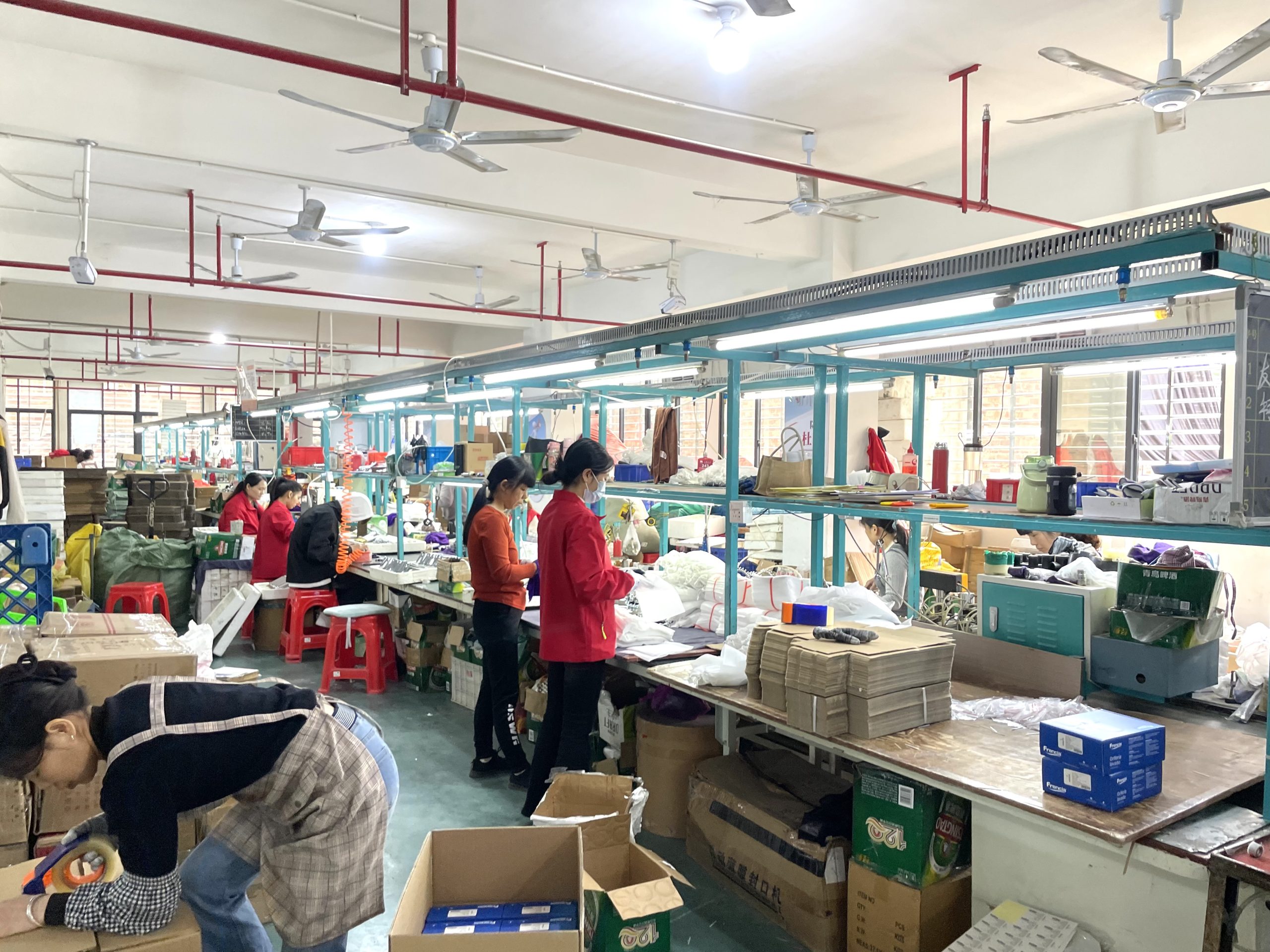
For faucet OEM/ODM projects, sample quality is only the beginning. The real test of a supplier’s manufacturing capability comes when the product enters mass production.
After moving from sample development to volume production, differences may occur between batches in dimensions, surface finishes, and assembly quality. Precision machining, standardized production processes, and continuous quality control help reduce these variations and ensure that approved sample requirements are consistently reproduced in bulk orders.
For brands and importers, more consistent mass production means fewer rework and after-sales issues. It also helps maintain uniform product performance across different batches in the market.
Therefore, when evaluating a long-term OEM/ODM partner, buyers should look beyond the sample itself and assess whether the supplier has the manufacturing capability to reliably reproduce that sample at scale.
5. Why Does Precision Manufacturing Capability Matter for Long-Term Supply?
The quality of a faucet is not determined by appearance alone. It is the result of material selection, machining, surface finishing, assembly, and quality inspection working together.
For B2B buyers, manufacturing capability affects more than the quality of an individual product. It directly influences consistency across OEM/ODM orders and the stability of long-term supply. A reliable manufacturing system can help brands, importers, and project buyers reduce quality variations and after-sales risks while building a more dependable supply relationship.
Therefore, when evaluating a Fábrica chinesa de torneiras, buyers should consider not only price, design, and lead time, but also its Precision faucet manufacturing capabilities.
For long-term OEM/ODM cooperation, the real value of manufacturing lies in the ability to consistently turn an approved product design into reliable mass production.