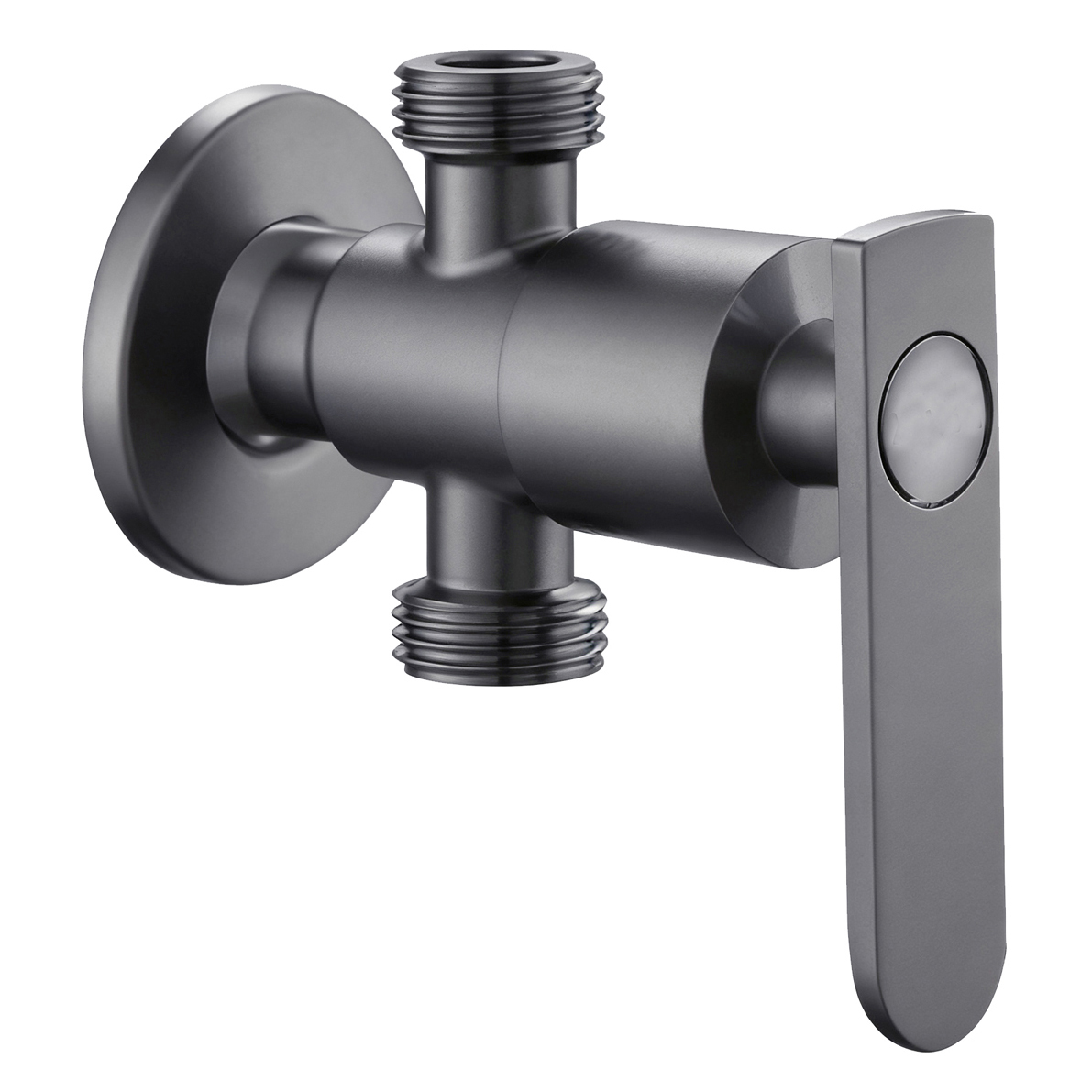




A faucet hose may occupy only one line on a quotation: “braided hose, fittings at both ends, specified length.”
Once installed, however, that hose connects the faucet to the water supply inside a limited under-sink space.
A fitting that can be threaded into place does not prove that the sealing method is correct. A hose that is long enough to reach both connections may still be stretched, twisted, or routed incorrectly. Material documentation for the inner tube does not demonstrate that the complete hose assembly has been verified.
Al seleccionar un faucet hose manufacturer, buyers should therefore evaluate the hose as a complete connection assembly.
An approved hose specification should answer five questions:
What materials are used? Where does each end connect? How will the hose be routed? How is each connection sealed? What evidence supports the complete assembly?
The appearance of the outer braid alone cannot answer these questions.
First Identify Which Type of Hose You Are Buying
Water supply hoses, kitchen pull-out hoses, and shower hoses perform different tasks.
They may have different movement patterns, connection designs, and operating conditions. The term “faucet hose” should not be treated as one universal specification. Neoperl also organizes hose products according to different applications.[1]
This article focuses mainly on flexible hose assemblies that connect the water supply to a faucet. Hoses designed for pull-out movement or other applications require their own evaluation.
If several hose types are included in the same order, they should have separate item codes. Warehouse or assembly teams should not identify them by length alone.
Para wholesale faucet supply hoses, the initial specification should identify the faucet, water-supply connection, intended water-contact application, and expected operating conditions.
Applicable temperature, pressure, and other requirements should be determined from the actual product and target market. A maximum value taken from one catalog model should not be applied automatically to every hose.
Identify the Materials From the Inner Tube to the Fittings
The outer braid is only one part of the hose.
The inner tube, end fittings, crimp sleeves, and seals can all affect whether the complete assembly is suitable for its intended use.
A purchasing specification can identify the material of each relevant component together with the supporting documentation and approved version. A description such as “high-quality stainless steel hose” is not enough to define the entire assembly.
Material identity also does not equal complete-hose performance.
If one inner-tube material works in an approved hose, replacing it with another material that carries the same generic name does not automatically produce the same result. Formulation, dimensions, construction, source, and connection processes may differ.
If the hose will contact drinking water, the applicable requirements and supporting evidence should be checked for the target market.
When a report covers only the inner tube, its scope should remain clear. It does not automatically provide evidence for the fittings, seals, or complete hose assembly.
A more useful supplier question is:
Which components contact water, what materials are used in those components, and how does each document correspond to the actual hose configuration?
Material or source changes also need to be controlled. The approved purchasing documentation should define which changes require notification, evaluation, or renewed approval.
A hose should not be treated as an uncontrolled accessory simply because it is a small part of the complete faucet.
Check Both Connections Separately
Connection verification should cover the relevant connection specification, male or female configuration, mating conditions, sealing location, and required mating components.
Two fittings with the same nominal size are not necessarily compatible.
Being able to screw a fitting in for several turns is not sufficient evidence that the connection and sealing method are correct.
| Connection | Information Provided to the Supplier | Information to Confirm |
|---|---|---|
| Faucet end | Faucet-body interface drawing, installation space, intended sealing method | Fitting drawing, mating conditions, assembly requirements, and relevant limitations |
| Supply end | Controlled specification for the angle valve or other supply connection | Corresponding fitting, seal, installation method, and compatibility basis |
| Complete connection | Relative position of both ends and actual routing | Suitable length, permitted routing conditions, and scope of complete-hose verification |
Where a connection uses an O-ring, gasket, or another sealing component, the corresponding sealing surface must also be compatible.
The sealing method should come from the design and installation information. Buyers should not assume that every fitting seals through its threads.
Adding extra gaskets, sealing materials, or other improvised components should not be used to hide an incompatible connection.
For flexible faucet connectors, a complete connection drawing is more useful than photographs of the fittings alone. The drawing should allow the technical team to identify the mating components and any areas that require tool access.
Assembly torque or other model-specific parameters should come from approved product documentation rather than from a universal value.
Choose Hose Length by Following the Actual Route
Hose length should be based on the real installation path, not simply on the straight-line distance between two connection points.
The route may need to pass around the sink, drain system, or other under-cabinet equipment.
A hose that is too short may place unnecessary stress on its connections. Excess length may also create unsuitable loops or routing. The final selection should follow the installation conditions permitted for the specific hose.
Neoperl technical information provides product-specific installation details, including bending considerations for relevant hose products.[2] Buyers should therefore obtain the limitations for the candidate hose rather than applying one bending-radius figure found elsewhere to every construction.
During sample installation, check for:
- twisting;
- sharp bends;
- contact with sharp edges;
- compression by nearby equipment; and
- unnecessary tension at either connection.
The hose position can also change while the end fittings are tightened. The final installed condition is therefore more important than how the hose looks before connection.
If the connected component moves during normal use, the hose path should also be checked through the expected movement.
Confirmed routing conditions can then be transferred into installation information. If a hose is suitable only under specific connection or routing conditions, those limitations should remain visible rather than being replaced by a broad claim such as “fits any cabinet.”
Check How the Hose Assembly Is Controlled
How the hose and fittings are assembled is another part of supplier evaluation.
Depending on the design, buyers may need to understand who performs the assembly or crimping, which process conditions are controlled, and how production and inspection records relate to the supplied batch.
Seeing a crimping machine in a factory does not by itself demonstrate consistent hose quality.
For the approved hose model, the supplier should be able to connect the material identity, relevant production controls, inspection, and final release to the product being supplied.
The hose also needs its own product definition and verification records. General faucet inspection photographs or factory equipment images do not demonstrate that a specific hose assembly has been approved.
Whether the supplier manufactures the complete hose internally or purchases a finished assembly is not, by itself, the deciding factor.
What matters is whether responsibility for materials, assembly, changes, verification, and product release is clearly controlled for the actual item being purchased.
Avoid Four Evidence Mismatches When Verifying the Complete Hose
1. Product mismatch
An inner-tube material report should not be used as evidence for the complete hose.
Likewise, a test for one fitting configuration should not automatically be applied to another.
The first step is to identify the tested sample and confirm how it relates to the ordered product.
2. Test-condition mismatch
“Pressure tested” is not a complete description of verification.
The relevant pressure, sealing, connection-strength, temperature, or cycling evaluations should be selected according to the applicable requirements and product risks.
Different tests answer different questions. Passing one test should not be described as proof of every aspect of hose reliability.
3. Version mismatch
A hose may have been verified in the past, but its material, fitting, or assembly process may have changed since then.
The effect of those changes on previous verification should be evaluated. A document should not remain the sole basis for approval simply because it has not reached an expiry date.
4. Assembly-level mismatch
Even when a hose has been evaluated as a separate assembly, its connection to the actual faucet and water supply may still need confirmation.
Where necessary, combined evaluation should cover the interface, routing, and relevant installation conditions.
Installation checks and laboratory tests serve different purposes and should not be treated as unlimited substitutes for each other.
Move From Sample Approval to Trial Supply
A practical qualification process can be divided into four stages:
Documentation review → Sample fit check → Required verification → Trial supply
Each stage should have a defined completion condition. Receiving an acceptable sample should not automatically place every hose from that supplier on the approved purchasing list.
During trial supply, check whether the delivered product still matches the approved configuration.
Packaging and identification should also allow receiving teams to distinguish the correct hose. This becomes especially important when several lengths or fitting combinations look almost identical.
Final approval should identify the permitted model, configuration, and intended use. It should also define which changes require another review.
Approval of one water supply hose does not automatically approve every hose produced or sold by the same supplier.
Keep the Product Traceable After Approval
If leakage, a loose fitting, or another abnormal condition is reported, the investigation should begin with identifiable product information rather than assumptions about whether the cause is installation or manufacturing.
Relevant records may include the hose model, batch, installation conditions, and observed problem.
Batch identification should connect the supplied hose to appropriate shipment and material records. The exact level of traceability depends on the product and management system, but the supplier should be able to determine which products may share the same relevant materials or production conditions.
Without that connection, one hose problem can quickly turn into uncertainty about multiple previous shipments.
Para faucet hose OEM projects, traceability can be considered together with the required fittings, packaging, product identification, and verification.
For projects with defined connection and installation conditions, information about both hose ends and the actual under-sink layout can also help YOROOW match the hose configuration to the faucet and water-supply connection more accurately.
A hose belongs on an approved purchasing list because its materials, fittings, routing, assembly, and complete-hose evidence correspond to the intended application—not simply because one line on the accessory list says “braided faucet hose.”
References
[1] Neoperl Hoses。
[2] Neoperl 软管产品目录。