



During a Faucet Factory Audit, business licenses, showrooms and samples reveal only part of a supplier’s capabilities.
For an OEM order, the more important question is whether the factory can reproduce the approved specifications and quality requirements throughout production, inspection and shipment.
A useful way to audit a China faucet factory is to follow the actual order process. Check whether production steps, records and responsibilities connect clearly from one stage to the next.
Start with Incoming Materials, Not Just Finished Faucets
The final performance of a faucet depends on multiple components. A factory audit should therefore begin with the management of major materials and parts.
Check how the factory identifies faucet bodies, cartridges, hoses, seals, handles and other key components. Look for clear specifications or supplier records. It is also important to understand how the factory prevents materials or parts from being mixed between different orders.
Some factories use external suppliers for certain processes. Outsourcing itself does not automatically indicate a problem.
The more useful questions are: Which processes are outsourced? How does the factory inspect incoming outsourced work? How does it record changes when they occur?
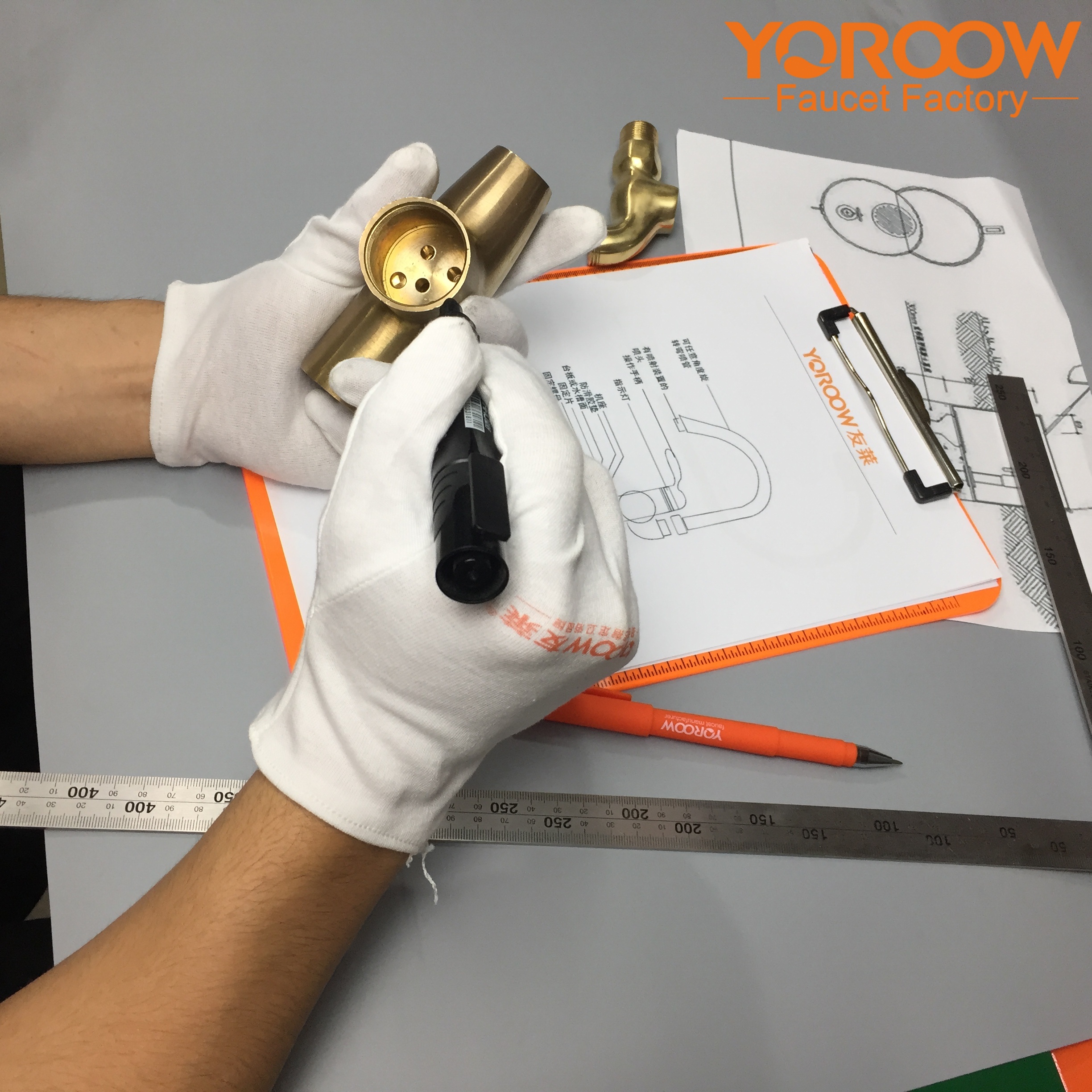
Follow the Production Process to Review Quality Control
Instead of simply asking whether the factory has QC, follow the production process and look at the actual inspection points.
These may include incoming materials, machining or outsourced-process inspection, assembly, sealing or pressure-related testing, surface inspection, packaging and final pre-shipment inspection.
The important point is not whether inspection procedures appear on the factory wall.
Look for actual records and check whether they connect to specific models, batches and orders.
If a problem occurs during assembly, the audit should also show how the factory handles nonconforming products. The process should identify problems at the relevant production stage rather than leaving everything for final inspection.
Checking a Previous Order Can Reveal More Than Reviewing the Current Sample
A Factory Audit can easily become a prepared presentation. One useful approach is to select a completed order and trace it backward.
Start with the final shipment record. Then check the approved sample, BOM, packaging requirements, production or inspection records, and any material, supplier or structural changes that occurred during the order.
When these records correspond with one another, they show that the factory can do more than produce one acceptable sample. They also provide evidence of order traceability.
If sample, production and shipment records remain separate, further questions are necessary.
For example, when an OEM order changes, how does the factory prevent an outdated specification or previous product version from entering production?
OEM Capability Ultimately Depends on Repeatability
The purpose of a مصنع الصنبور Audit is not to find the supplier with the most impressive equipment.
It is to determine whether the factory can turn approved product requirements into consistent production.
For an OEM project, three questions are especially important:
- Can the approved sample specifications transfer accurately into mass production?
- Does the factory record and control changes during production?
- Can pre-shipment inspection confirm that the final products still match the approved version?
From the manufacturing perspective of a China faucet factory, long-term cooperation does not depend on producing one good sample.
It depends on whether the same quality requirements can be repeated across future orders.