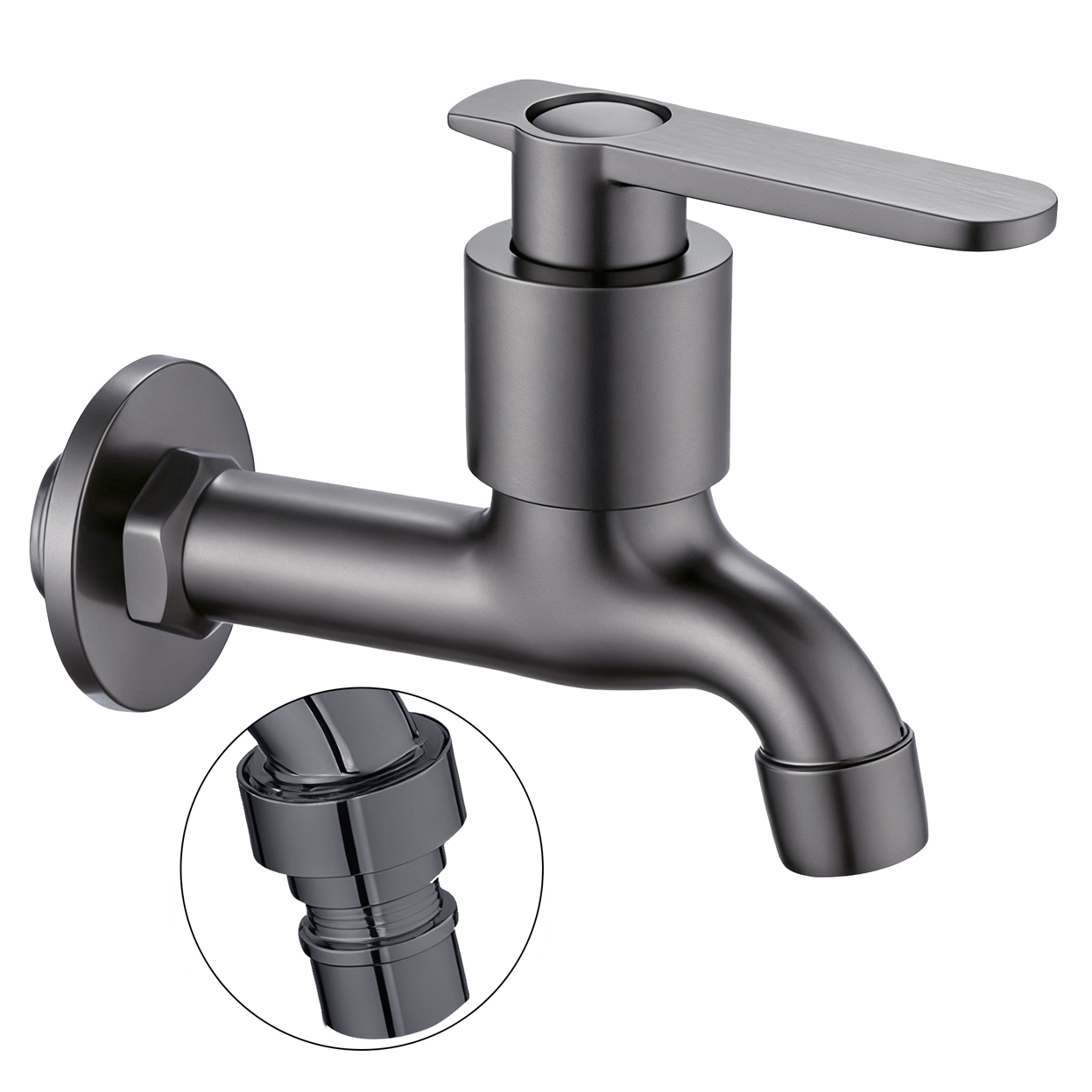




A gold faucet that looks right in a showroom does not guarantee that the same finish will still match when replacement handles or a second production batch arrive six months later.
Faucet finish selection needs to answer more than which color looks attractive. It also needs to consider how the surface is produced, how its appearance is approved, how it performs under expected use, and whether the same finish can be reproduced for future orders.
Reducing PVD vs. electroplated faucet finish to a question of which one looks more premium can overlook the factors that affect a product series over time: appearance consistency, cleaning requirements, durability evidence, and replenishment.
A more practical approach is to approve the required appearance and use conditions first, then compare the available finishing processes and supporting evidence. A process name helps describe how a finish is made, but it cannot by itself guarantee the long-term performance of the finished faucet.
Separate Finish Names from Manufacturing Processes
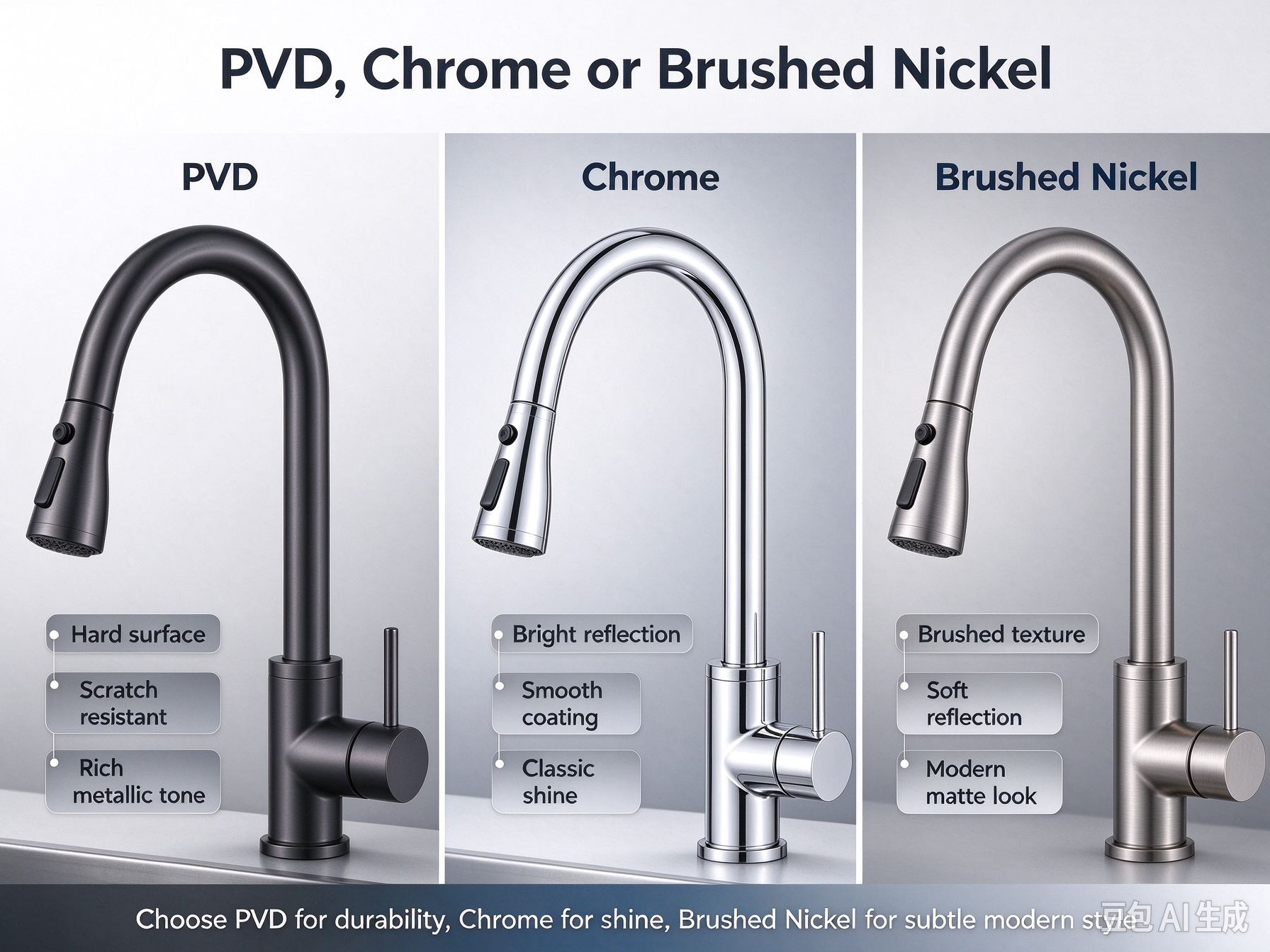
PVD describes a group of physical vapor deposition technologies. Chrome plating generally refers to a finishing process that produces a chromium layer, while brushed nickel is commonly used to describe a nickel-colored finish with a directional surface texture.
These terms do not describe the same type of information.
A purchasing document that treats them as three simple finish choices can mix together the manufacturing process, coating system, and visible appearance. The supplier should be able to explain the relevant substrate, surface preparation and final finishing system for the actual product.
Decorative PVD coatings can preserve surface structures formed before coating and can be produced in different color directions. This means that even when two products use a similar coating technology, differences in the underlying surface can affect the final appearance.
For this reason, approving only a description such as “PVD gold” is usually not enough. The required color, gloss, texture and approved sample also need to be identifiable.
The same principle applies to other finish names. “Brushed” does not automatically mean the faucet body is stainless steel, and “nickel” in a product description does not by itself define the material construction of the complete faucet.
Consumer-facing product pages can use familiar color names. Technical and purchasing documents should go further by identifying the finish code, sample and product configuration that the supplier is expected to reproduce.
Compare Finishes Under the Same Product Conditions
A useful faucet finish durability comparison starts with the actual product being purchased.
The comparison should identify the substrate, components, surface system and test configuration. A result from a flat test panel should not automatically be compared with a result from a complex assembled faucet. Likewise, different test conditions should not be treated as directly comparable simply because both reports show a number of hours.
The same faucet model can also require different finishing steps depending on the target appearance and surface condition. Polishing, brushing and electroplating may be used at different stages depending on the product and finish rather than as a fixed sequence for every SKU.
When a supplier proposes several finishing routes, the useful questions are therefore:
- What appearance is the process intended to achieve?
- Which parts of the faucet use the finish?
- What surface preparation is required?
- What evidence is available for the proposed configuration?
- Which parts of the finished product are included in the verification?
This makes the comparison more meaningful than simply asking which process is considered more durable.
Approve the Finish as a Repeatable Product Standard
Faucet finish selection for retail collections should consider the complete product combination, not just an isolated color sample.
The faucet body, handle, base, drain assembly, shower components or other visible accessories may appear together in the same collection. A finish that looks acceptable on one sample may still look different when several curved or textured components are viewed together.
Brushed surfaces also need attention to grain direction and texture. Lighting and viewing angle can affect how a curved faucet appears, so the conditions used to approve the sample should be clear enough to provide a consistent reference.
A practical finish standard can remain simple:
| What needs to be approved | What should be retained for future comparison |
|---|---|
| Color and gloss | Approved physical sample and viewing conditions |
| Brushing or other texture | Texture direction, area and representative sample |
| Visible components | Appearance checked after assembly |
| Matching accessories | Approved combination and component identification |
The purpose is not to create an unrealistic requirement for absolute visual uniformity. It is to define what the supplier, inspection team and product team are comparing when they discuss whether a finish matches the approved version.
Photos can support communication, but lighting, cameras and screens can change how a color appears. Where instrumental measurement is required, the measurement location, method and acceptable range should be agreed in advance rather than debated after delivery.
Replenishment Consistency Is Part of the Finish Decision
The first approved sample becomes more useful when its condition and identity can be maintained until the next production order.
A controlled reference sample helps prevent a common problem: the first batch is approved against one appearance, while a later batch is judged against a different photograph, display sample or replacement component.
This matters even more when a collection contains several products and finishes.
For example, a collection with three faucet models and two finishes creates six product combinations. If each finish is also matched with a different drain or shower accessory, replenishment requires those relationships to be maintained as well.
The example is not a standard SKU rule. It simply shows why adding another finish can affect purchasing and inventory management beyond adding another color to a catalog.
Before expanding a finish range, it is useful to consider whether the new finish will also require:
- Additional reference samples
- Matching accessories
- Separate replacement parts
- Different replenishment quantities
- New verification evidence
- Updated product or maintenance information
A finish surcharge is only one part of this decision. The longer-term cost can also come from maintaining more combinations across the product range.
Connect Finish Durability With Real Cleaning Conditions
When customers compare brushed nickel vs. chrome faucets, questions about fingerprints, water spots and cleaning are often as important as the initial appearance.
A product should not be described as “durable” in a way that implies every cleaning chemical or method is suitable. The maintenance instructions should correspond to the actual finish and be consistent with the product’s verified performance and warranty conditions.
For example, Moen’s official care guidance for its products recommends relatively gentle cleaning methods, rinsing and drying with a soft cloth, while warning against abrasive cleaning products. This is useful as an example of why maintenance instructions belong in product documentation, but it should not automatically be treated as a universal requirement for every faucet finish.
Special coatings and products containing electronic components may require more specific cleaning instructions.
The same principle applies to durability testing. A salt-spray result or another surface test should be read together with the sample, test method, duration and evaluation criteria. Corrosion resistance, scratch resistance, color consistency and cleaning compatibility are different performance questions.
A single test result therefore should not be used as a substitute for the entire finish evaluation.
If a future order changes the substrate, surface preparation or finishing system, an earlier test report may also need to be reviewed to determine whether it still represents the new configuration.
Make the Approved Finish Reproducible for Future Orders
A useful finish standard does not need to become a complicated approval form. It simply needs to connect the appearance that was approved with the product configuration that will be reproduced.
The key information may include:
- Faucet model and visible components
- Finish name or code
- Approved physical sample
- Viewing or measurement conditions
- Relevant verification documents
- Cleaning requirements
- Rules for finish or component changes
This creates a common reference for product development, purchasing, production and inspection.
The goal of finish selection is therefore not simply to decide whether PVD, chrome or brushed nickel looks better. The more practical question is whether the chosen finish can be clearly specified, appropriately verified, properly maintained and reproduced when the next order arrives.