


After a hand shower has been used for some time, white or grayish-white deposits may appear around its water outlets. Sometimes, the shower head looks relatively clean, but limescale has already formed around certain nozzles, causing water jets to spray at unusual angles, uneven spray patterns, or blockages in individual outlets.
These problems are usually related to minerals in the water, moisture remaining after use, and nozzle design. In hard water areas, limescale can gradually accumulate around smaller water outlets.
However, not all hand showers have the same nozzle structure. Flexible silicone nozzles and rigid water outlets require different cleaning methods, and improper cleaning may damage the nozzles or the shower head’s surface finish.
Understanding why limescale forms and choosing the appropriate cleaning method for each nozzle material can help address blockages and maintain normal spray performance.
1. Why Does Limescale Build Up Around Hand Shower Nozzles?
Limescale mainly forms from mineral deposits in water. Hand shower nozzles are particularly prone to buildup because water repeatedly passes through them, and droplets often remain around the outlets after use.
How Do Minerals in Water Form Limescale?
Tap water typically contains minerals such as calcium and magnesium. In hard water areas, these minerals are present at higher concentrations, increasing the likelihood of limescale formation.
When calcium carbonate precipitates from water, or when mineral-containing droplets evaporate, deposits may remain on the shower head’s surface and around its water outlets. Over time, these deposits can form visible white or grayish-white limescale.
As a result, even when the same hand shower model is used, the amount of limescale buildup can vary significantly between regions.
Why Does Limescale Concentrate Around Water Outlets?
After the shower is turned off, some water droplets may remain around the nozzle openings and surrounding surfaces.
As the water evaporates, minerals can be left behind near the outlets. With repeated use, these deposits gradually accumulate, often forming visible limescale around the nozzle edges.
Compared with deposits on the outer surface of the shower head, limescale around water outlets deserves particular attention. Because these openings are relatively small, even a limited amount of buildup may affect the local water flow.
When deposits cover the edges of an outlet or extend into the water passage, they may reduce the effective opening area, causing water jets to change direction or reducing the amount of water coming through.
2. How Does Nozzle Design Affect Hand Shower Cleaning?
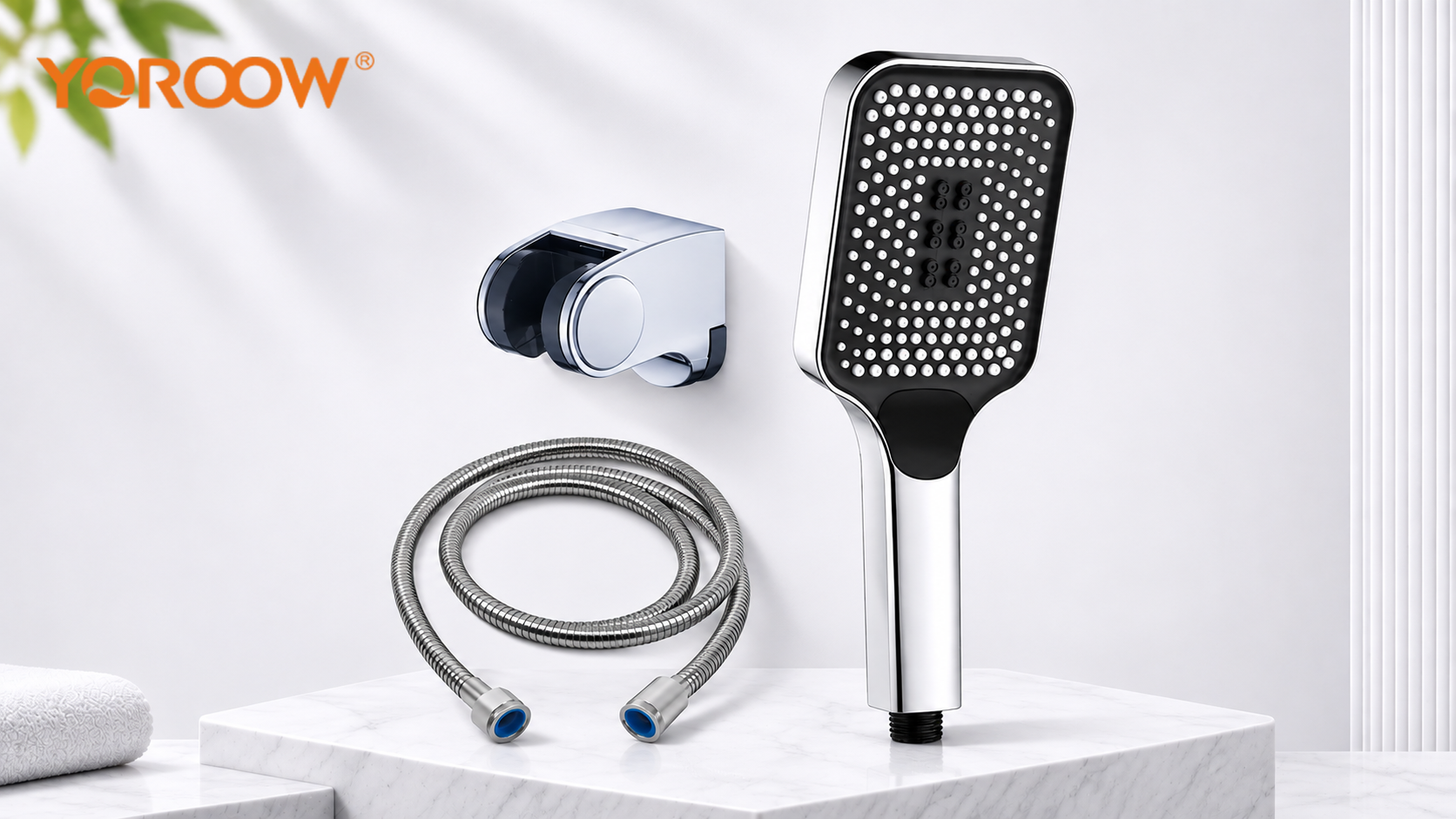
Not all hand showers use the same water outlet structure. Nozzle material, opening shape, and flexibility influence which cleaning methods are suitable.
Why Are Flexible Silicone Nozzles Easier to Clean by Rubbing?
Silicone has a certain degree of flexibility. For silicone nozzles designed to allow cleaning by rubbing, gently rubbing the area around the openings with your fingers can help loosen some surface limescale. The loosened deposits can then be rinsed away with clean water.
This method takes advantage of the nozzle material’s ability to deform slightly, without requiring hard tools to scrape the openings.
However, silicone nozzles are not immune to limescale. If deposits have entered the water passages or have accumulated over a long period, rubbing alone may not remove them completely.
In addition, silicone nozzles can differ in structure and attachment methods. Whether rubbing is an appropriate cleaning method should always be confirmed in the manufacturer’s maintenance instructions.
How Should Rigid Water Outlets Be Cleaned?
Some hand showers use rigid materials to form their water outlets. Unlike flexible silicone nozzles, these openings cannot be slightly deformed to loosen deposits.
For these designs, it is best to start with clean water, a soft cloth, and cleaning methods approved by the manufacturer.
Sharp tools such as metal needles or knife tips should not be used to forcefully clear blocked openings. They may damage the outlet edges and affect the original spray pattern.
Do Anti-Limescale Nozzles Really Prevent Limescale?
Some hand showers función anti-limescale nozzles, which are generally designed to make deposits around the water outlets easier to remove.
This does not mean they prevent minerals in water from forming deposits.
Even flexible silicone nozzles can develop limescale in hard water conditions. Therefore, when evaluating how easy a hand shower is to clean, it is more useful to consider the actual nozzle structure and maintenance method than to rely solely on the term “anti-limescale.”
3. How Can You Tell Whether Limescale Is Affecting Hand Shower Performance?
When a hand shower develops an unusual spray pattern, the first step is to determine whether the problem affects individual outlets or the entire shower head.
Different symptoms may indicate different causes.
| Spray Problem | Posible causa | What to Check |
|---|---|---|
| Individual water jets spray at unusual angles | Deposits around the outlet edges | Check the affected nozzles for limescale |
| Reduced flow from some outlets | Deposits reducing the effective outlet area | Inspect the openings for blockages |
| Uneven spray distribution | Several outlets are obstructed to different degrees | Examine the nozzle surfaces and openings |
| Noticeably weaker overall water flow | Limescale, changes in water pressure, or blockages in other components | Check both the nozzles and water supply components |
Localized Spray Problems: Check the Nozzles First
If only a few outlets produce angled, split, or weaker water jets, start by checking for visible limescale around those openings.
When deposits affect the shape of an outlet, the direction of the water jet may change. Removing the deposits may restore normal flow from the affected outlets.
Weak Overall Water Flow: Limescale May Not Be the Cause
If water flow becomes noticeably weaker across all outlets, it should not automatically be attributed to blocked nozzles.
In addition to limescale, changes in water supply pressure, clogged filter components, or problems with the shower hose may affect overall flow.
Before cleaning, observe how widespread the problem is. If there are no obvious deposits around the nozzles, other components affecting the water supply should be checked rather than repeatedly applying descaling products.
4. How Can You Clean Hand Shower Nozzles Safely and Correctly?
When cleaning a hand shower, start with gentle methods. More thorough descaling should only be considered when necessary, based on the condition of the deposits.
Step 1: Inspect the Nozzles and Locate the Limescale
Check for white deposits around the water outlets and determine whether the buildup is mainly on the nozzle surfaces, around the opening edges, or potentially affecting water flow.
Also identify whether the shower head has flexible nozzles or rigid water outlets to avoid using an unsuitable cleaning method.
Step 2: Remove Loose Surface Deposits
Start by gently wiping the spray face with clean water and a soft cloth to remove dirt and deposits that can be easily loosened.
For flexible silicone nozzles that the manufacturer allows to be cleaned by rubbing, gently rub the areas around the openings with your fingers to loosen some of the limescale, then rinse with clean water.
For rigid water outlets, use a gentle cleaning method suitable for their material.
Regardless of nozzle type, avoid using sharp tools to force open or enlarge the water outlets. Flexible nozzles should also not be pulled or stretched forcefully.
Step 3: Use a Suitable Descaling Product If Necessary
If limescale is firmly attached and cannot be removed through ordinary wiping, consult the shower manufacturer’s cleaning instructions to determine whether a descaling product is permitted.
When selecting a cleaner, consider not only the nozzle material but also whether the product is compatible with the shower head’s surface finish and other components that may come into contact with it.
Follow both the cleaning product instructions and the shower manufacturer’s recommendations. Avoid using strong acidic cleaners, prolonged soaking, or aggressive scrubbing without confirming that these methods are suitable.
It is especially important to remember that a descaling method suitable for one hand shower may not be appropriate for products made from different materials or with different surface finishes.
Step 4: Rinse and Check the Spray Performance
After cleaning, thoroughly rinse the nozzles and treated areas with clean water to remove loosened deposits and any remaining cleaning product.
Then turn on the shower and check whether the previously affected outlets have returned to normal.
If individual water jets still spray at unusual angles or the overall water flow remains noticeably weak, investigate other possible blockages or water supply problems.
Do not repeatedly use stronger cleaning products simply because the first cleaning attempt did not improve the spray performance.
5. How Can Regular Maintenance Reduce Limescale Buildup?
Limescale formation depends on water quality, frequency of use, and moisture remaining after use. Although regular maintenance cannot completely prevent limescale, it can reduce the accumulation of deposits over time.
After using the hand shower, wiping away remaining water droplets from the spray face and around the nozzles can help reduce mineral deposits left behind as water evaporates.
It is also useful to inspect the outlets regularly for white deposits, especially if individual water jets begin to spray at unusual angles or produce less water.
In hard water areas, nozzles may require more frequent inspection and cleaning. However, the appropriate maintenance frequency should depend on actual limescale buildup and the product’s instructions. There is no need to apply the same cleaning schedule to every hand shower.
Conclusion: Proper Cleaning Starts with Understanding Nozzle Design
Limescale tends to accumulate around hand shower outlets because of minerals in water, droplets remaining after use, and the small size of the openings. As deposits build up, they may affect the direction of individual water jets and the overall spray distribution.
The key to proper cleaning is to identify where the limescale has formed and choose a method suitable for the nozzle material. Some flexible silicone nozzles can be gently rubbed to help remove surface deposits, while rigid water outlets require different cleaning methods.
Regularly inspecting the nozzles, removing deposits before they become severe, and avoiding unsuitable cleaning tools and descaling products can help maintain normal hand shower spray performance.