



Having several series within one Faucet Product Line is not a problem. The real problem begins when two series both need to exist, but it becomes increasingly difficult to explain what makes them different.
When price, design, function and product positioning become too similar, a new series may not expand product coverage. Instead, it may compete with an existing series for the same purchase decision.
A Luxury Kitchen Faucet Needs a Clear Reason to Upgrade
Suppose an existing product line already includes a mainstream Kitchen Faucet range. A new Luxury Kitchen Faucet should offer more than another Finish or a small design change.
If its price, function and overall product experience remain close to the existing range, the boundary between the two series becomes unclear.
A high end kitchen faucet needs to answer one important question:
Why does this product belong to a higher product tier?
The answer may come from stronger design proportions, material and Finish choices, operating experience, function combinations, detailing or overall product presentation.
These changes need to create differences that customers can understand and recognize.
If the price moves into a higher range while the upgrade still depends mainly on color or decorative details, the premium positioning becomes difficult to support.
Define Series Boundaries Across Several Dimensions
To identify internal competition between two series, compare several factors together: price position, design language, function configuration and intended use.
Every factor does not need to be completely different.
For example, two series can share some internal structures. One may remain focused on mainstream functions and pricing, while the other introduces clearer upgrades in design, function or product details.
From a product development perspective, this approach can also make more sense than building a completely independent structure for every series.
The goal is to create product value that customers can recognize, not to create more components simply to make two series look different.
Do Not Use More SKUs to Fix Overlapping Positioning
When the positioning between two series is unclear, adding more colors, sizes or designs usually does not solve the problem.
The result may be Series A with several similar SKUs and Series B with another group of similar SKUs, while the two series continue to overlap.
Sometimes both series still deserve a place in the product line. In that case, the problem is not necessarily the number of SKUs but the role of each series.
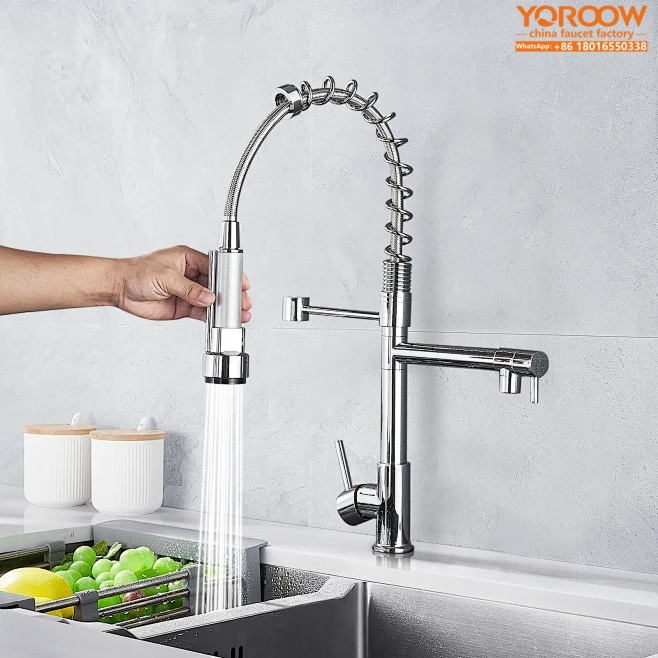
One series could cover mainstream pricing and functional needs. The faucet kitchen luxury series could then focus on a higher level of design, Finish, operating experience or configuration.
Every Series Needs Its Own Reason to Be Chosen
A simple question can help define a Product Line Boundary:
If two series appear side by side, why should one customer choose Series A while another chooses Series B?
If the only answer is “the styles are different,” the boundary may still be too weak.
If each series offers clear differences in price, design, function, product details or intended use, both can hold a distinct position instead of replacing each other.
The purpose of a Luxury Kitchen Faucet is not simply to add a “premium series” to the product catalog.
A higher price should correspond to clearer and more consistent product differences.