



A buyer writes, “Please use a better aerator.” The supplier may understand this as a request for a different stream pattern, while the buyer may actually want a lower flow rate.
Another RFQ says, “We need the same cartridge.” The supplier quotes a cartridge with the same diameter, but the buyer expects the same handle movement and water flow direction as the previous version.
Both sides may be using the same English term while describing different requirements.
For faucet buyers, terminology becomes useful only when it is connected to a specific component, function, and verification condition.
This guide focuses on four common terms found in faucet catalogs, drawings, and quotations: aerator, ceramic disc cartridge, diverter, and flow rate. The first three usually refer to components or functional assemblies. Flow rate is a performance parameter.
Understanding that difference is the first step toward turning technical vocabulary into a purchasing requirement that a supplier can actually confirm.
Aerator: Are You Asking About the Stream or the Flow Rate?
When buyers ask what is a faucet aerator, the easiest place to start is the faucet outlet.
An aerator is commonly installed at the end of the spout to control how water leaves the faucet. Different designs can create different stream characteristics. Some models may also restrict or regulate flow.
However, the presence of a mesh-like component at the outlet does not mean every aerator provides the same water-saving, flow-control, or filtration performance.
NEOPERL, for example, offers aerators in different product families, sizes, flow rates, and installation designs, including housed and concealed versions.[1] This illustrates an important purchasing point: “aerator” describes a product category, not a complete replacement specification.
A buyer should therefore confirm the exact model, connection, required stream pattern, flow conditions, and maintenance method.
Stream pattern and flow rate should also be treated as separate requirements.
A buyer may want a softer stream, a more defined water column, or less splashing. These describe aspects of the water delivery experience. Flow rate, by contrast, needs to be expressed as a measurable value under defined conditions.
Installing an aerator with a lower flow rate does not automatically mean it will provide a better experience with every sink. Likewise, a visually fuller stream does not prove that the faucet is delivering more water.
It is also useful to distinguish between a flow restrictor and a flow regulator. NEOPERL explains that fixed-orifice restriction and pressure-compensating flow regulation behave differently as pressure changes.
Therefore, writing only “water-saving aerator” in an RFQ still leaves important questions unanswered.
A clearer request would be:
“Please provide the proposed aerator model, connection details, target flow rate and corresponding test conditions. Please also specify the stream type and removal or maintenance method.”
If an approved sample already exists, include its sample number rather than asking for something “similar to the previous one.”

Ceramic Disc Cartridge: Diameter Alone Does Not Define Compatibility
In the term ceramic disc cartridge, “ceramic disc” refers to the ceramic elements used to control the water path.
The complete cartridge also contains other components, such as its housing, operating connection, and sealing structure. Calling something a ceramic cartridge does not mean that the entire component is made from ceramic.
In a single-handle mixer, the cartridge may control both water flow and the mixing of hot and cold water. Other cartridge designs may perform different functions or operate differently.
SEDAL catalogs distinguish cartridges by type and specific model, while technical information also includes installation and fitting requirements.[3]
This is why a description such as 35 mm cartridge oder 40 mm cartridge is useful for initial identification, but not enough to prove compatibility with an existing faucet body.
Cartridge diameter is an identification clue, not a complete compatibility specification.
The position of the inlets and outlets, sealing surfaces, locating features, stem connection, and retaining method can all affect whether a cartridge works correctly in a particular faucet.
A buyer does not need to perform the engineering evaluation personally. However, the purchasing team should know what information needs to be checked.
When requesting a quotation, provide the cartridge model and relevant faucet-body information for technical review. If the supplier proposes an alternative cartridge, ask what is different and what needs to be reconfirmed.
“Same specification” without supporting drawings or compatibility information is not yet a controlled replacement.
The same applies to subjective descriptions such as “good handle feel.”
Opening resistance, hot-to-cold adjustment, shut-off position, and interference between the handle and the countertop or wall can all affect the operating experience. Handle length and final faucet assembly also influence how the cartridge feels in use.
Moving an uninstalled cartridge by hand a few times is therefore not enough to evaluate the complete faucet experience.
A more useful purchasing question is:
“What is the complete cartridge model, and how does it interface with our faucet body and handle? If the cartridge model changes, which dimensions and performance items need to be reconfirmed?”
That question provides much more purchasing value than simply asking whether the faucet uses a ceramic cartridge.
Diverter: Define Where the Water Goes
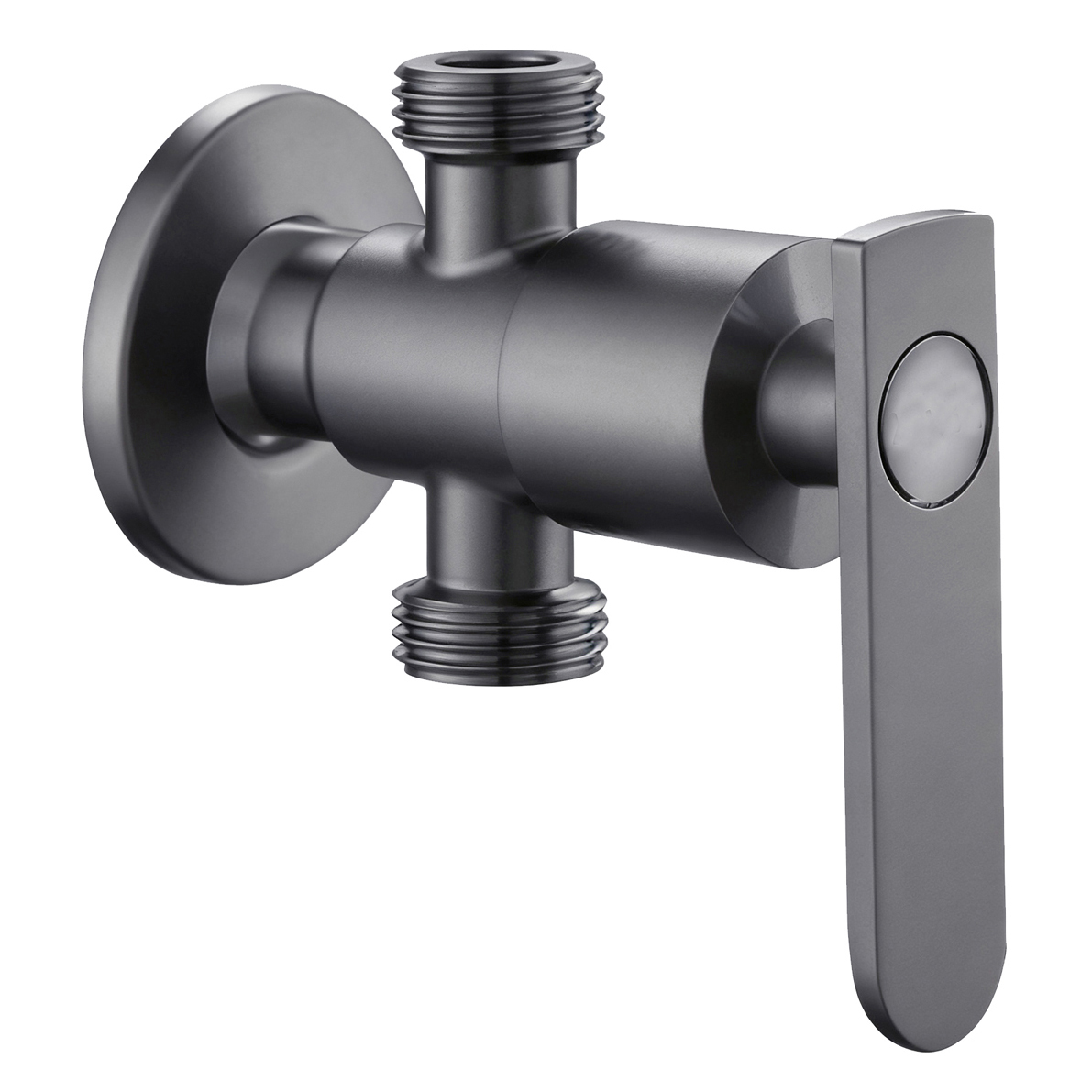
When asking what is a faucet diverter, the key idea is water-path switching.
A diverter directs water between different outlets. A common example is switching water between a tub spout and a shower outlet. Moen product information shows several practical examples of diverter configurations.
However, the operating method, internal components, and maintenance procedure of one product should not automatically be applied to another brand or model.
Diverter function is also different from temperature mixing.
A component that switches the water path does not automatically control temperature, limit maximum temperature, or provide backflow protection. Likewise, a product with multiple outlets does not necessarily allow those outlets to operate at the same time.
Those functions depend on the actual system design.
This is why a purchasing request such as “two-function diverter” may still be ambiguous.
The RFQ should identify the water path more clearly: How many inlets are there? Which outlets do they connect to? What happens at each operating position? Can two outlets operate simultaneously? Is there a required reset position after shut-off?
Buyers should also confirm whether the diverter is a separate component, integrated into the faucet body, or combined with another cartridge assembly.
An exterior photo may show the control knob without revealing how the internal waterway is arranged.
For a complete faucet or shower product, a clearer request would be:
“Please identify the water path at each operating position, the outlets that can be connected, the installation direction, and the maintenance access.”
If the final application has not yet been decided, define the required water-path function before choosing the handle shape or finish. This reduces the risk of approving an appearance before confirming that the internal configuration can perform the intended task.
Flow Rate: Every Number Needs a Unit and a Condition
When buyers ask what is a faucet flow rate, the basic definition is the volume of water delivered over a given period of time.
It may be expressed in liters per minute or gallons per minute, depending on the market and measurement system. The unit should always be stated. When gallons are used, the applicable definition should also be clear to avoid conversion errors between markets.
But a statement such as “the flow rate is X” is still incomplete.
The buyer also needs to know the conditions under which that value was obtained.
Relevant information may include the test or supply pressure, handle position, outlet mode, and product configuration. Whether cold, hot, mixed-water, or different spray modes need to be evaluated depends on the applicable requirements.
Static pressure measured while no water is flowing should not be treated as interchangeable with pressure under operating conditions without explanation.
Water also passes through the complete system, including hoses, the cartridge, internal waterways, and the outlet component. As a result, flow information for one component does not automatically represent the performance of the complete faucet.
For finished-product purchasing, the supporting information should correspond to the actual faucet configuration being quoted.
Buyers should also distinguish between a nominal value, maximum value, minimum requirement, acceptable range, and measured result. These terms answer different questions.
A test result that falls within an acceptable range does not mean that the same measured value can be guaranteed for every faucet under every installation condition.
A clearer RFQ question is:
“Please provide the flow-rate unit, test conditions, product configuration, and acceptance requirement. If the hose, cartridge, or aerator changes, does the complete faucet need to be rechecked?”
Only when these conditions are known can flow-rate figures from two quotations be meaningfully compared.
Putting These Terms Back Into a Faucet RFQ
Consider this hypothetical RFQ sentence:
“We need a high-quality cartridge, a water-saving aerator, and a two-function diverter.”
It names three component categories, but it does not define compatibility or functional boundaries. A supplier could propose several very different configurations that still appear to satisfy the wording.
A clearer request separates the three requirements:
“For the cartridge, please propose a model based on the attached faucet-body and handle drawings and identify the fitting dimensions that require confirmation. For the aerator, please recommend a model based on the required stream pattern and complete-faucet flow conditions, including connection information. For the diverter, please use the attached waterway diagram to show the outlet status at each operating position and the permitted operating combinations.”
Anything that has not yet been decided should remain clearly marked as to be confirmed.
If the requirements for the target market have not been verified, do not insert an arbitrary flow rate or certification name simply to complete the RFQ. If no controlled drawing exists, do not invent a dimension.
Clearly identifying missing information is usually more useful than filling a purchasing document with terms such as “standard configuration,” “same specification,” or “high quality.”
When Reading a Drawing, Identify the Object Before the Number
Non-engineering purchasing teams can use a simple reading order.
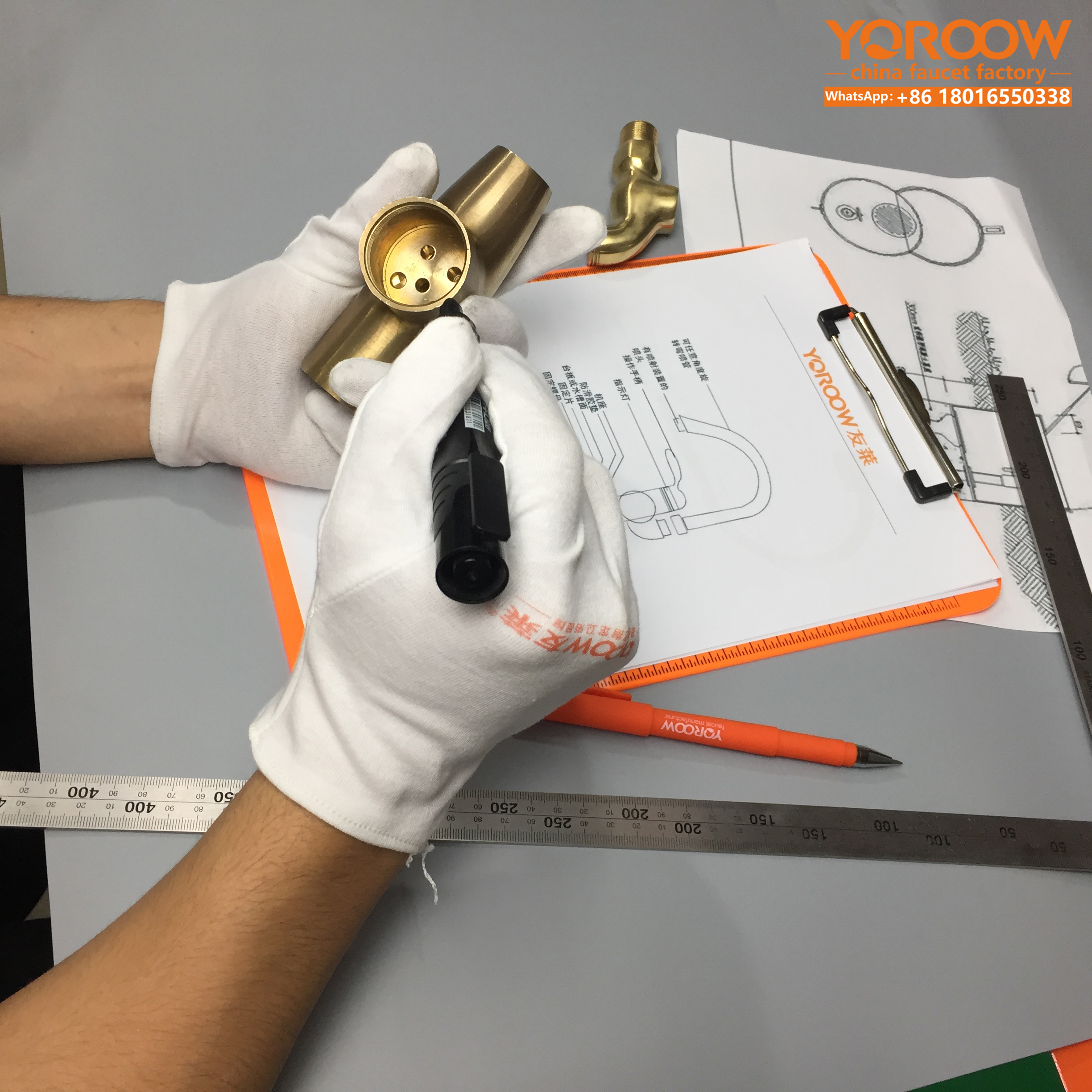
First, determine whether the drawing represents the complete faucet or an individual component. Then check whether its model matches the quotation and whether the revision is current. After that, identify which interface each dimension refers to and whether the notes impose requirements on material, assembly, or use.
If two documents conflict, ask the responsible technical person to clarify the difference. Do not select one number and place it into the purchase order without resolving the inconsistency.
Different documents also answer different questions.
An exploded view helps identify component locations. A dimensional drawing defines geometric conditions. A waterway diagram explains connections and functions. A test report records results under specified conditions.
A product photo cannot replace all of these documents, and a component catalog does not prove that the finished faucet has already been verified.
The same distinction matters in manufacturing. Identifying the component is only the first step. Drawings define how parts should fit. Assembly brings those parts together in the finished faucet. Testing then evaluates performance under specified conditions.
A component name alone cannot replace those stages.
A Short Purchasing Check
Before placing a technical term into an RFQ, ask:
- Does this term describe a component, a function, or a measured parameter?
- Can the quoted name be linked to a specific model and revision?
- When the supplier says “same,” does that mean the same appearance, dimensions, connection, or verified interchangeability?
- Does every parameter include its unit, condition, and acceptance basis?
- If the component changes, which finished-product documents or verification items need to be reviewed again?
When sending an inquiry to YOROOW, buyers can include a photo showing the location of an uncertain component and explain the actual requirement they are trying to solve.
The goal of technical purchasing communication is not to use more specialized vocabulary. It is to make sure that the terminology, drawings, samples, and purchase order all point to the same product and the same requirement.
References
[1] Neoperl 起泡器产品系列概览。
[2] Neoperl Water-saving technologies for aerators。
[3] Sedal 产品技术目录。