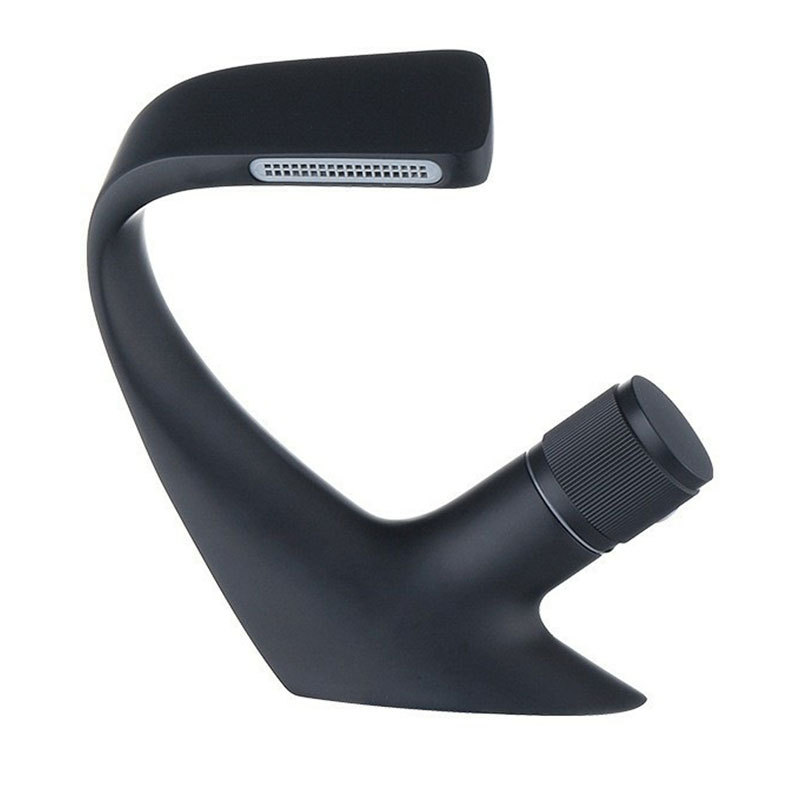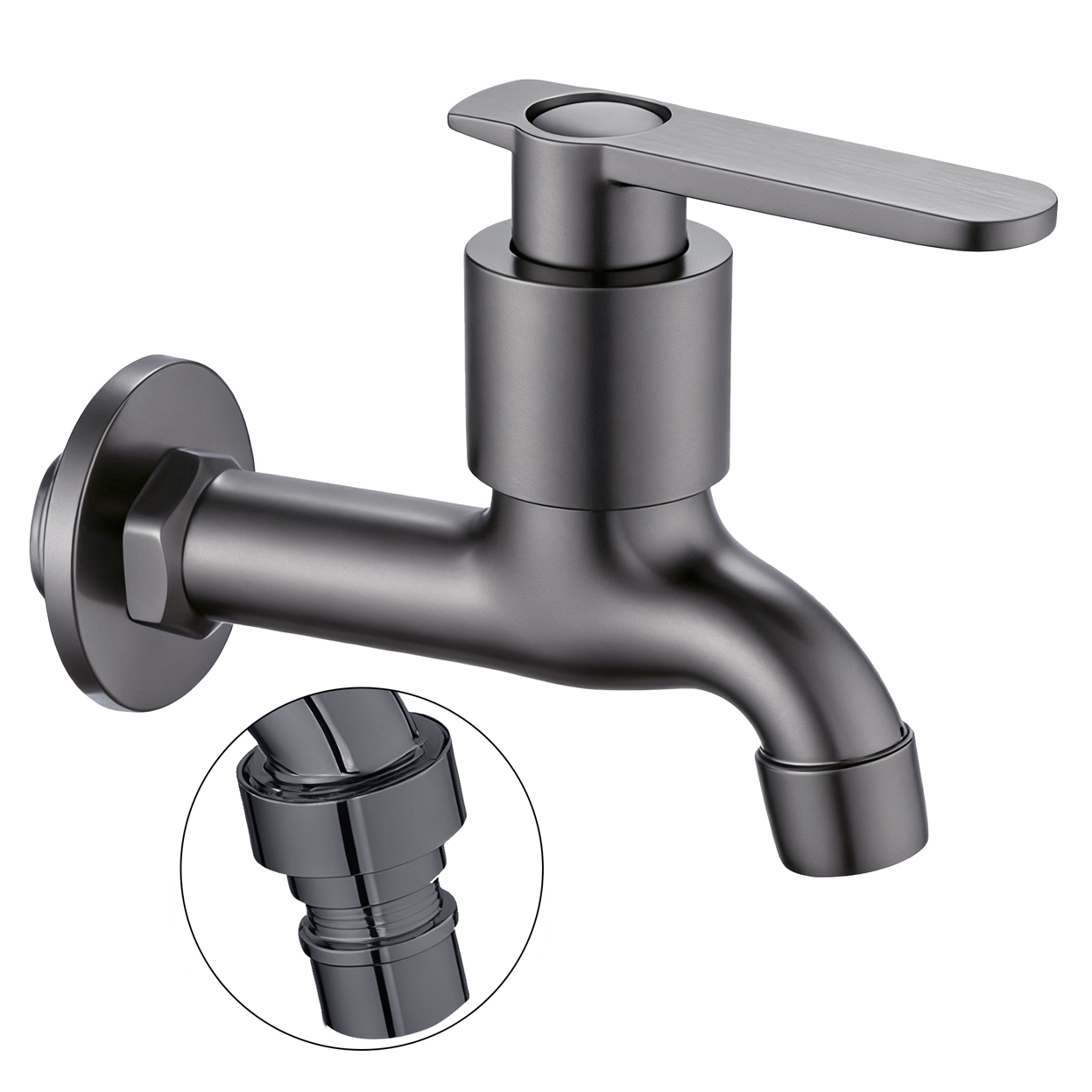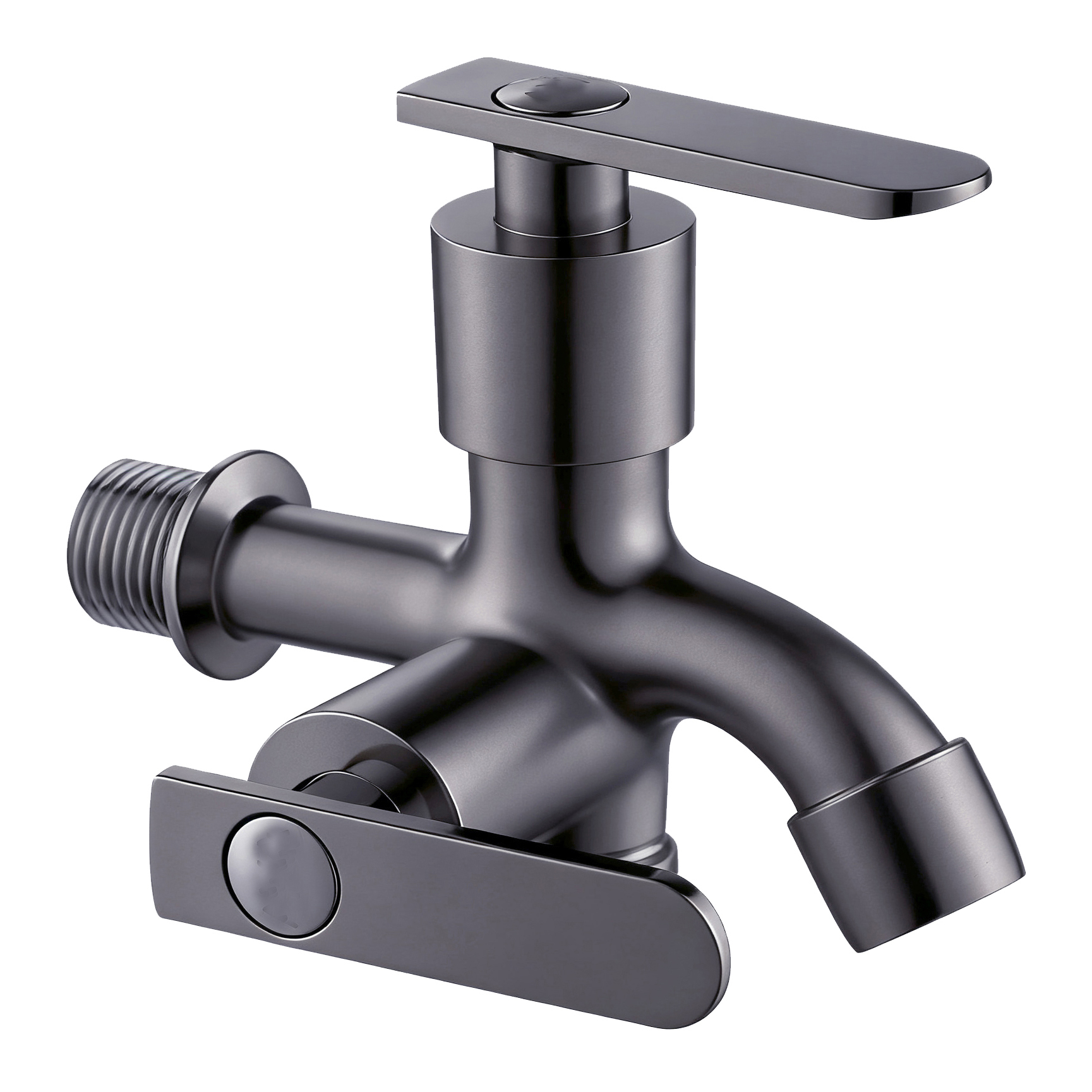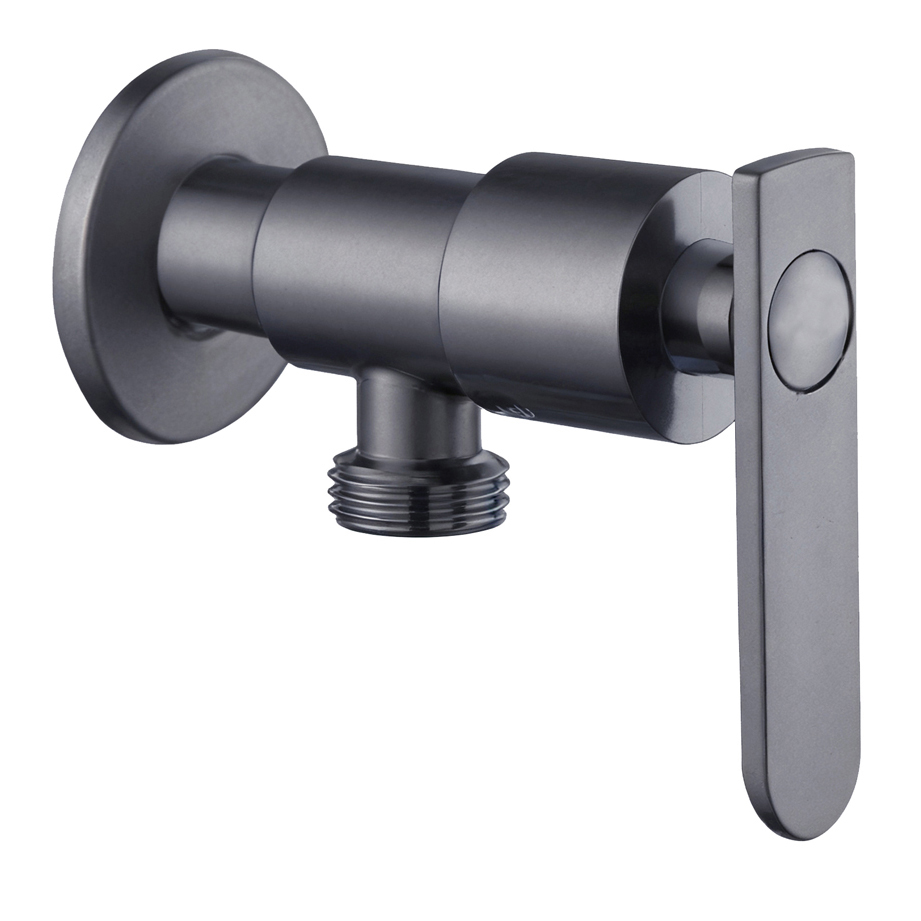




After a trade show, a buyer may return with more than ten catalogs, dozens of phone photos, and several supplier business cards.
However, when it is time to request quotations, the email may contain only one sentence:
“Please quote your best prices for these models.”
The replies can quickly become difficult to compare. One supplier includes hoses, mounting hardware, and color boxes. Another quotes only the faucet body. One supplier calculates quantity by model, while another calculates it by finish.
The problem is not always that suppliers are unwilling to provide accurate quotations. Often, the same RFQ leaves too much room for different interpretations.
A practical faucet RFQ checklist should turn product selections into line items that suppliers can confirm.
The first RFQ does not need to complete the entire engineering process. Instead, it should separate confirmed requirements, optional configurations, and items that still require supplier input.
Each round of communication should remove uncertainty rather than create more of it.
Keep the Source of Each Product When Organizing Catalogs
Do not keep only a cropped product photo without a model number.
For each shortlisted faucet, record the catalog version, page number, supplier model, image reference, and contact person.
If the website and printed catalog use different model numbers, ask the supplier to confirm the relationship between them.
A faucet wholesale catalog may cover several internal configurations. The same image may also be used to show different finishes. Therefore, a catalog page does not always represent a complete product specification.
Create a simple product selection sheet with one quotation item per row.
If a model cannot yet be identified, assign an internal buyer reference number. Make it clear that this is only a communication reference.
Once the supplier provides the official model number, link the two numbers together. Do not simply delete the original reference. Otherwise, your team may lose the connection between photos, samples, and previous quotations.
A 2026 report from the Kaiping municipal government documented the participation of Shuikou faucet companies at the Shanghai Kitchen & Bath Show.[1]
Trade shows can help buyers discover different product ranges. However, moving from a display booth to a purchase order still requires specification confirmation.
A sample shown at a booth does not mean the same configuration is available at every quantity, lead time, or price.
Give the Supplier Enough Market Context
The opening paragraph of an RFQ does not need a long company introduction.
Start with the destination market, sales channel, intended application, and current purchasing stage.
For example, is this a trial range for retail distribution or a project order with confirmed drawings? Are you still selecting product platforms, or are you ready to finalize the configuration?
This context helps the supplier understand whether to provide catalog recommendations, technical clarification, or a formal quotation.
Price targets also need a clear basis.
A target retail price, purchasing target, and maximum budget are not the same thing. A target that includes transportation cannot be compared directly with one that excludes it.
If you do not want to disclose a budget, ask for a standard proposal and one clearly defined alternative. This is more useful than asking the supplier to guess what “mid-to-high-end” means.
Market information also cannot replace compliance requirements.
List the destination-market documents that have already been confirmed. If the requirements are still being reviewed, ask the supplier to provide existing documents for verification and identify the models they cover.
Avoid using broad requirements such as “complies with all international standards.” Also, do not assume that the supplier already knows every installation requirement for your intended market.
Turn Every Catalog Selection Into a Quotation Line Item
The following structure can be used when preparing the RFQ.
If many models share the same requirements, place the common conditions at the top of the document. Keep only the variable information in each product row.
This reduces contradictions caused by repeatedly copying the same requirements.
| Field | Recommended Information | Possible Problem If Missing |
|---|---|---|
| Product identification | Buyer reference, supplier model, catalog version | Supplier may quote a similar-looking model instead |
| Quantity | Quantity per model, per finish, and expected reorder situation | Price and MOQ may be calculated on the wrong volume |
| Configuration | Material, cartridge, outlet components, and accessories | Supplier may use its standard configuration by default |
| Instalación | Connection type, key dimensions, or items requiring confirmation | Sample may not fit the intended installation |
| Finish and branding | Approved finish sample, logo position, or standard option | Special finishing or branding costs may be excluded |
| Packaging and documents | Individual box, master carton, language, and required reports | Printing and testing costs may be added later |
If you only have an OEM faucet catalog PDF, the RFQ can still be divided into two sections: “Known Information” and “Supplier to Confirm.”
Known information may include the product image, intended quantity, and application.
The supplier can then complete the missing material details, accessories, dimensional drawings, and available options.
This is still an effective RFQ because it clearly identifies what remains unknown instead of pretending that the catalog already contains every specification.
Use Quantity Scenarios When the First Order Is Still Uncertain
If the initial order volume has not been finalized, buyers can request quotations for a small number of realistic quantity scenarios.
State whether the quantity applies to each model, each finish, or the entire order.
Avoid requesting prices across extremely wide volume ranges that have no connection to the actual purchasing plan simply to obtain the lowest possible unit price.
Each quotation scenario should show the corresponding configuration, packaging conditions, and quotation validity.
Expected reorder volume can also be discussed, but it should remain separate from the confirmed first-order quantity.
An annual forecast that has not been committed is not the same as an actual purchase order. It should not automatically be used to bypass the MOQ for the first order.
Instead, both sides can discuss the initial order conditions and the conditions under which future orders may be renegotiated.
A First RFQ Email Can Follow This Structure
The following is an example of the communication structure. It is not a real YOROOW order or commercial commitment.
“We are currently selecting basin and kitchen faucet ranges for retail distribution in our target market. At this stage, we would like to confirm the standard configuration, MOQ per model and finish, and available sample information for each reference in the attached sheet. Please reply based on attachment version R1. If any item has not been confirmed, please mark it as ‘To Be Confirmed’ rather than replacing it with an unspecified standard configuration.”
“Please list the product unit price, any separate development or packaging charges, included accessories, quotation currency, and validity period. If you recommend alternative materials or components, please present them as a separate option and identify the differences and any items that require new verification. Please also provide the correct model number, dimensional drawing, packaging information, and the scope of any relevant product documents.”
“At this stage, we are comparing options and this RFQ does not represent a volume order. Please list any information you still need from us before issuing the final quotation or arranging samples. Please also explain the expected process and when the lead time begins.”
This structure helps the supplier separate product selection, quotation, and order commitment.
It also gives the buyer a clear advantage. Questions raised by the supplier become the action list for the next round instead of being scattered across emails and chat messages.
Attachments Need Version Control More Than the Email Body
RFQ sheets, technical drawings, finish images, and packaging requirements should use identifiable file names and version numbers.
If the hose length or finish quantity changes, record the reason and date in the revision history. Then ask the supplier to reply according to the new version.
Do not send a file named “Final Version” and then change critical requirements through instant messages.
YOROOW’s internal faucet production process documentation starts with requirement analysis before moving into design, sampling, production, and packaging.
For RFQ management, this illustrates a simple point: the manufacturing proposal depends on the requirements provided at the beginning.
A quotation prepared from an old requirement does not automatically become valid for a new configuration because the buyer later changed a photo or specification.
Important changes should therefore be reviewed for their effect on price, samples, and production scheduling.
If several departments contribute attachments, one project coordinator should maintain the active version.
Purchasing can confirm commercial terms. Engineering can confirm dimensions. The brand team can approve logos and visual requirements. Quality staff can confirm acceptance requirements.
Each person should approve the area they are responsible for. The team should also define how conflicts between different requirements will be resolved.
This prevents the buyer from having to make technical, branding, and quality decisions alone.
Check Completeness Before Comparing Prices
A fast supplier response is not necessarily a complete response.
First, check each line to make sure the model is correct. Then check whether required fields are missing. Only after that should prices be compared.
Open-ended replies such as “according to sample,” “standard configuration,” or “depending on quantity” should be converted into specific sample references, configurations, and quantity conditions.
Responses can be placed into three working states:
Complete information — ready for comparison.
Clarification required — do not compare yet.
Mandatory requirement not met — remove from the current round.
These are purchasing-management statuses. They are not permanent judgments about the supplier.
If missing information is later provided, the quotation can return to the evaluation process. However, the revision history should remain available.
Also check for conflicts between attachments.
For example, the quotation may specify one cartridge while the technical drawing shows another connection. A test document may refer to a different product series.
Do not select the most favorable information from each document and combine it into an imaginary ideal product.
List the conflicts together and ask the supplier to confirm the actual delivery configuration.
Only after the information is consistent is there a sound basis for arranging samples.
Create a Clear Handover From RFQ to Sampling
The RFQ stage can contain several options. However, once sampling begins, the buyer should identify exactly which option is being tested.
Appearance samples and functional samples may serve different purposes.
Sample cost, sample scope, approver, and expected feedback timing should also be clear.
Otherwise, the supplier may deliver a sample that looks correct but does not answer the question the buyer actually needs to verify.
One practical method is to carry the RFQ line-item reference into the sample task.
Keep the relationship with the original supplier model number.
When the sample arrives, record feedback against dimensions, operation, appearance, and accessories. Avoid comments such as “looks good” or “quality is average.”
Confirmed information can then move into the controlled specification and the next quotation revision.
A faucet manufacturer catalog is useful for selecting products. It cannot replace the final approval record.
Four Common RFQ Problems to Avoid
Sending only a photo leaves the supplier without information about the internal configuration.
The solution is not necessarily to define every component yourself. You can allow the supplier to propose its standard configuration, but require the supplier to list that configuration clearly.
Sending only keywords creates another problem. The same product name may refer to different structures.
Add the intended use, drawing, or sample reference so the supplier knows what you mean.
Asking only for the lowest price gives the supplier no clear acceptable range.
Separate requirements that cannot be changed from items that are open for discussion.
Repeatedly changing quantities also makes quotations difficult to compare.
Freeze the quantity scenario for the current round. Record later changes separately and request a revised quotation when necessary.
None of these steps requires the purchasing team to understand every manufacturing detail at the beginning.
The important point is to know what has already been confirmed, what still requires input from the supplier or engineer, and whether an unanswered question prevents the project from moving to the next stage.
Common Questions About Faucet Catalogs and RFQs
Can I Ask the Supplier to Recommend Models Directly?
Yes.
Provide the application, target market, channel positioning, and key limitations. Ask the supplier to explain why each model is recommended.
The recommended models should still go through configuration and document verification. A supplier recommendation does not automatically make a model approved.
Should I Reject a Catalog If It Does Not List the Material?
Not necessarily.
You can first ask the supplier to provide the missing information.
A catalog may be designed primarily as a marketing document. Missing information in the catalog does not by itself prove that the product is unsuitable.
However, if the supplier repeatedly cannot clarify critical order requirements, that becomes a sourcing issue that needs further evaluation.
Is a More Detailed RFQ Always Better?
Detail should support a decision.
Keep the questions that must be answered in the current round together in the RFQ sheet. Keep the background explanation short and clear.
Requirements that are not yet relevant can be handled in later stages.
A concise, version-controlled requirement is easier to execute than a long set of attachments that contradict one another.
Make the Next Supplier Reply Useful for the Next Decision
When sending catalog selections to YOROOW, keep the source image and model reference for each product. Include the quantity per model and finish, together with the configurations that still need confirmation.
Ask the supplier to separate the standard proposal, alternative proposal, and unresolved questions.
The result of the RFQ will then be more than a price list.
It becomes the working basis for the next steps: sample preparation, specification verification, quotation revision, and eventually the purchase order.